The Question That Can't Be Asked: A Guide to Late Capitalism
In an era defined by economic anxiety and political upheaval, one question threatens to unravel everything we think we know about how society functions. That question is so dangerous that it's been systematically buried under decades of policy debate and public discourse. What if the answers we've accepted for generations were never the real answers at all?
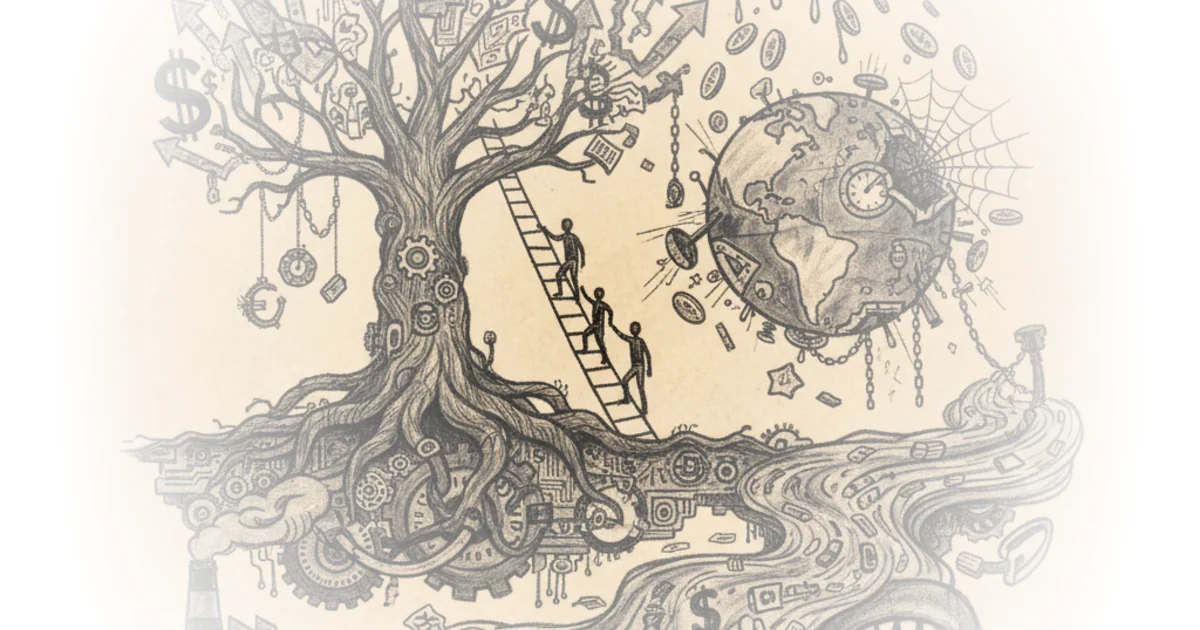
Wes Cecil argues that late capitalism has constructed an entire ideology around scarcity—not natural scarcity, but artificially induced scarcity that forces people to pay premium prices for things they actually need. The mechanism is simple: create artificial walls around resources, then charge for access. Water. Healthcare. Housing. The list grows longer every year.
The implications are staggering when you pause to consider them.
The Unaskable Question
Consider this: in Catholic history before the Reformation, asking why we needed a pope wasn't permitted. The question wasn't mentioned in scripture. Yet asking it revealed everything about how power functioned. Today, the parallel is striking. In late capitalism, the unaskable question is what actually creates wealth?
The answer we're forced to accept is simple: money. We measure everything by money. We debate policy by money. We vote based on who promises more money for solutions. But this is a fundamental misunderstanding of what wealth actually means.
Cecil points out that the word wealth originally meant wellness—healthiness, wholeness, flourishing. Abundance comes from the notion of having excess, of overflow, of creation. Poverty originally meant those who could not produce, who had no surplus. These words once described physical reality and human capability, not financial instruments.
The Gatekeeper That Does Nothing
Here's where the argument becomes most compelling. Consider health insurance. People believe they want insurance because they want to be well. But insurance doesn't set bones. It doesn't take X-rays. It doesn't provide pain relief. It doesn't give you a healthy diet, exercise routine, social connections, or sleep patterns. Insurance does absolutely nothing to make you healthy.
And yet insurance has become the gatekeeper between you and medical care. This is pure circular logic: we accept that money solves health, but money doesn't actually create health at all. It's an artificial barrier imposed for one purpose—extracting money from people who need help.
The same pattern appears everywhere. Private equity companies buying water rights know water will become scarce. If water is scarce, you can charge enormous prices because people genuinely don't want to die of thirst. This isn't crazy—it's just how the system works. Dams, reservoirs, and communal water systems could make water abundant for everyone. Instead, we create scarcity artificially, then require money to access what people need.
Why Spending More Money Doesn't Work
Look at government budgets across nearly every major nation. They spend more today than they did five years ago, ten years ago, twenty years ago. Yet problems persist. The solutions haven't worked. This is the of the unaskable question—we keep throwing money at issues but never asking whether money actually addresses what we need.
Cecil argues this represents complete mental fixation. We've become so certain that money answers everything that we've stopped asking what else might work. Once you start asking okay, what can a government do that has zero financial impact? The possibilities become almost infinite. Passing laws to protect people, regulating harmful ingredients in food, banning social media for children under sixteen—none of these require new revenue. They simply require different priorities.
In much of Europe, corn syrup is rare or nonexistent as a food additive. In the United States, it's everywhere. When someone suggests regulating it, the response immediately becomes about cost. But sugar isn't expensive. The financial implications would be minuscule. Yet any action that doesn't center on money gets treated as impossible.
Australia recently passed social media bans for children under sixteen. France is doing the same. Spain is likely to follow. These policies don't impact government revenue—they simply require different thinking. This reveals something crucial: we can solve problems without money, but we've forgotten how to ask those questions.
The Reformation We Need
The real question isn't whether we need more money or better efficiency with existing money. It's what kind of society we want that doesn't require financial extraction as its foundation.
Critics might note that dismissing money as a solution oversimplifies complex problems. Some issues genuinely require substantial resources—pandemic response, climate infrastructure, healthcare systems for aging populations. The argument that money is never the answer risks ignoring real constraints. Additionally, artificially induced scarcity isn't purely malevolent—some resource limits are genuinely environmental or logistical.
But the core insight remains powerful: we've become so locked into financial thinking that we can't see alternatives. We measure everything in money. We've stopped asking what else might work. And that's precisely what late capitalism wants—it keeps us arguing about money instead of questioning what we actually need.
Bottom Line
Cecil's strongest argument is that the scarcity mindset isn't natural—it's engineered for extraction. The biggest vulnerability is strategic: some problems genuinely require resources, and dismissing financial solutions entirely oversimplifies complex challenges. But once you start asking what else could work, you'll see alternatives everywhere. That's exactly what makes this uncomfortable to contemplate—it threatens the foundation of how we've organized society for generations.