Most coverage treats artificial intelligence as a futuristic miracle or an existential robot threat, but this interview pivots sharply to a materialist reality: AI is a mechanism for wage suppression and management control. Brian Merchant's conversation with cognitive scientist Hagen Blix strips away the sci-fi hype to reveal a familiar historical pattern where technology is weaponized to de-skill workers and depress pay. This is not a story about the singularity; it is a story about the immediate erosion of professional stability.
The Wage Depression Tool
Merchant frames the discussion by challenging the dominant narrative that AI is primarily a productivity engine. Instead, he highlights Blix's central thesis that we are witnessing the industrial production of language, mirroring the industrial production of cloth in the 19th century. Blix argues that the goal is not necessarily to replace every human, but to flood the market with "good enough" output that forces skilled professionals to compete against cheap, automated alternatives.
"We should think about the AI as a wage depression tool rather than a productivity increasing tool."
This reframing is crucial because it shifts the debate from technical capability to economic consequence. If productivity gains are stagnant, as many studies suggest, then the value of AI for corporations lies elsewhere. Blix posits that the technology is designed to allow companies to pay skilled workers as if they were unskilled laborers. The argument holds weight when applied to fields like translation or design, where the output is not perfect but is significantly cheaper, driving down the market rate for human expertise.
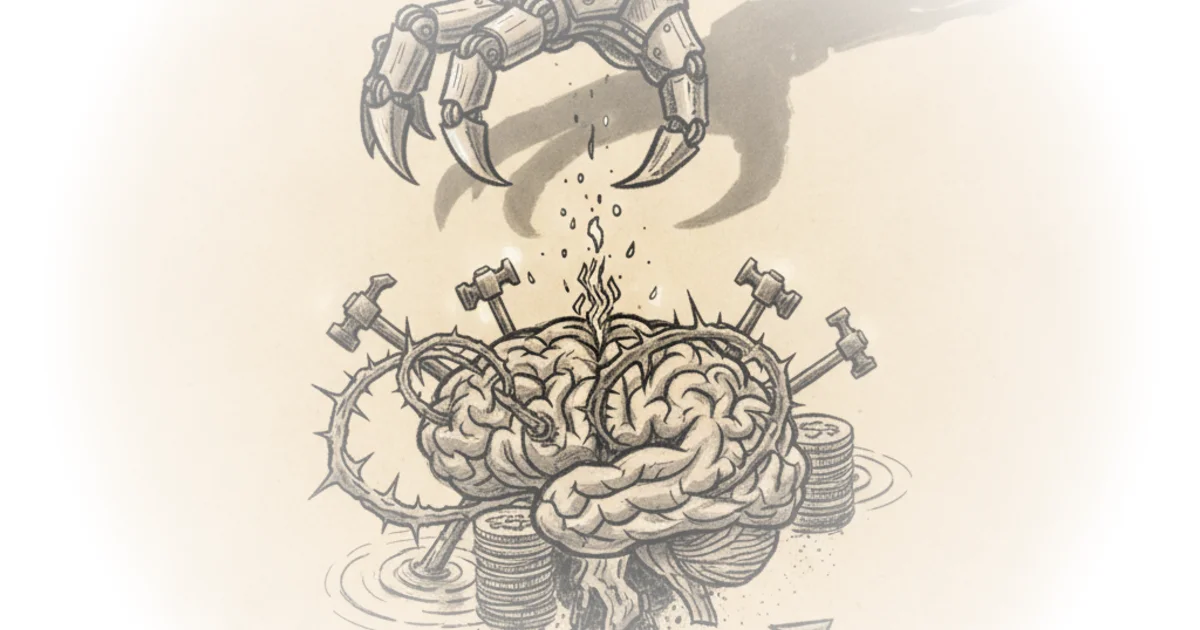
Critics might argue that this view ignores the potential for AI to augment human work, creating new roles rather than destroying old ones. However, Blix counters that even when humans remain in the loop, their role often degrades to that of a gig worker fixing machine errors, stripping away the autonomy and security that once defined their profession.
The Proletarianization of the White Collar
The interview delves into the class dynamics of this shift, suggesting that AI is extending the logic of industrialization to the professional class. Merchant notes how Blix connects the fear of AI to a broader anxiety about control, noting that for the ruling class, the narrative of "technology taking over" may be a way to deflect from their inability to solve crises like climate change. Yet, for the worker, the threat is immediate and tangible.
"AI is an attack from above on wages."
Blix illustrates this with the example of the legal system. While high-stakes corporate law may remain insulated, public defenders and lower-tier legal work face a bifurcation where cheap, AI-driven services replace human judgment, reducing the quality of justice for those who cannot afford premium counsel. This mirrors the historical shift from durable, handcrafted goods to disposable fast fashion. The middle tier of quality is being hollowed out, leaving only expensive, bespoke services for the wealthy and a flood of low-quality, automated alternatives for everyone else.
"We're producing a bifurcation... the higher class will be of quality of goods produced will be more expensive."
This analysis effectively links the abstract concept of "algorithmic management" to the concrete reality of declining living standards. It suggests that the fear of AI is not irrational; it is a rational response to the encroachment of automated systems into domains that were previously resistant to such efficiency drives.
Solidarity in the Age of Automation
Perhaps the most compelling part of Merchant's coverage is the potential for a new labor movement. Blix suggests that the very nature of AI's threat—its ability to de-skill and precaritize white-collar workers—could force a historic realignment. Traditionally, professionals like lawyers, writers, and designers have been structurally hostile to unionization. However, the shared threat of AI is breaking down these barriers.
"There is something about this moment that makes obvious our shared humanity and our shared interests as workers of all stripes."
Merchant points to the recent strikes by the Writers' Guild of America and the Screen Actors Guild as evidence of this shift. The solidarity generated was unprecedented, driven by a recognition that AI is not just a tool for coastal elites but a systemic threat to livelihoods across the board. Blix argues that the path forward is not to fight the technology itself, but to organize collectively against the owners who deploy it to extract value at the expense of workers.
"The first step to doing that is, of course, to realize that maybe we have shared interests... that together you might be able to do something about your interests in a way that you can't individually."
This call to action is the piece's strongest political argument. It moves beyond the paralysis of fear or the distraction of hype, offering a clear, historical precedent for resistance. The Luddites were not against technology; they were against the way technology was used to undermine their wages and working conditions. Blix and Merchant suggest we are in a similar moment, where the only viable response is collective organization.
Bottom Line
The strongest element of this interview is its refusal to get lost in the sci-fi tropes of AI, grounding the conversation instead in the hard economics of labor and class. The argument that AI is a tool for wage depression rather than pure productivity is a vital corrective to the current tech-optimist narrative. Its biggest vulnerability lies in the difficulty of organizing a fragmented, increasingly gig-based workforce, but the piece successfully identifies the cracks in the professional class that could allow for a new era of labor solidarity.