This interview with Mercury CEO Immad Akhund stands out not for its business tactics, but for its startling historical lens on modern ambition. While most founders look to Silicon Valley for their next playbook, Akhund finds his most potent lessons in the brutal geography of the Mongol Empire and the industrial might of the Las Vegas Sphere. Mario Gabriele frames this conversation as a "Modern Meditation," extracting a philosophy where the grind of building a company mirrors the relentless expansion of ancient empires.
The River of Ideas and the Hard Mode of Building
Gabriele captures Akhund's core thesis early: success is not about copying a specific person, but immersing oneself in a "river of ideas." The CEO describes his time at Y Combinator not merely as networking, but as an education in the foundational patterns of entrepreneurship. He recalls sitting in the front row during dinners with figures like Mark Zuckerberg, noting that seeing them in person demystified their success. "They're obviously remarkable, but at the same time, you realize they're not in some other universe," Akhund tells Gabriele. This observation is crucial; it strips away the myth of the "genius" and replaces it with a model of accessibility and repetition.
The argument extends to the nature of excellence itself. Akhund draws a direct line from tech founders to musicians and athletes, suggesting that the secret to high performance is universal and unglamorous. "It really comes down to working extremely hard and being unwilling to give up when others would," he asserts. This framing is effective because it counters the romanticized narrative of sudden inspiration. Instead, he posits that whether one is coding software or writing a novel, the path is defined by "waking up and grinding for ten or eleven hours." Critics might argue that this "grind" mentality overlooks the role of privilege or structural barriers that allow some to work such hours while others cannot, but within the context of scaling a startup, the emphasis on persistence holds weight.
"Once you get to the far edge of excellence, I really feel like the stories are fairly similar. It's all about perseverance through difficult times and overcoming self-doubt."
History as a Mirror for Modern Resilience
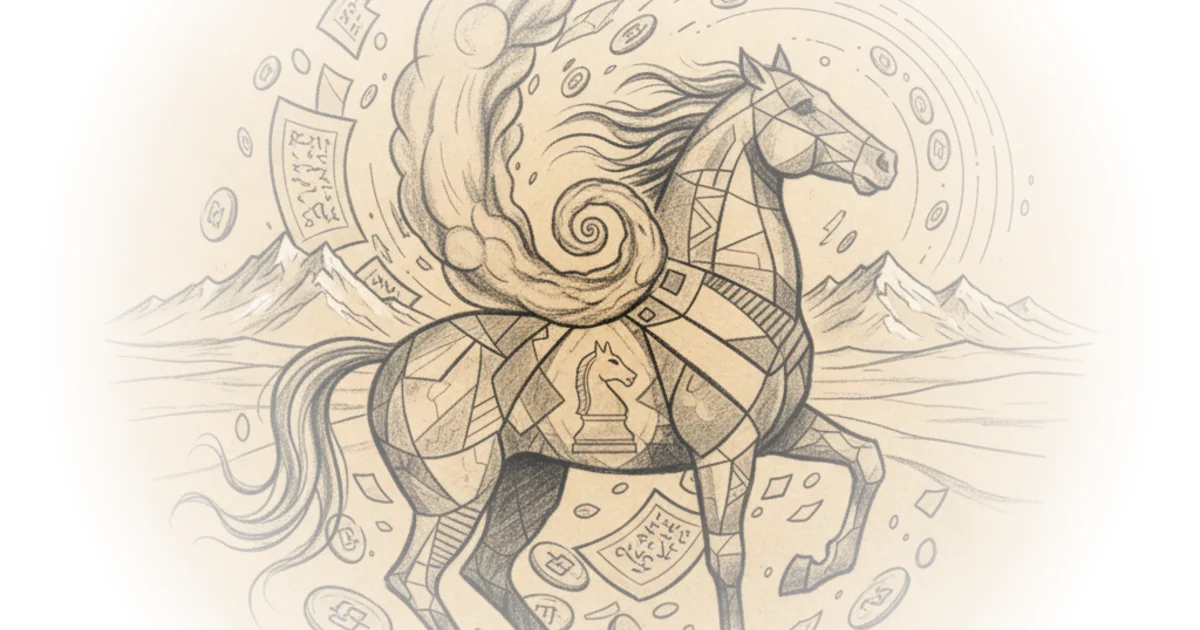
The most distinctive section of the piece is Akhund's deep dive into the Mongol Empire. Gabriele highlights how Akhund uses history not for trivia, but as a strategic framework for understanding how "soft" civilizations can be overtaken by "hard" ones. Akhund explains that the Mongols succeeded not just through violence, but because they were forged in a contested environment where "hundreds and hundreds of years, there had been fighting between tribes." In contrast, surrounding empires like China had become complacent.
This historical analogy serves as a warning and a motivator for the modern executive. Akhund notes that Genghis Khan's drive was insatiable: "We're not done." The comparison is striking, especially given the scale of the Mongol conquest, which united the steppes in a way that happened "very rarely." It suggests that in business, as in history, the most dangerous competitor is often the one with the most to lose and the most to prove. However, one must be careful not to glorify the brutality of the Mongol expansion; the "hard edge" Akhund admires came at a catastrophic human cost, a nuance that is present in the historical record but necessarily minimized in a business context.
The conversation shifts to the built environment, where Akhund identifies the Sphere in Las Vegas as a modern monument surpassing the Pyramids of Giza. "There's this idea in the US that we can't make things, and this is counter to that," he argues. He finds the structure impressive not just for its size, but for its originality and the creative use of its interior and exterior. This preference for the new over the ancient reflects a broader optimism about American capacity, even as the empire-building analogy from earlier suggests a more complex view of power.
Optimism in a Fractured World
Akhund's most contrarian stance is his insistence that the world is "ultimately, pretty good." Gabriele notes that this view runs counter to the prevailing pessimism of the current era. Akhund points out the disconnect between public perception of the economy and personal well-being: "80% will say that it's trash. But if you ask them how they're doing, a similar number will say, 'I'm great!'" He attributes this to a failure to recognize gradual progress, citing Steven Pinker's Enlightenment Now as a key influence.
This optimism is grounded in a comparison of risks. "We don't have to worry that a Mongolian tribe is going to come kill us in the night and capture our families," Akhund says. "Our worries are mostly that we're getting too fat because we're eating too much." While this perspective offers a necessary corrective to doom-scrolling, it risks minimizing the very real geopolitical instability that Akhund himself acknowledged earlier, noting that the "end of history" illusion was shattered in 2016. The tension between his historical awareness of violence and his current optimism is a fascinating friction point in the interview.
"History hasn't ended, and sadly, we still have wars and hardship. But ultimately, I think we have a lot to be grateful for."
The Limits of Growth and the Future of Learning
Finally, Akhund challenges the Silicon Valley dogma that "more is always better." He argues that constraints are essential for productivity, noting that growing headcount faster than 30-40% annually leads to diminishing returns due to the overhead of hiring and onboarding. "More and more resources often don't increase speed and productivity," he observes. This is a pragmatic counter-narrative to the "blitzscaling" era, suggesting that sustainable growth requires a disciplined approach to learning and integration.
His vision for the future involves a "space city" around Earth rather than a colony on Mars, driven by the desire to solve for a more hospitable environment first. Yet, his most immediate tool for growth remains the humble audiobook. He describes listening at 2x speed while driving or brushing his teeth as a "meditative break" that allows him to consume five books in three weeks. This habit underscores his identity as a "conversational learner" who values the exchange of ideas over passive consumption.
Bottom Line
Gabriele's interview succeeds by reframing the CEO's role from a manager of capital to a student of history and human nature. The strongest part of the argument is the synthesis of ancient military strategy with modern product philosophy, offering a unique lens on resilience. However, the piece's biggest vulnerability lies in its optimistic gloss over the human cost of the very historical forces it admires; the "grind" of empire and the "grind" of a startup are not morally equivalent. Readers should watch for how Akhund applies these historical lessons as global tensions rise, testing whether his optimism can withstand the return of the "hard" edges he so admires.