PILCROW transforms a contest submission into a visceral meditation on how grief fractures the self, arguing that memory is not a static archive but a physical force that can drown the living. The piece stands out not for its plot, but for its refusal to treat the anniversary of a death as a mere date on a calendar, reframing it instead as a tidal event that threatens to wash away the narrator's current reality. This is essential reading for anyone who has ever felt the disorienting pull of a past that refuses to stay buried.
The Architecture of Haunting
The narrative begins not with a linear timeline, but with a sensory overload where the physical world dissolves into the internal landscape of the protagonist. PILCROW writes, "World was in the face of the beloved, but suddenly it poured out and was gone: world is outside, world cannot be grasped." This opening sets a tone of desperate fragility, suggesting that the boundary between the self and the external world is thinner than we admit. The author anchors this emotional volatility in the specific geography of Central Park, describing it not as a green space but as a "stretch of cold Atlantic darkness" that curls into Harlem. By invoking the park's vastness, PILCROW taps into a historical resonance; much like the park was once a swampy, contested ground before being engineered into a pastoral ideal, the narrator's mind is a landscape where the past has been paved over but remains porous to the elements.
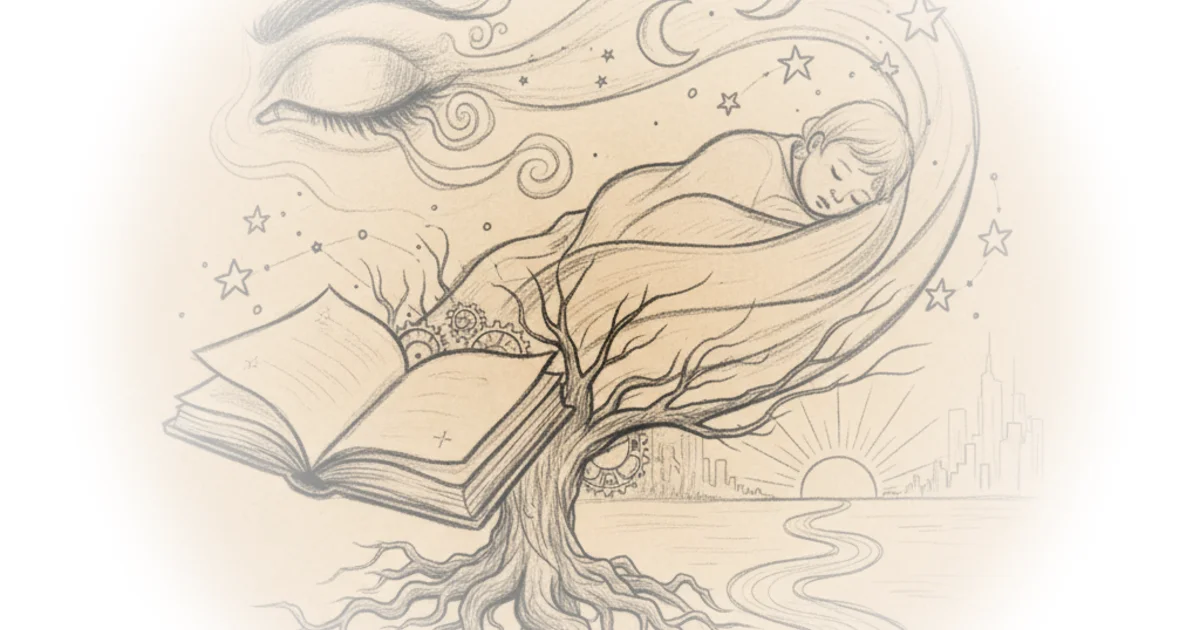
The core of the argument here is that the body remembers what the mind tries to suppress. PILCROW observes, "It was the feeling some stage before tears, when memory is poised in the rim of the eyelids, when memory has come into the musculature and the eyes and one feels the cold blooming of the memory coming out of the bone." This is a powerful reframing of grief: it is not an abstract sadness but a somatic event, a physical pain rooted in the very structure of the human design. The prose suggests that the narrator's current relationship is merely a vessel to access a deeper, older pain, a mechanism to trigger a memory that has been dormant for a decade.
Memory has come into the musculature and the eyes and one feels the cold blooming of the memory coming out of the bone.
The narrator's experience of seeing the deceased lover's face superimposed over the living woman's is rendered with a hallucinatory clarity. PILCROW describes the moment: "As the woman and I's cheeks clung side to side I suddenly saw Her shining up from below like the moon coming into the surface of a pond in an open field before the sky." This imagery evokes the surrealism of a dream state, yet the author grounds it in the physical act of intimacy. The comparison to looking at a Monet to find clarity is particularly striking, suggesting that truth is often found only when one stops trying to see things sharply. Critics might argue that this blurring of reality borders on the melodramatic, yet the text's insistence on the physical sensation—the smell, the taste, the cold—keeps the reader anchored in the narrator's subjective truth rather than drifting into pure fantasy.
The Frozen Self and the Passage of Time
As the narrative delves deeper into the mechanics of mourning, PILCROW introduces the concept of a "dual self": the aging narrator and a younger, frozen version of himself that remains stuck in the moment of loss. The author writes, "Death is a separation and this was the pact of my letting this self separate – that it not age. That we live in secret from each other." This is a profound insight into the psychology of grief, where the survivor often feels they have left a part of themselves behind in the past. The narrator describes this younger self as a "pious pilgrim, a devotee of Decembers," waiting for a reunion that can never happen. This framing challenges the conventional wisdom that time heals all wounds; instead, PILCROW suggests that time creates a schism, leaving a ghost of the former self to haunt the present.
The text draws a subtle parallel to the literary tradition of the Ophelia figure, noting, "She was an Ophelial leak in the stream and he was forever in awe of this leak." This reference to the tragic drowning of Ophelia from Hamlet adds a layer of cultural weight, connecting the narrator's personal tragedy to a timeless archetype of beauty lost to water. The imagery of the "Ophelial leak" suggests that the deceased is not gone but is seeping into the narrator's life, altering the flow of his existence. The author further complicates this by describing the younger self as someone who "wanted to be turned into stone so he could look backward forever," highlighting the paralysis that grief can induce. The desire to become stone is a rejection of the forward momentum of life, a wish to freeze the moment of loss to preserve the memory intact.
PILCROW captures the panic of this realization with stark simplicity: "I felt alien suddenly from the world, from moonlit sheets and bodies and as the feeling came back my muscles felt younger and my body lighter and loose in the buoyancy of a long ago afternoon ocean." This shift from the heavy, cold reality of the present to the buoyant, weightless feeling of the past illustrates the disorienting power of memory. The narrator is not just remembering the past; he is physically regressing into it. The author notes, "I had passed long ago into the elegiac side of Her death, and then the elegy ended. I had fallen out of all that breadth and range that Her death had opened to me." This suggests that even the process of mourning has an expiration date, and the narrator is now facing the terrifying prospect of moving forward without the structure of grief to hold him.
The Ocean of Memory
The piece culminates in a powerful metaphor of the ocean, where the narrator realizes he has been "drinking towards Cape Cod all this time." PILCROW writes, "There is a relation between an overpoured whiskey in winter and the Cape in summer, the sharp wince and the warmth puts you in the sea breeze." This connection between alcohol, memory, and the sea is a masterstroke, linking the physical sensation of drinking to the emotional landscape of the past. The author suggests that the narrator has been using alcohol to simulate the feeling of being near the sea, a place associated with the deceased. The text concludes with the idea that "Sex is like ballast on a night of this kind of drinking, so that you are not plunged down in darkness and you are not on land either, but bobbing in the deep sea sun innocent of all danger." This final image of bobbing in the sea captures the precarious balance between holding on and letting go, a state of suspended animation that defines the narrator's existence.
The author's choice to weave in the specific geography of the Vineyard Sound and the Cape Cod coast adds a layer of realism to the surreal narrative. Just as the tides of the Atlantic are relentless and indifferent to human sorrow, the narrator's grief is a force of nature that cannot be controlled. The text implies that the only way to survive this is to accept the current, to let the waves wash over him rather than trying to fight them. As PILCROW puts it, "It's when these dissolve that things push up through the sand." This suggests that only by surrendering to the pain can the narrator uncover the buried truths of his past.
It's when these dissolve that things push up through the sand.
Critics might note that the heavy reliance on metaphor and the abstract nature of the "frozen self" could alienate readers looking for a more grounded narrative. However, the emotional resonance of the piece lies precisely in its refusal to be grounded, mirroring the disorientation of the grieving process. The author's refusal to provide a clear resolution or a path forward is not a flaw but a reflection of the reality of loss, which often lacks a neat conclusion.
Bottom Line
PILCROW's commentary on the nature of grief is a tour de force of sensory writing, successfully arguing that memory is a physical, invasive force that reshapes the living self. The piece's greatest strength is its ability to make the abstract concept of a "frozen self" feel viscerally real, while its vulnerability lies in its dense, metaphorical prose which may require multiple readings to fully unpack. Readers should watch for how this narrative style might influence the broader conversation on how we talk about loss in literature, moving away from linear recovery arcs toward a more fragmented, cyclical understanding of mourning.