Yascha Mounk delivers a jarring correction to the modern liberal imagination: the "Father of Liberalism" did not champion the total separation of church and state, but rather engineered a sophisticated system where the state actively shapes moral orthodoxy. This piece dismantles the comfortable myth that John Locke was a disestablishmentarian avant la lettre, revealing instead a thinker who believed in a state-sponsored clerisy to model "reasonable" dissent. For busy readers navigating today's culture wars, Mounk's historical excavation offers a startling explanation for why modern institutions feel so rigidly orthodox despite their claims to open-mindedness.
The Popple Problem
Mounk begins by exposing a foundational error in how the English-speaking world reads Locke. The famous preface to the Letter Concerning Toleration, which demands "Absolute Liberty, Just and True Liberty, Equal and Impartial Liberty," is often cited as Locke's own voice. Mounk corrects this record with precision: "The plain-speaking and commonsensical English voice of the Letter begging to 'speak the Truth, as becomes one Man to another' and pleading for 'Absolute Liberty' in matters of religion was not Locke's—it was Popple's." This revelation is not merely academic nitpicking; it recontextualizes the entire text. The radicalism attributed to Locke was actually the project of William Popple, a Yorkshire wine merchant and political exile who translated the work without Locke's permission.
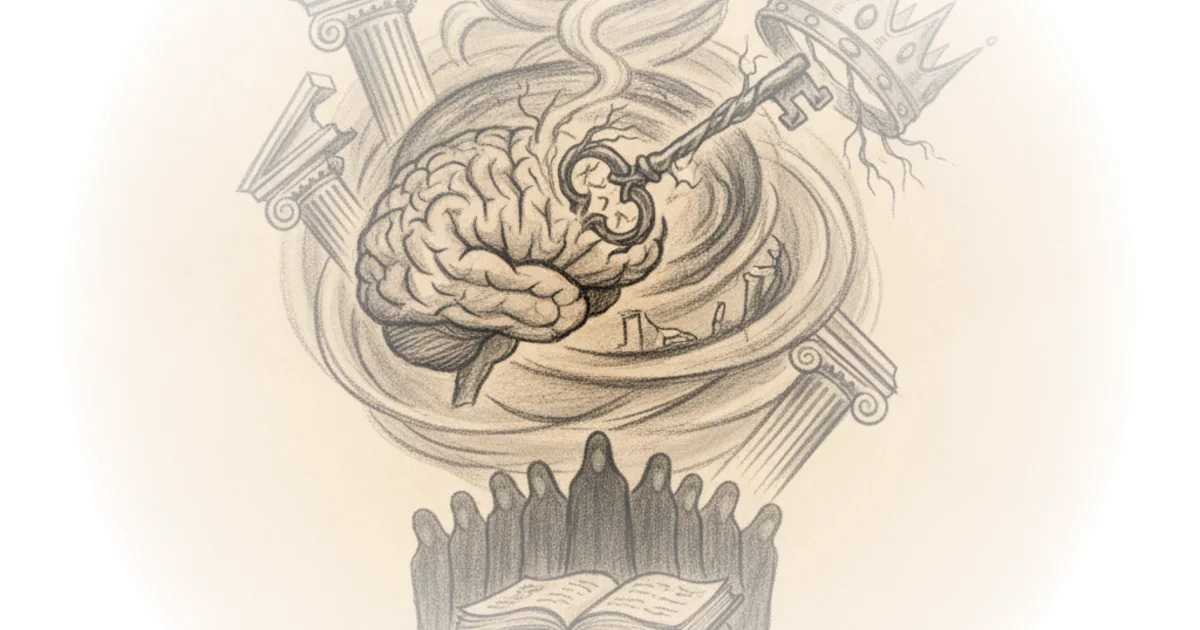
The core of Mounk's argument is that Locke's actual position was far more conservative and establishment-friendly than his reputation suggests. While Locke opposed the most brutal penal laws, he accepted the continued dominance of the Church of England. Mounk notes that Locke praised the Toleration Act of 1689, which suspended penalties only for Trinitarian Protestants while explicitly excluding Catholics and atheists. This legislation, which emerged from the turmoil of the Exclusion Crisis, was designed to manage dissent, not eliminate religious hierarchy. As Mounk writes, "Locke envisioned a continued role for the state in policing religious doctrine" through the requirement that tolerated churches must "own and teach the Duty of tolerating All men in matters of mere Religion."
This framing is effective because it shifts the debate from "tolerance vs. intolerance" to "who defines the boundaries of tolerance." Mounk points out that Locke's vision relied on an "established clerisy"—trained clergy in universities and parishes—to set the moral tone for society. Critics might argue that Mounk overstates the continuity between 17th-century Anglican orthodoxy and modern secular liberalism, but the structural parallel he draws is compelling. He suggests that the "liberal establishment" today functions much like Locke's envisioned clerisy: a credentialed class that enforces a specific set of moral assumptions while claiming to protect diversity.
The modern "liberal establishment" has taken root not just in churches, but across increasingly broad sectors of society, performing the same credentialing function that they performed in 17th-century England.
The Modern Clerisy
Mounk extends his historical analysis to the present, arguing that the assumptions of religious establishment continue to shape American liberalism in subtle but powerful ways. He observes that the vocabulary of "dissent" and "nonconformity" in modern discourse often presupposes a dominant orthodoxy that must be navigated. "One finds tell-tale traces of this influence in our vocabulary," Mounk writes, noting that even the term "disestablishment" is a misnomer for the United States, which never had a national church to disestablish in the first place.
The piece argues that universities have replaced the Church of England as the primary credentialing body for the elite. Mounk asserts that these institutions ensure the nation's leaders are "sufficiently 'tolerant,' in the increasingly narrow sense of being supportive of racial and cultural (but not necessarily intellectual) diversity, minority rights, sex and gender nonconformity, and so on." This is a provocative claim: that the very institutions accused of being too progressive are actually enforcing a rigid form of conformity that mirrors Locke's "reasonable" establishment. Mounk writes, "I don't think liberalism's critics, whether on the left or on the right, are wrong when they complain that a liberal ideological impulse has taken root in the halls of higher education, nor when they link this impulse with John Locke."
This argument lands because it explains the visceral reaction many feel toward modern institutions without resorting to conspiracy theories. It suggests that the friction is structural, not accidental. However, a counterargument worth considering is whether this "liberal establishment" truly possesses the same coercive power as the 17th-century state church. While social and professional penalties exist, they lack the legal force of the Test Acts or the threat of imprisonment that Locke's contemporaries faced. Mounk acknowledges the difference in mechanism but insists the cultural function remains identical.
Bottom Line
Mounk's strongest contribution is the historical unmasking of the "Popple preface," which successfully decouples the radical rhetoric of the Letter from Locke's actual political philosophy. His vulnerability lies in potentially equating the soft power of modern academic norms with the hard power of state-enforced religious orthodoxy, though the parallel in social enforcement is undeniable. Readers should watch for how this reframing influences the ongoing debate over institutional credibility, as the distinction between "tolerance" and "enforced orthodoxy" becomes the central fault line in modern democratic life.