Naomi Kanakia delivers a chillingly specific diagnosis of a society sliding into fascism, not through the lens of a sudden coup, but through the slow, creaking machinery of state failure and class deference. The piece's most arresting claim is that in a resource-poor authoritarian regime, the upper class is not imprisoned but rather weaponized as a rhetorical scapegoat, while the true violence is outsourced to an energetic, lower-middle-class mob. This is not a story about the efficiency of tyranny, but about its chaotic, ad-hoc brutality.
The Mechanics of Ad-Hoc Terror
Kanakia reframes the concept of fascist control by stripping away the myth of bureaucratic perfection. She writes, "Everything in our country is slow and creaky and inefficient, even our fascism." This observation is crucial because it dismantles the fear that the regime is a monolithic, all-seeing machine. Instead, she argues that control is exerted in an "ad-hoc fashion," where individual actors are granted license to kill with impunity if they claim to serve the cause. The author notes that while her own class faces doxxing and social ostracization, they are rarely murdered due to a "vestigial respect for the former ruling class."
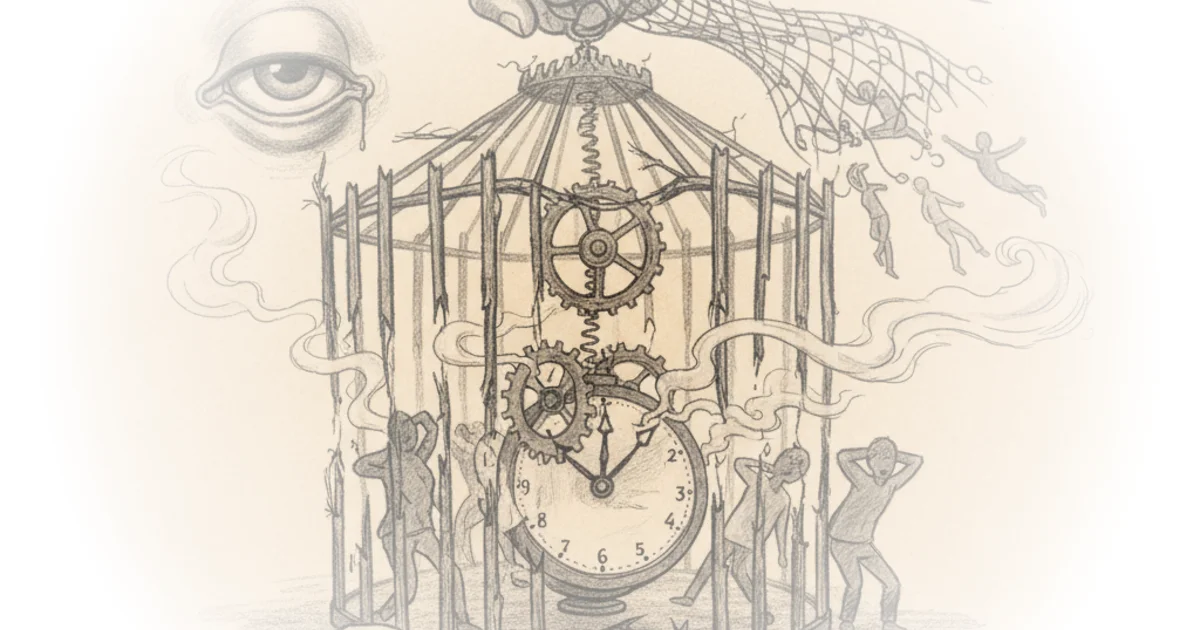
This dynamic mirrors the historical function of the Sturmabteilung (SA) in 1930s Germany, where paramilitary groups operated with a degree of autonomy that allowed them to terrorize populations while the state maintained a veneer of legality. Kanakia suggests that the current regime relies on this same ambiguity. She writes, "Basically, if an individual fascist decides to kill you, then they can... And they will almost never be punished for this crime, if they do it in the name of the cause." The horror here lies in the lack of a central command; the violence is decentralized, making it harder to predict and harder to stop.
Critics might argue that this focus on class deference underestimates the regime's willingness to purge elites once they are no longer useful. However, Kanakia's point is that the regime currently needs the liberal elite as a "pinata they can beat upon rhetorically." The administration, or the movement driving it, thrives on the dissatisfaction of the masses, and the upper class provides a convenient, safe target for that rage.
"Fascism has decisively beaten mainstream liberalism, and as a result the fascists aren't particularly afraid of people like me."
The Seduction of the Stormtrooper
The narrative takes a deeply personal turn as Kanakia introduces "Declan," a lower-middle-class fascist student who embodies the raw, unfiltered energy of the movement. Unlike the "smarmy and supercilious" fascists of her own upper-class background, Declan is described as "pure libido." He is not acting out of political calculation but out of a genuine, fervent desire to "smash things." Kanakia details a disturbing interaction where Declan attempts to seduce her intellectually, arguing that Adolf Hitler was a hero who "took the burden of villainy on himself for all time, so others would be free."
This scene is a masterclass in depicting the psychological appeal of extremism. Declan's argument—that a leader who achieves "Judenfrei" (a term Kanakia uses to describe the ethnic cleansing of Germany) has "won" despite his historical vilification—is a potent distortion of history. Kanakia writes, "He cleansed his country. And now it is one of the great countries of the world... He went down in history as a villain, but he won." This logic, which prioritizes ethnic homogeneity over human rights, is presented not as a fringe theory but as a mainstream belief held by the "lower-middle-class strivers" who populate the university.
The author highlights the tragic disconnect between the educated elite and the rising fascist movement. While Kanakia and her peers are paralyzed by "left-wing infighting" and debates over the efficacy of non-violence, the fascist movement is unified by its embrace of violence. She notes, "The fascist movement used violence—that's all it was, organized violence and the threat of violence, wielded to bend various institutions... to the will of Leader." The failure of the opposition to match this energy, or even to agree on a strategy, leaves them vulnerable to a movement that is willing to do whatever it takes.
The Illusion of Hope
Perhaps the most poignant section of the piece is Kanakia's reflection on the students she teaches and interacts with. Despite the looming threat of ethnic cleansing and the rise of a genocidal movement, the lower-middle-class students remain "hopeful" and "idealistic." They are the children of illiterate parents who scrub toilets, striving for a desk job that may not exist. Kanakia writes, "Most of them avoid politics, because it would be a distraction from the work of getting ahead." This apathy is not born of ignorance but of a desperate need to survive in a collapsing economy.
The author contrasts the "sophisticated" revulsion of her ex-girlfriend, Anwen, with the "illusion" held by the younger girls who are drawn to her. These students, she observes, "haven't gotten the message yet" about the darkness closing in. They are falling in love with ideas and with the image of the intellectual, unaware that their future may be one of violence and erasure. Kanakia notes, "There are a lot of girls falling in love with Foucault at this school!" while the reality of the situation is far more brutal.
This disconnect creates a tragic irony: the very people who are most vulnerable to the fascist agenda are the ones who are still dreaming of a better future. Kanakia writes, "A lot of these people are girls... They see someone cultured, who's been exposed to the better things in life." But this culture is a fragile shield against a movement that has already decided who is "inherently evil" and must be eliminated. The author's own isolation—eating meals alone while the fascists march in uniform—underscores the loneliness of resistance in a society where the majority is either complicit or asleep.
"He made his own law, took the burden of villainy on himself for all time, so others would be free. That is what a hero does—they do what must be done."
Bottom Line
Naomi Kanakia's piece is a devastating portrait of a society where fascism is not a sudden explosion but a slow, creeping rot fueled by class resentment and state incapacity. The strongest part of her argument is the revelation that the upper class is not the primary target of this violence, but rather a theatrical prop for a regime that relies on the energy of the lower-middle class to enact its will. The piece's greatest vulnerability lies in its reliance on a fictionalized setting to make its point, which may lead some readers to dismiss the parallels to real-world events. However, the specific details of the "Sturmabteilung"-like behavior and the logic of the "heroic villain" are too precise to be mere fiction. Readers should watch for how this dynamic of "ad-hoc" violence and class deference plays out in other democracies facing similar pressures of inequality and state failure.