Ryan Grim and Jeremy Scahill deliver a harrowing dispatch that exposes the stark disconnect between high-stakes diplomatic maneuvering and the brutal reality on the ground in Gaza. While the administration signals readiness for talks with Tehran and orchestrates a $6 billion arms bypass, the authors force the reader to confront the human toll: a ceasefire that exists only on paper while airstrikes continue to claim civilian lives. This is not merely a news recap; it is a forensic examination of how policy is weaponized against the very populations it claims to stabilize.
The Cost of Bypassed Oversight
The most jarring revelation in the piece concerns the executive branch's aggressive circumvention of legislative checks. Grim and Scahill write, "The Trump administration has moved to push through more than $6 billion in new arms sales to Israel, bypassing long-standing congressional oversight and notifying Congress only an hour in advance of the transfer." This maneuver effectively neutered the Arms Export Control Act, a law designed to ensure transparency in military exports. By reducing the notification window to a single hour, the administration rendered the review process a formality rather than a safeguard.
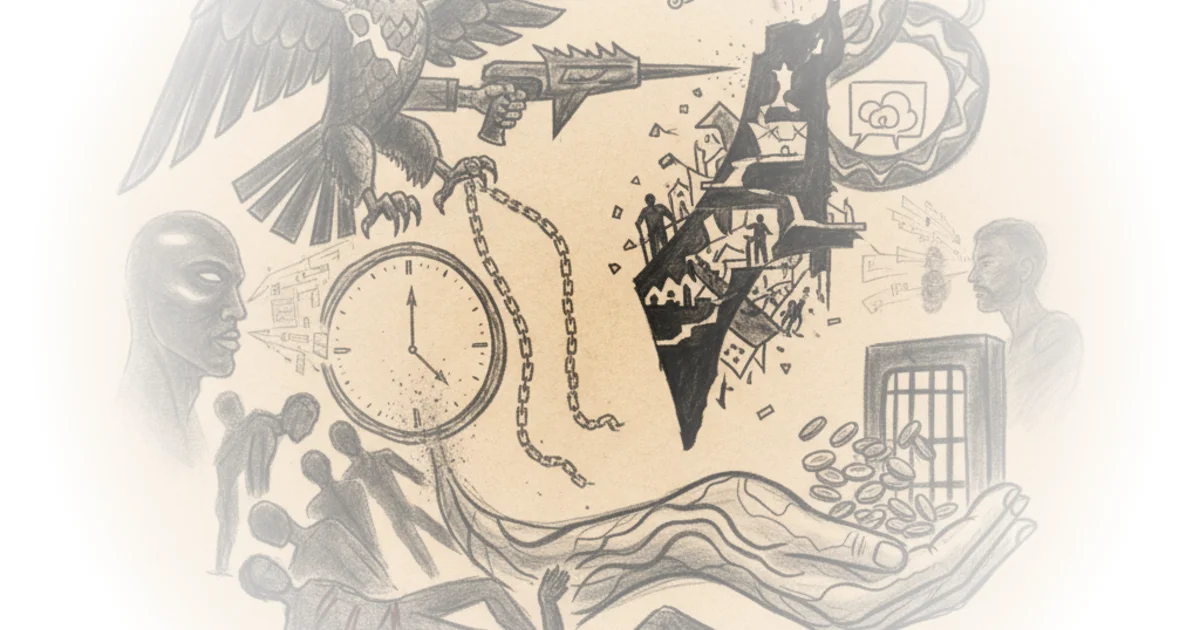
The authors highlight the reaction of House Foreign Affairs Committee ranking member Gregory Meeks, who noted that the administration has "repeatedly isolated Congress from its Gaza policy." This isolation is not accidental; it is structural. The commentary suggests that when the executive branch treats Congress as an obstacle rather than a partner, the result is a foreign policy devoid of democratic accountability. Critics might argue that rapid arms transfers are necessary for immediate defense, yet the lack of documentation provided to justify this bypass undermines any claim of urgency or necessity.
"The administration has repeatedly isolated Congress from its Gaza policy, and criticized Secretary of State Marco Rubio for providing no documentation to justify bypassing the review process."
The human cost of this procedural shortcut is immediate and measurable. Grim and Scahill detail that "at least 32 Palestinians were killed on Saturday as Israeli forces carried out sustained airstrikes and artillery fire across Gaza," including a "three-year-old child in Al-Mawasi, who was killed by machine gun fire from an Israeli gunboat." The authors do not let the reader look away from these specifics. They juxtapose the cold mechanics of a billion-dollar deal with the warmth of a child's life extinguished, creating a moral dissonance that is difficult to ignore.
The Illusion of Ceasefire and the Reality of Administration
The piece dismantles the narrative of a functioning peace agreement. Grim and Scahill report that "since October 11, the first full day of the ceasefire, Israel has killed at least 526 Palestinians in Gaza and wounded 1,447, while 717 bodies have been recovered from under the rubble." The authors point out that the Rafah crossing, often touted as a lifeline, has been reduced to a "largely symbolic development," opening for only six hours a day to allow a mere 50 medical evacuees to leave.
This section of the reporting draws a sharp contrast between the diplomatic theater and the humanitarian catastrophe. The authors note that "health authorities have said at least 1,268 Palestinians have died in Gaza while waiting for medical transfer after Rafah was closed by Israel in 2024." The framing here is critical: the blockade is not a passive absence of aid but an active policy choice with lethal consequences. The administration's proposal to have the UAE run Gaza's civilian administration is presented not as a solution, but as a mechanism to "sideline Palestinian authority" and impose a "foreign-run civilian system."
As Grim and Scahill put it, "Hamas said it held intensive discussions with mediators and international parties to condemn Israel's continued ceasefire violations and attacks across Gaza, warning the agreement cannot hold unless Israel is compelled to comply." This quote underscores the fragility of the truce; it relies on the compliance of a party that the authors argue is actively violating its terms. The administration's push for a "New Gaza" managed by foreign powers and private security firms echoes the failed state-building experiments of the past, raising questions about whether this model can ever succeed without genuine Palestinian consent.
Geopolitical Chess and Nuclear Shadows
Beyond the immediate conflict, the authors weave in broader geopolitical tensions that threaten to destabilize the entire region. The piece notes that the "Trump administration has told Iran through multiple channels that it is ready to negotiate, even as the United States builds up forces in the Gulf, raising the risk of escalation." This dual-track approach—diplomacy paired with military posturing—creates a volatile environment where miscalculation is always a risk.
The authors connect this current tension to the fragility of the New START treaty, the last remaining limit on U.S. and Russian nuclear weapons. They describe a poster warning of the treaty's expiration, quoting a past administration figure who claimed it was "not an agreement you want expiring." This historical reference serves as a grim reminder of how quickly arms control frameworks can erode. If the executive branch is willing to bypass Congress on arms sales to Israel, the long-term stability of nuclear treaties becomes even more precarious.
Furthermore, the reporting touches on the entanglement of private wealth and public policy. Grim and Scahill reveal that a UAE investor "secretly bought a 49 percent stake in the Trump family's crypto venture World Liberty Financial for $500 million in January 2025." This financial link between the UAE and the U.S. executive branch complicates the narrative of impartial mediation. When the mediators have deep financial stakes in the administration, the integrity of the peace process is inevitably called into question.
"The deal, signed just months before Washington approved major U.S. AI-chip access for the UAE, made Tahnoon's vehicle the firm's largest shareholder and placed G42 executives on its board alongside President Trump and U.S. envoy Steve Witkoff family members."
The authors also highlight the admission of a former Biden adviser, Phil Gordon, who acknowledged that "the United States violated U.S. law to continue funding Israel's war effort." This admission from within the previous administration suggests a bipartisan continuity in the disregard for legal constraints when it comes to military aid. It reinforces the argument that the bypassing of Congress is not a temporary anomaly but a systemic feature of current U.S. foreign policy.
Bottom Line
Ryan Grim and Jeremy Scahill have constructed a narrative that is as damning as it is necessary, exposing the chasm between the administration's diplomatic posturing and the lethal reality of its military policies. The strongest part of their argument is the relentless focus on the human cost, refusing to let the reader get lost in the abstraction of geopolitics. However, the piece's vulnerability lies in the sheer scale of the systemic issues it identifies; by highlighting so many failures—from the Rafah blockade to the nuclear treaty expiration—it risks overwhelming the reader with a sense of inevitability. The critical takeaway is that without a fundamental shift in how the executive branch interacts with Congress and the international community, the cycle of violence and legal bypasses will only accelerate.