Karim Zidan delivers a startling thesis: the modern fusion of mixed martial arts and American politics has evolved from mere endorsement into a sophisticated machinery for consolidating power. This isn't just about a president liking a sport; it is a structural analysis of how the Ultimate Fighting Championship, under specific leadership, became a primary vehicle for a political agenda that prioritizes spectacle over democratic norms.
The Cage on the Lawn
Zidan opens with a vivid, almost dystopian visualization to ground the stakes of this political merger. "It's a humid summer night in Washington, DC... a steel cage now stands, its black mesh and bloodied canvas contrasting against the white columns of the Executive Mansion." This imagery is not hyperbole but a preview of a planned event that Zidan argues represents the "culmination of Donald Trump's fusion of sports, politics, and spectacle." The author's choice to describe the White House lawn as a stage for violence rather than diplomacy forces the reader to confront the erosion of institutional dignity.
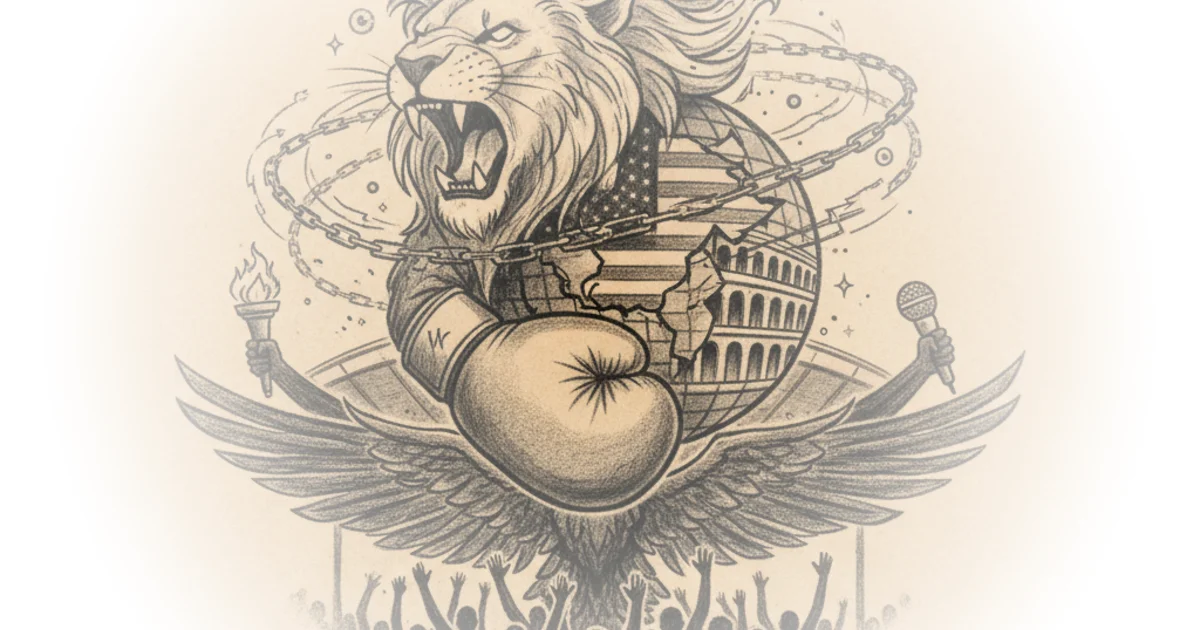
The core of Zidan's argument rests on the agency of the sports executives themselves, rather than passive political opportunism. He writes, "Make no mistake about it: the UFC helped put Trump back in the White House." This is a bold claim that shifts the blame from the politician to the ecosystem that enabled him. Zidan details how the administration leveraged the UFC to "portray himself as a symbolic strongman," tapping into a demographic that traditional politics often ignores. Critics might argue that attributing an election victory solely to a sports league overstates the influence of entertainment, yet Zidan provides a compelling map of the specific mechanisms—rallies, endorsements, and media access—that made this influence tangible.
Trump is not only reshaping the role of sports in American life but also the broader fabric of U.S. society and politics.
The Architects of the New Order
Zidan moves beyond the athletes to dissect the corporate machinery driving this relationship, focusing on Ari Emanuel, the CEO of Endeavor. The author notes that despite Emanuel's Democratic registration, he "maintained a friendly rapport with Trump that has endured well into the political arena." Zidan's reporting highlights a crucial, often overlooked dynamic: the rightward shift of major sports properties is not accidental but a strategic business decision by leaders who prioritize access and influence over ideological consistency. Under this leadership, the UFC and World Wrestling Entertainment have become "cultural powerhouses" that increasingly amplify specific political narratives.
The analysis extends to the media amplifiers, specifically Joe Rogan. Zidan describes how Rogan, once critical, flipped his stance to host a "three-hour marathon conversation" that reached over 50 million views. The author argues that Rogan's power lies in his ability to make his audience "highly receptive to Trump's rhetoric," effectively acting as a kingmaker. "By amplifying Trump through his podcast, Rogan didn't just shape conversation—he helped shift perceptions, energize voters, and influence the outcome of the 2024 election." This framing is effective because it identifies the specific cultural bridge that allowed political messaging to bypass traditional gatekeepers.
However, the piece also touches on the international dimension, citing FIFA President Gianni Infantino. Zidan points out that Infantino's friendship with the administration lent "international legitimacy" during a period of trade disputes. While this strengthens the argument about global networking, a counterargument worth considering is whether these international figures are genuinely endorsing a political ideology or simply pragmatic actors seeking to secure hosting rights and financial stability for their organizations. Zidan leans toward the former, suggesting a deep ideological alignment that may oversimplify the transactional nature of sports diplomacy.
The Cost of Spectacle
The commentary culminates by addressing the broader implications of this fusion. Zidan warns that "no previous U.S. president has embedded himself so deeply in the nation's sporting life, especially to consolidate power, amplify culture-war narratives, and erode democratic norms." The author's focus on figures like Conor McGregor, who used the White House visit to "legitimize his standing among conservatives," illustrates how sports personalities are being repurposed as political assets. This is not merely about popularity; it is about the "laundering" of reputations and the propagation of an "authoritarian-leaning" agenda.
The piece effectively argues that the sports world has become a "living museum" where history is rewritten through the lens of power. Zidan's assertion that the administration is "leveraging the UFC to stage arguably the biggest example of sports propaganda in American history" serves as a stark warning. The human cost here is the degradation of the public square, where the line between entertainment and governance blurs, leaving citizens to navigate a landscape where truth is secondary to the spectacle.
Bottom Line
Zidan's strongest contribution is the detailed mapping of the corporate and media network that actively constructed this political reality, moving beyond personality cults to expose the machinery of influence. The argument's vulnerability lies in its tendency to view all participants as purely ideological actors, potentially underestimating the role of pure financial pragmatism in driving these alliances. Readers should watch for how these sports-political entanglements evolve as the administration attempts to institutionalize these spectacles into permanent fixtures of American governance.