Dan Snow doesn't just debunk the romanticized myth of the Peaky Blinders; he dismantles the very architecture of the popular narrative, revealing a violent, disorganized reality that the Netflix series deliberately obscured. By stepping away from the stylized flat caps and razor blades, Snow exposes a gritty history of Birmingham's working poor, where survival, not style, dictated the brutal existence of street gangs in the late 19th century. This is essential listening for anyone who wants to understand the true social fabric of the Industrial Revolution, stripped of its cinematic sheen.
The Myth of the Razor Blade
Snow's most striking contribution is his forensic rejection of the franchise's most iconic visual: the razor blade sewn into a cap. He argues that this detail is not just inaccurate, but physically impractical. "It was a myth," Snow states flatly, demonstrating how a cap would need to be folded and manipulated to even attempt a strike, rendering it useless in a real fight. Instead, he points to the actual tools of the trade: boots, knives, bricks, and the belt. "These had heavy buckles and they would slash and slash vicious fighting," he explains, noting that the belt was the primary weapon, wrapped around the wrist to maximize impact.
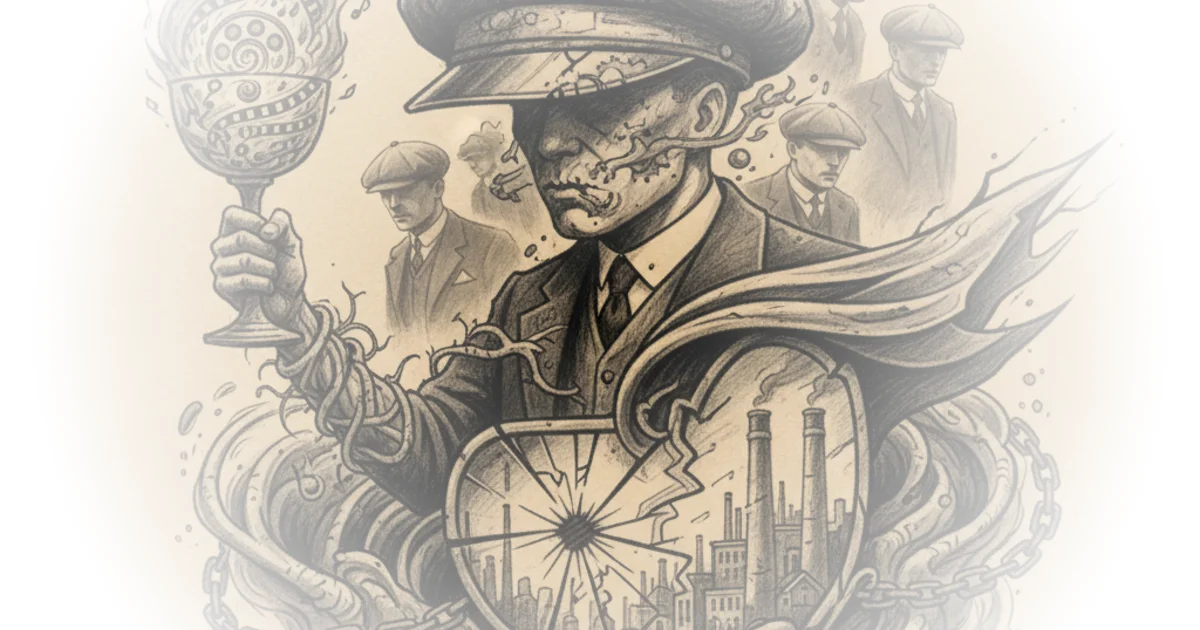
This correction is vital because it shifts the focus from a fantastical, almost superhero-like capability to the desperate, improvised violence of the era. The author emphasizes that the real gang members were not the cool, calculating anti-heroes of the screen. "They were not Robin Hood characters. They were violent thugs," Snow asserts, highlighting that their violence was often directed inward, bullying the very poor communities they lived among. Critics might argue that the romanticization serves a necessary cultural function, allowing modern audiences to engage with history through a compelling narrative, but Snow's insistence on the lack of honor among these men provides a necessary moral grounding.
"They were not anti-heroes. They were not Robin Hood characters. They were violent thugs."
Fashion as a Weapon of Intimidation
The commentary then pivots to the visual identity of the gangs, dismantling the flat cap trope in favor of the "Billy bonnet." Snow describes a specific, terrifying fashion choice: a hard-brimmed hat pulled forward to cover one eye, worn by men with a distinct "skin head" haircut save for a single quiff at the front. "They would pull the brim forward like a funnel," he notes, explaining that the wetted hat was shaped to obscure vision and intimidate opponents. This was not merely aesthetic; it was a psychological tactic. "It's a fashion statement, but he marks them out as peaky blinders," Snow observes, noting that the hairstyle was a badge of membership that outsiders would not dare to mimic.
This detail connects the Birmingham gangs to a broader national phenomenon of youth hooliganism. Snow contextualizes the Peaky Blinders within a wider landscape of urban unrest, noting that similar groups existed under different names: "Scuttlers" in Manchester and Salford, "cornermen" in Liverpool, and "street ruffians" in London. The term "hooligan" itself, he points out, emerged from a violent bank holiday in August, becoming a generic term for these street gangs. By linking these groups, Snow illustrates that the Peaky Blinders were not a unique anomaly but part of a systemic failure to manage rapid urbanization and poverty.
The Architecture of Despair
Perhaps the most profound section of Snow's analysis is his reclamation of the word "slum." He challenges the derogatory connotation, arguing that the term was originally neutral, describing an area of bad housing, before becoming an insult to the residents. "My mom was very proud to be... a Backstreet Wench," he shares, reclaiming the identity of the working class. He details the horrific living conditions in Birmingham, where 44,000 back-to-back houses crammed 200,000 people into spaces with no gardens, shared toilets, and walls so thin they offered no privacy. "There's more dirt in the mortar than there is anything else," he describes, painting a picture of an environment that forced people out of their homes and onto the streets.
The sheer density of these neighborhoods is staggering. Snow notes that in areas like Small Heath and Ladywood, families of twelve might share a single room. "Can you imagine 10 people trying to eat round?" he asks, forcing the listener to visualize the claustrophobia. This context is crucial because it explains the why behind the gang violence. The lack of space, the stench of the shared "suff" (drain), and the absence of safe play areas meant that the street became the only place for social interaction and, inevitably, conflict. As Snow puts it, "it's these sorts of conditions that limit any opportunity to just relax... and it forces them out of these conditions into the street."
Bottom Line
Dan Snow's greatest strength lies in his refusal to let the cinematic glamour of the Peaky Blinders obscure the brutal reality of 19th-century Birmingham. His argument is most compelling when he connects the specific fashion choices and weaponry of the gangs to the desperate, overcrowded environment that bred them. The piece's only vulnerability is its reliance on oral history and police accounts from the 1920s to describe events from the 1890s, which may lack the granularity of contemporary court records. However, for the busy reader seeking a grounded understanding of the era, Snow delivers a powerful corrective to the myth, proving that the real story of the Peaky Blinders is far more tragic, and far more human, than any drama could capture.