Freddie deBoer delivers a scathing critique of how modern commerce has sterilized queer identity, arguing that we have traded the raw, risky power of actual desire for a sanitized, marketable abstraction. In an era where the entertainment industry treats queerness as a demographic checkbox rather than a lived reality, deBoer contends that the most damaging trend isn't the erasure of gay people, but the erasure of their humanity through a lens of "sexlessness" that caters to straight comfort. This is not a nostalgic plea for the past, but a sharp diagnosis of why contemporary culture feels so hollow, even when it claims to be celebrating liberation.
The Commodification of the Abstract
DeBoer opens his assault on the current cultural moment by dissecting the promotional machinery surrounding the Wicked film, specifically the manufactured chemistry between Cynthia Erivo and Ariana Grande. He argues that the industry has perfected the art of "queerbaiting" without the substance, creating a scenario where "vaguely nice" interactions are sold as profound romantic entanglements to a gullible audience. "Let's set aside for the moment that there has absolutely, 100%, undeniably been multiple meetings in the marketing department at Universal Pictures where they conspired to make the world's most gullible people think that there's some sort of romantic entanglement," deBoer writes, highlighting the cynicism behind the scenes. This framing is effective because it strips away the romanticized narrative fans construct, revealing the cold transactional nature of the publicity machine.
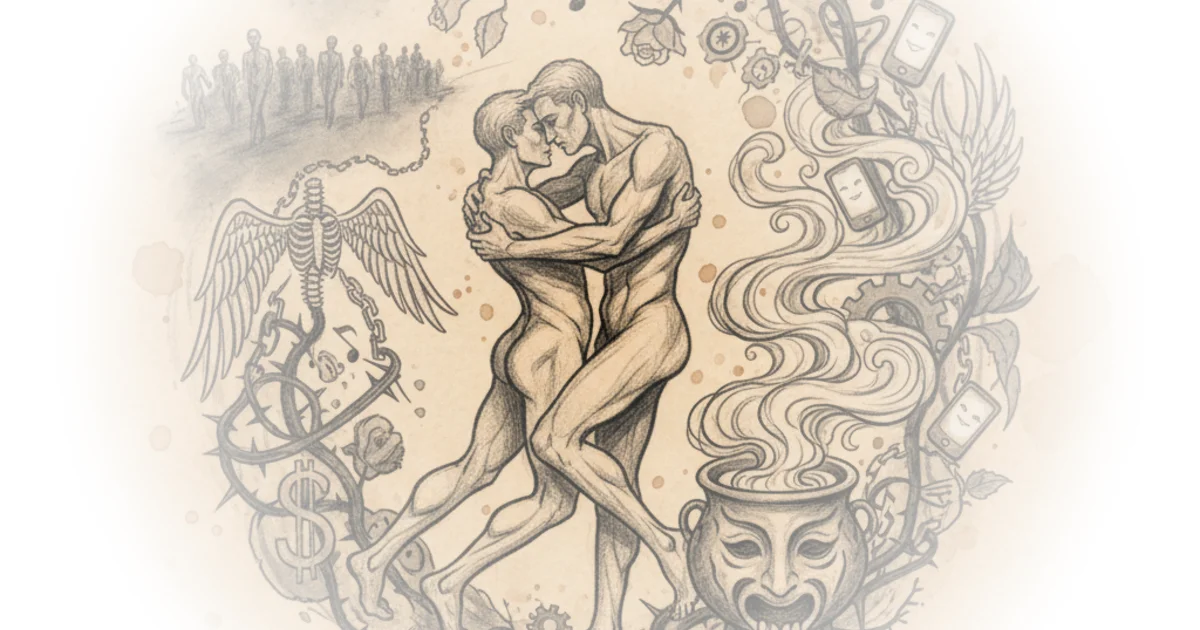
The author suggests that this phenomenon has created a culture where people "love everything about queer life except for queer sex," preferring an abstraction that poses no threat to the status quo. He notes that "gay culture amounts to a bunch of Disney Adults peppering their online presence with 24-hyphen font declarations of their various orientations and identities but who otherwise seem offended by the fact that human beings live in fleshy corporeal hormone-laden bodies." This observation cuts deep, suggesting that the current iteration of LGBTQ+ visibility is often a performance of identity that actively rejects the biological and messy reality of desire. Critics might argue that deBoer overlooks the genuine joy many find in non-sexual expressions of queer community, but his point stands that the dominant commercial narrative has become dangerously detached from physical reality.
Anyone and anything can be gay, now, because gay is just a set of pompous liberal cultural signifiers that have no earthly material relation to homosexuals.
The Bifurcation of Desire
DeBoer extends his critique to the representation of gay men, using actor Bowen Yang as a case study for the "sexless" celebrity archetype. He argues that the old stereotype of the "predacious, lecherous gay guy" has been replaced by a "harmless stuffed animal" figure, a shift that mirrors the historical trajectory of the gay rights movement which often prioritized being "safe" over being radical. He recalls the old debate about Sesame Street characters, noting that "the assertion of gay rights became inherently an assertion of gay harmlessness," a strategy that secured acceptance at the cost of erasing the erotic. This historical context is crucial; it reminds readers that the current "clean" image was a political calculation, not an organic evolution of culture.
However, deBoer argues that this sanitization has created a toxic binary. On one side, there is the "Hallmark Channel Ken doll" version of gayness, and on the other, a "meat-market desensitization" characterized by joyless, scheduled promiscuity. He points to recent coverage of New York's "Peak Gay Sluttiness" summer, describing it not as liberation but as "an endless circuit of meaningless hookups, pharmacological numbing, and pornified compulsions that are somehow treated as radical even though everyone involved looks miserable." The author's distinction here is vital: he is not condemning sex, but rather the mechanization of it. He writes, "The problem with regular gay group sex is not the 'gay' nor the 'group' but rather the 'regular' - the problem is that these sex parties are to be expected." By framing scheduled, algorithmic sex as a loss of humanity, deBoer challenges the reader to reconsider what true sexual freedom looks like.
Critics might note that deBoer's dismissal of modern hookup culture risks sounding like a moralizing elder generation, yet his specific focus on the loss of risk offers a compelling psychological insight that transcends generational judgment. He suggests that the very predictability of modern encounters strips them of their erotic power, turning intimacy into a transaction.
The Death of Risk and the Rise of AI
The piece culminates in a broader philosophical argument about the nature of attraction itself. DeBoer posits that "eroticism, like romance and seduction, cannot exist without risk," and that the modern generation's fear of uncertainty has killed the possibility of genuine connection. He contrasts the human experience with the rise of AI partners, stating, "if they can't say no, there is no validation in their saying yes." This is a profound insight into why algorithmic relationships feel empty: they remove the terrifying, necessary gamble of asking another human being for affection.
He argues that the "fear that attends asking someone to like you back is the exact same emotion as the pleasure you feel when they say yes," and that these two feelings are "inextricable." By removing the risk of rejection, we also remove the possibility of true desire. This argument resonates deeply in a time when dating apps and social media have created a culture of curated safety, where the "unknown" is treated as a danger to be managed rather than a space for discovery. DeBoer's conclusion is that we have built a world where we are safe, but in doing so, we have made ourselves incapable of being truly alive in our relationships.
The fear that attends asking someone to like you back is the exact same emotion as the pleasure you feel when they say yes.
Bottom Line
DeBoer's most powerful contribution is his identification of the "sexless" compromise as the primary casualty of mainstream LGBTQ+ acceptance, arguing that we have traded the messy, dangerous reality of desire for a safe, marketable brand. While his critique of modern hookup culture may feel harsh to some, his central thesis—that the removal of risk and uncertainty has sterilized our capacity for true erotic connection—is a necessary and uncomfortable truth. The biggest vulnerability in his argument is a potential over-reliance on a romanticized past, but his warning that we are building a culture of "harmless stuffed animals" and "robotic promiscuity" demands immediate attention from anyone invested in the future of human intimacy.