"In nuclear war, all men are cremated equal," a line Doomberg opens with to set a grim, unflinching tone for a piece that refuses to treat Russia's military posturing as mere bluster. This analysis is notable because it pivots sharply from the usual geopolitical shouting match to a cold, hard assessment of industrial reality: while the world fixates on rhetoric, Russia's state-owned nuclear giant, Rosatom, has quietly secured a stranglehold on the global energy supply chain that the West is only now realizing it cannot easily break.
The Shadow of the Skyfall
Doomberg does not mince words regarding the terrifying capabilities Russia claims to have deployed, framing them not as triumphs but as existential threats that render current defense systems obsolete. The author cites the October 21 announcement of the Burevestnik cruise missile, noting that "the missile was airborne for 15 hours and flew 8,700 miles during the test." This is followed by the revelation of the Poseidon torpedo, described by Doomberg as a "65-foot-long nuclear death machine capable of triggering massive and radioactive tsunamis toward coastlines all over the world."
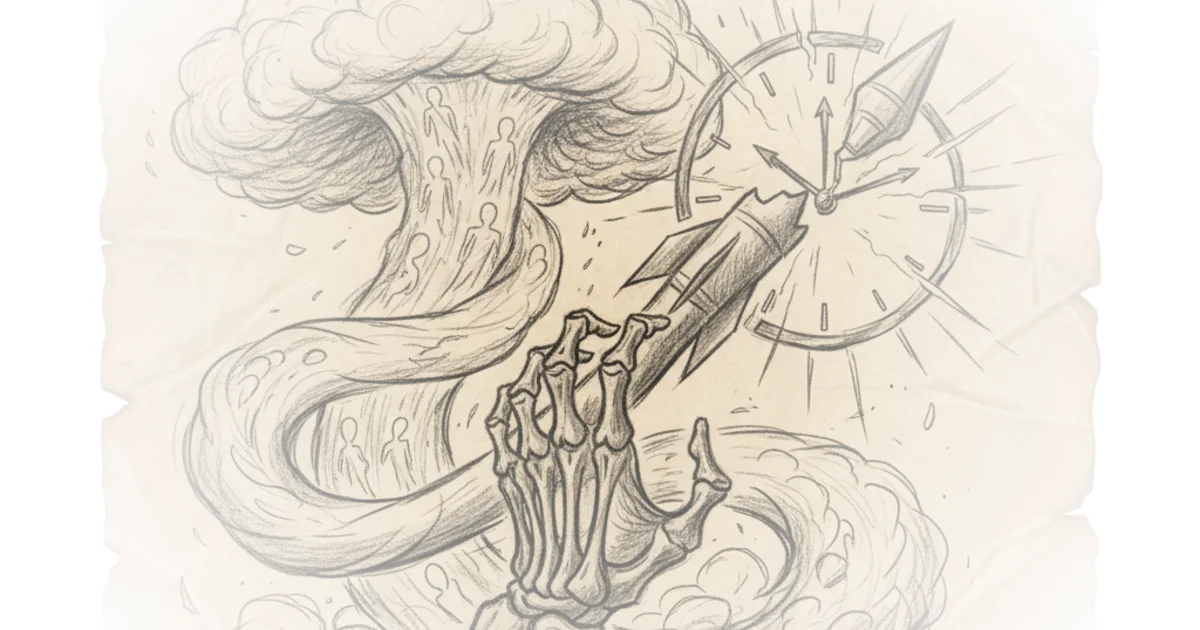
The commentary here is heavy with the weight of potential human catastrophe, correctly identifying that these are not just weapons of war but instruments of global environmental destruction. Doomberg writes, "There are no known defenses against the technology," a stark assertion that forces the reader to confront the vulnerability of modern coastlines. While the military claims are ominous, the author wisely suggests that the true story lies not in the weapons themselves, but in the industrial capacity that built them.
"Whether you take these military claims at face value, there is no denying that Russia's civilian nuclear energy sector is world-class."
This pivot is the piece's most effective move. By separating the horror of the Poseidon torpedo from the mundane reality of power plants, Doomberg highlights a dangerous irony: the same state apparatus capable of unleashing radioactive tsunamis is also the primary engine keeping the lights on in the West.
The Rosatom Reality Check
The core of the argument rests on the sheer dominance of Rosatom in the global market, a fact Doomberg illustrates by detailing the company's footprint from Egypt to the United States. The author points out that on the very day Russia announced the Burevestnik test, Rosatom delivered a reactor pressure vessel for the El-Dabaa plant in Egypt, a project that "will be Egypt's first nuclear power plant, and the first in Africa since South Africa's Koeberg was built nearly 40 years ago."
Doomberg emphasizes the depth of this dependency, noting that under the 2017 contracts, Rosatom will "supply Russian nuclear fuel for its entire life cycle, including building a storage facility and supplying containers for storing used nuclear fuel." This is a critical detail often missed in headlines; it is not just about building the reactor, but about controlling the fuel cycle for a century. The author writes, "Rosatom said last month that it is aiming for a future service life of 100 years for nuclear power plants," a timeline that locks nations into Russian infrastructure for generations.
The argument gains further traction when Doomberg contrasts this with the American situation. The author notes that "despite the ongoing war in Ukraine and endless sanctions against Russia, Rosatom remains the largest foreign supplier of enriched uranium to the US, providing roughly a fifth of the fuel used to keep America's fleet of nuclear reactors running." This creates a jarring dissonance: the administration is sanctioning a nation while simultaneously relying on its most critical energy inputs.
Critics might argue that the author overstates the immediacy of the threat, suggesting that the US could pivot to other suppliers faster than implied. However, Doomberg counters this by highlighting the stagnation of Western competitors. The text points out that "Canadian-owned Westinghouse... has only a handful of its AP1000 reactors under construction, and all are in China," while plans in Poland, Bulgaria, and Ukraine have "yet to commence."
"Such is the hand US President Donald Trump and his team were dealt upon their return to power, and—to their credit—they seem to recognize the urgency of both the civilian and military nuclear power deficiencies."
Here, the commentary shifts to the political response, framing the situation as a structural crisis rather than a personality-driven one. Doomberg suggests that behind the noise of political posturing, there is a "steely resolve to do whatever is necessary to return the US to global preeminence in nuclear power." This reframing is crucial; it moves the conversation away from individual leaders and toward the institutional capacity required to rebuild a shattered industrial base.
The Bottom Line
Doomberg's strongest contribution is the unvarnished exposure of the West's strategic vulnerability: the very nation threatening to rain radioactive tsunamis on the world is currently indispensable to its energy security. The argument's greatest vulnerability lies in its reliance on the assumption that the US administration can rapidly reverse decades of industrial atrophy without significant economic pain or diplomatic fallout. The reader must now watch not for the next missile test, but for the next announcement regarding domestic uranium enrichment capacity, as that is the only metric that truly matters.