Devin Stone cuts through the noise of political posturing to expose a startling reality: the executive branch is attempting to bypass Congress and the Constitution to seize direct control over American elections. While the narrative often fixates on rhetoric, Stone brings a specific, leaked 17-page draft executive order into the light, arguing that the administration is weaponizing emergency powers to solve a problem that statistical audits show barely exists. This is not just political theater; it is a structural challenge to the federalist design that has governed American elections for over two centuries.
The Constitutional Mismatch
Stone's most compelling move is grounding the entire controversy in the text of the Constitution, specifically Article One. He writes, "The Constitution's elections clause vests the power to run elections in two separate entities... Note that the Constitution gives the president exactly zero role in administering or certifying elections." This is a crucial distinction that often gets lost in the heat of the moment. The author reminds us that this omission was intentional; the founders, having just fought a war against a monarch, deliberately denied the executive branch the power to dictate how the people vote.
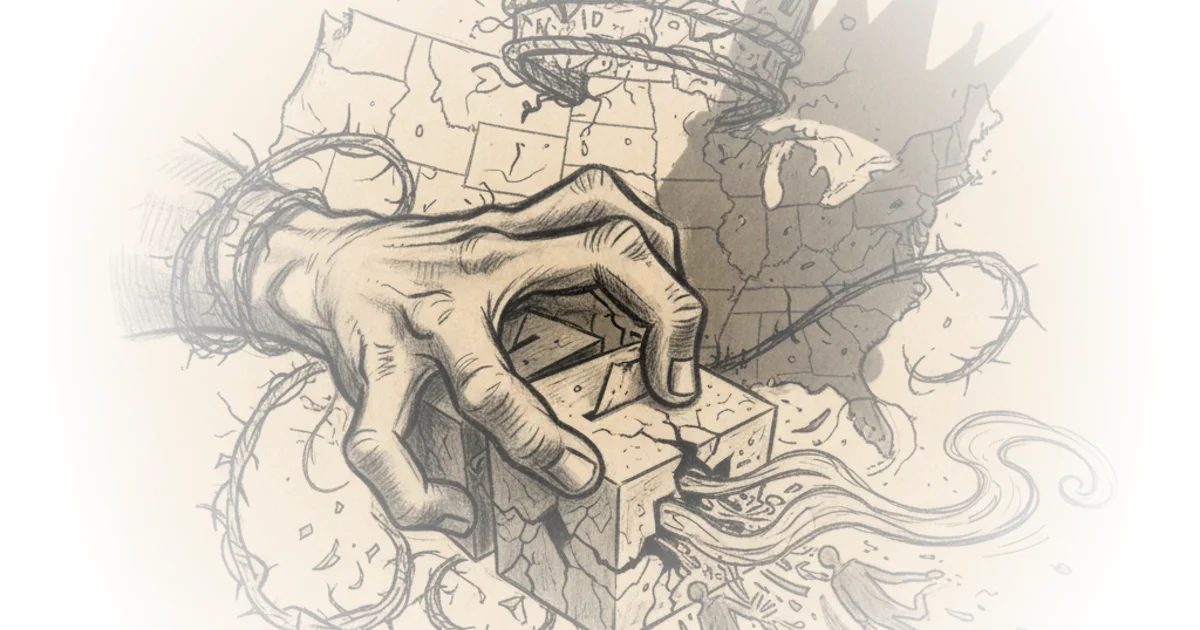
The argument gains weight when Stone contrasts this historical intent with current actions. He notes that while Congress has passed statutes like the National Voter Registration Act of 1993, these laws were "enacted to make it easier to vote, not harder." By flipping the script to use federal authority to restrict access, the administration is not just changing policy; it is inverting the legislative history of the last sixty years. Critics might argue that the executive branch has always had some latitude in enforcing federal law, but Stone effectively counters this by pointing out that every single prior federal intervention was designed to expand, not contract, the franchise.
The framers of our Constitution recognized that power over election rules could be abused either to destroy the national government or to disempower the people from acting as a check on their elected representatives.
The Myth of the Emergency
The commentary then dismantles the justification for these sweeping changes: the alleged crisis of voter fraud. Stone presents a stark reality check, stating, "There is no plague of voter fraud, and the instances of non-citizen voting are vanishingly rare." He cites a 2025 audit of Michigan's 7.2 million voters that found only 15 suspected non-citizens, a rate of 0.000028%. This data-driven approach strips away the emotional panic the administration relies on to justify extraordinary measures.
Stone argues that the proposed solutions are wildly disproportionate to the problem. "That's like trying to take out a mosquito with a rocket launcher," he writes, a vivid metaphor that captures the absurdity of disenfranchising millions to stop a handful of hypothetical bad actors. The author highlights how the administration is using a "lie about foreign interference" as a pretext to seize control, a tactic that echoes historical patterns of using national security fears to erode civil liberties. The sheer scale of the proposed restrictions—requiring passports or birth certificates for registration—suggests that the goal is suppression, not security.
The SAVE Act and the Bureaucratic Trap
The piece shifts to the legislative vehicle for these changes: the Safeguard American Voter Eligibility Act, known as the SAVE Act. Stone explains that under this law, voters would need specific, hard-to-obtain documents like a passport or a military ID with a service record showing US birth. He points out the demographic reality: "About 50% of Americans don't have a passport," and over 21 million citizens would struggle to provide the required proof.
The author shines a light on the practical nightmare this creates for specific groups, noting that "married women often take their husband's name," leading to mismatches between birth certificates and driver's licenses. Stone critiques the proposed "fail-safe" affidavit as a bureaucratic hurdle that would deter rather than help. "I don't think you'd be so cavalier about 65 million married men having to sleuth down to the courthouse... and fork over cash for a certified copy of their marriage licenses," he writes, exposing the class and gender biases embedded in the policy.
Furthermore, Stone warns of the chilling effect on election officials. The SAVE Act makes it a crime for a registrar to register someone without perfect documentation and allows private citizens to sue them. "Are you going to risk getting sued or even going to jail to ensure that the person gets registered to vote?" he asks. This creates a perverse incentive for officials to reject registrations rather than risk legal peril, effectively shutting the door on millions of legitimate voters.
We are living through a very odd moment where the president is using laws designed to make it easier to vote to make it harder to cast a ballot.
Executive Fiat vs. Judicial Reality
Finally, Stone addresses the administration's threat to bypass Congress entirely if the SAVE Act fails. He quotes the president's claim that he will present "irrefutable" legal arguments for an executive order, but Stone dismisses this as a fantasy. He invokes Shakespeare's Henry IV, noting that while the president can "call spirits from the vasty deep," the question is whether they will come. "The president can only do things the law empowers him to do," Stone asserts, reminding readers that executive orders are not binding on state officials who run the actual elections.
The commentary highlights the role of the judiciary as a check on this overreach, citing Judge Colleen Keratelli's blocking of similar citizenship requirements. Stone argues that the administration's strategy relies on a conspiracy theory of legal interpretation, one that suggests the president can unilaterally rewrite the rules of democracy. "It's like a sequel to National Treasure," he quips, mocking the idea that a secret clause in the Constitution grants the president absolute power over elections.
Bottom Line
Devin Stone's analysis is a masterclass in separating political theater from constitutional reality, effectively demonstrating that the administration's election plan is a solution in search of a problem. The strongest part of the argument is the rigorous application of historical context and statistical data to debunk the fraud narrative, while its biggest vulnerability lies in the unpredictability of how the courts will ultimately rule on these novel executive claims. Readers should watch closely as the administration attempts to enforce these rules on the ground, as the gap between a signed order and a functioning election system is where the real battle will be fought.