Maria Popova's essay braids three lives into a single thread of tragedy and progress: a feminist philosopher who died from childbirth infection, her philosopher husband who loved her against their own principles, and a Hungarian doctor who discovered why mothers died—but was destroyed by the very institution he tried to save.
The Rebellion Against Marriage
Mary Wollstonecraft and William Godwin met at a publisher's dinner in 1791, both famous for attacking the institutions that bound human freedom. Wollstonecraft had just completed A Vindication of the Rights of Woman, demanding justice for "one half of the human race." Godwin had written an eight-book indictment of government, religion, and marriage as oppressive forces.
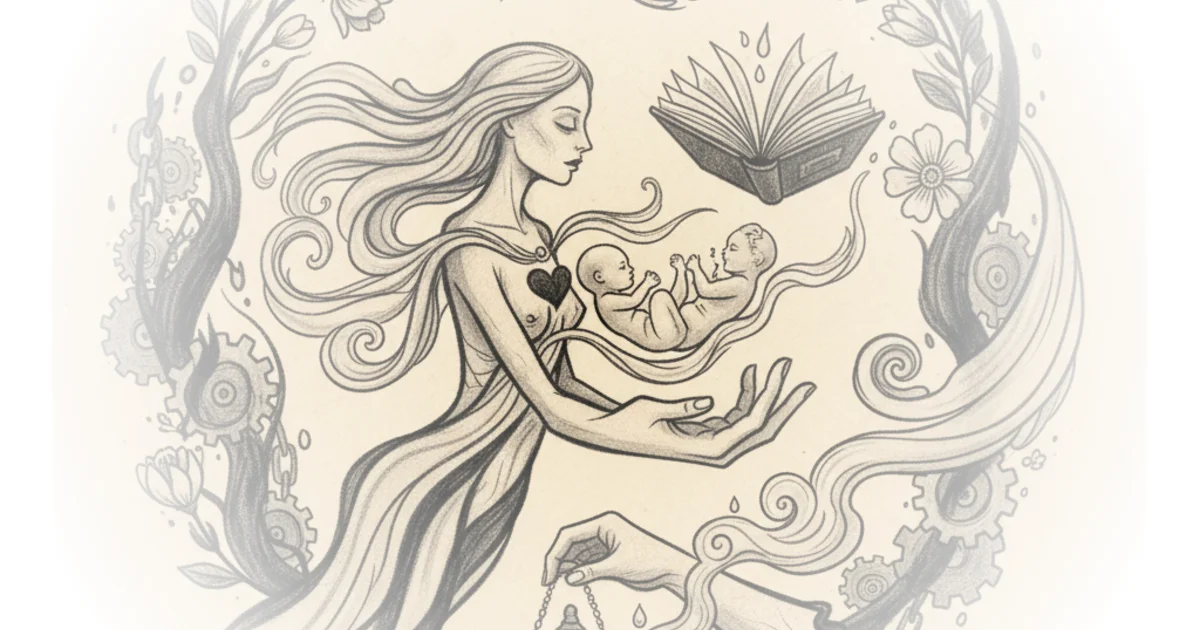
Maria Popova writes, "Marriage, as now understood, is a monopoly, and the worst of monopolies. So long as two human beings are forbidden, by positive institution, to follow the dictates of their own mind, prejudice will be alive and vigorous."
Wollstonecraft's opposition came from lived horror. She had stood sentinel outside her mother's bedroom door to keep her alcoholic father from entering. She watched women trapped in marriages with no escape—only four women obtained divorce in an entire century. Her call for equal education for girls seems banal today. Maria Popova notes, "The luxury of being embarrassed by it — in just five human lifetimes, in a species 7,500 generations old — is the measure of our progress."
Critics might note that Popova romanticizes Wollstonecraft's childhood trauma as the sole origin of her feminism, when her intellectual debt to Paine and the French Revolution was equally formative.
Friendship Melting Into Love
The two philosophers did not fall through "the barn door of animal passion." Love entered through shared ideals. Godwin, introverted and awkward, found Wollstonecraft too eager to dominate conversation with Paine. Yet respect begot friendship begot love.
Maria Popova writes, "It was friendship melting into love."
Godwin discovered "above the gratifications of being admired the gladness of being seen." In his unpublished autobiography, he acknowledged "there is nothing that the human heart more irresistibly seeks than an object to which to attach itself." When he attached himself to Wollstonecraft, it altered him.
"After all one's philosophy it must be confessed that the knowledge that there is some one that takes an interest in one's happiness, something like that which each man feels for his own, is extremely gratifying."
In spring 1797, they married in a churchyard—against their stated credos. They shared a bed and value system but kept separate studies. Their child arrived August 30, 1797. The placenta failed to leave Wollstonecraft's uterus. A surgeon plunged his hands into her flesh. Within hours, she shivered with savage fever.
The Cadaver Particles
Fifty summers later, Vienna General Hospital faced a medical mystery. Young women died by the legion after childbirth. Two maternity wards—one staffed by obstetricians and medical students, the other by midwives. Tenfold more mothers died in the first.
Maria Popova writes, "The bell was a painful exhortation to me to search for this unknown cause with all of my might."
Ignaz Semmelweis, a young Hungarian doctor, catalogued variables. The data told no story. Then his mentor died after a student nicked his finger with a scalpel during dissection. The revelation: doctors dissected cadavers, then touched pregnant women. Their hands transferred "cadaver particles."
Semmelweis implemented chlorine washing. Death counts plummeted. Yet he was a terrible communicator. He called doctors who didn't wash their hands murderers. He was dismissed, grew cantankerous, suffered memory lapses. A colleague lured him to an asylum. He was brutalized, straitjacketed, died from infection contracted from the beating.
Critics might note that Popova's account of Semmelweis's mental decline—possibly Alzheimer's, possibly syphilis—relies on speculation that undermines the precision of her medical history.
Four years later, French scientists discovered the "microbe chains." Pasteur identified them as haemolytic streptococcus. Florence Nightingale's data diagrams persuaded the medical establishment to standardize sanitization. Semmelweis had been right. He had been destroyed.
The Dashes of Grief
Wollstonecraft died ten days after giving birth. Godwin, who had sieged religion with reason, faced loss that unlatched "an emotional trapdoor beneath our firmest cerebral convictions."
Maria Popova writes, "On the day of his beloved's death, this man of factual records could not bring himself to name the fact. All he wrote in the ledger was '20 minutes before 8,' followed by an interminable sequence of dashes suturing the unspeakable."
The dashes stretch across the page: "– — — — — — — — — — — — — — — — — — — — — — — — — — — — — — — — — — — — — — — — — — — — — — — — — — — — — — — — — — — — — — — —"
By evening, he wrote to his oldest friend: "My wife is now dead. She died this morning at eight o'clock… I firmly believe that there does not exist her equal in the world."
Critics might argue that Popova's framing of Godwin's grief as uniquely profound overlooks how his diary's factual style made the dashes more devastating than any eulogy—yet she doesn't fully explore why this restraint matters.
Bottom Line
Maria Popova's essay achieves something rare: it makes historical progress feel personal, not inevitable. Wollstonecraft died from what Semmelweis would prevent. Semmelweis was destroyed by the institution he saved. Godwin's dashes say more than words could. The bittersweet truth: love and respect bloom in the shadow of death, and progress is paid for in lives that never saw it.