Phillips P. O'Brien delivers a stark, unsettling diagnosis of a conflict that is actively eroding American power rather than projecting it. While much of the public discourse focuses on the tactical exchange of missiles, O'Brien argues that the strategic reality is far more dire: the United States is engaged in a self-inflicted war of attrition that is hollowing out its military stockpiles, paralyzing its institutions, and driving regional allies into the arms of its adversaries. This is not a standard military analysis; it is a warning that the current trajectory may permanently degrade America's standing in the Asia-Pacific and the Middle East.
The Myth of Coercive Air Power
O'Brien begins by dismantling the premise that air strikes alone can achieve political capitulation from Tehran. He observes that the administration's strategy relies on a hope that "if he does something, anything, to damage Iran, that the Iranian regime will get the message and give him peace terms that he can sell as 'not a catastrophic loss'." This framing suggests a fundamental disconnect between the means employed and the ends desired. The author argues that without a ground invasion capable of overthrowing the regime—a scenario requiring hundreds of thousands of troops and years of occupation—coercion is impossible.
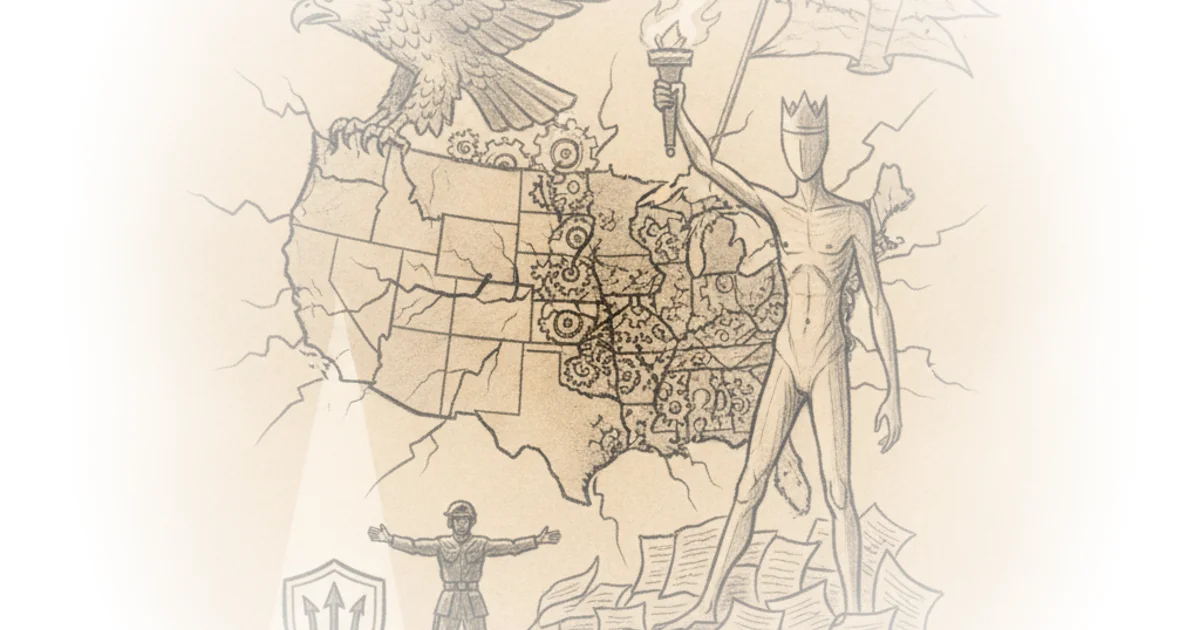
The core of the argument is that the current campaign is functionally useless for its stated political goals. O'Brien writes, "The USA is engaged in a war of choice to defeat itself. It certainly is a special moment." This is a provocative claim, but it is grounded in the logistical reality that air power cannot topple a entrenched government. Critics might note that limited strikes can signal resolve or degrade specific capabilities without full regime change, but O'Brien counters that the specific demands of this conflict—nuclear concessions and open waterways—require a level of regime compliance that bombing cannot force.
The USA is engaged in a war of choice to defeat itself. It certainly is a special moment.
The Hollowing of American Strength
Perhaps the most alarming section of the piece concerns the physical depletion of US military resources. O'Brien cites an anonymous official's grim assessment to the Washington Post: "We do not have enough to safely sustain operations, and I don't think the White House is aware of that." This quote underscores a dangerous gap between the executive branch's operational tempo and the Pentagon's logistical reality. The author highlights that the US had already run its stockpile of advanced anti-air missiles dangerously low before this escalation, and the current exchange is accelerating that depletion.
The commentary suggests that the administration is prioritizing political optics over strategic sustainability. O'Brien notes that the Pentagon is likely aware of the shortage but is "unwilling to do the right thing as that will admit that they have failed." Instead, the strategy relies on the hope that Congress will provide emergency funding to keep the cycle going. This institutional paralysis is compounded by the failure of the legislative branch to invoke the War Powers Act, leaving the executive branch to wage a prolonged conflict without legal or public accountability.
"We do not have enough to safely sustain operations, and I don't think the White House is aware of that."
The "Sideways" Strategy and Regional Fallout
O'Brien introduces a compelling concept he calls "sideways escalation" to describe Iran's response. Rather than engaging the US military directly in a conventional fight they cannot win, Iran is striking the infrastructure and security of US allies. The author details a series of attacks on Qatar, the UAE, Bahrain, Kuwait, and Jordan, noting that these strikes are "far strategically superior to what the US is doing to it." The human cost of this strategy is immediate and severe, with reports of injuries to civilians, including a child in Qatar, and the destruction of critical desalination and power infrastructure in Kuwait.
This approach is effectively turning US partners against Washington. O'Brien argues that these attacks are proving that the US security guarantee is "weaker than once thought." He quotes a US businessperson in the Gulf who warns that the war is causing "the dilution of US influence as it becomes clear that America's security guarantee is weaker than once thought." The strategic fallout is stark: a divided Gulf Cooperation Council (GCC) that is increasingly looking toward China for economic and security partnerships. While the UAE remains a supporter, the broader trend suggests a rapid erosion of trust in American protection.
"The strategic fallout is stark. A divided GCC only strengthens Iran, and China is positioned to capitalize on the erosion of US credibility."
The Long-Term Strategic Cost
The piece concludes by connecting these immediate tactical failures to a broader geopolitical decline, particularly regarding the US position vis-à-vis China. O'Brien asserts that the degradation of US power in the Middle East has reached a point where "the US might never recover" in the Asia-Pacific theater. The argument is that every day the US expends munitions and political capital on a war it cannot win, it weakens its ability to project power where it matters most.
The author's framing is unflinching: the administration is not just failing to win; it is actively aiding and abetting the decline of American global leadership. "When it comes to the Asia-Pacific, that degradation has reached a stage where the US might never recover," O'Brien writes. This is a heavy verdict, suggesting that the current conflict is not an isolated incident but a catalyst for a permanent shift in the global order.
"When it comes to the Asia-Pacific, that degradation has reached a stage where the US might never recover."
Bottom Line
Phillips P. O'Brien's strongest contribution is his rigorous linking of tactical military depletion to long-term geopolitical decline, forcing a reckoning with the idea that "doing something" can be strategically worse than doing nothing. The argument's greatest vulnerability lies in its assumption that the administration is entirely unaware of the logistical limits, a claim that may overstate the separation between the White House and the Pentagon. However, the evidence of crumbling alliances and the human cost of "sideways" escalation on civilian infrastructure provides a sobering counter-narrative to the official line of decisive action.