Helen De Cruz offers a startling reframing of the 2024 global election results: the anti-incumbent backlash wasn't a sudden spike in American selfishness, but the inevitable biological and social hangover of a pandemic that officials declared over before it actually ended. While most analysis fixates on personality or isolated policy failures, De Cruz argues that the root cause is a fundamental disconnect between the political declaration of "victory" and the lingering reality of a sick, exhausted workforce. This is a vital read for anyone trying to understand why voters are turning toward chaos and far-right movements; it suggests the electorate isn't just angry, but abandoned by a social contract that dissolved the moment the virus became inconvenient to manage.
The Biological Reality vs. Political Fiat
De Cruz begins by dismantling the idea that the pandemic was merely a psychological state that could be wished away. She points out a critical error in governance: "You cannot declare a pandemic over by social fiat." The argument is that while the World Health Organization never officially ended the pandemic, governments simply stopped acting as if it existed. This disconnect had tangible, devastating consequences for the labor market. De Cruz notes that "long-term illness leads many people to leave the workforce and this leads to worker shortages, especially in key groups that are vulnerable to repeat covid infection such as teachers and nurses."
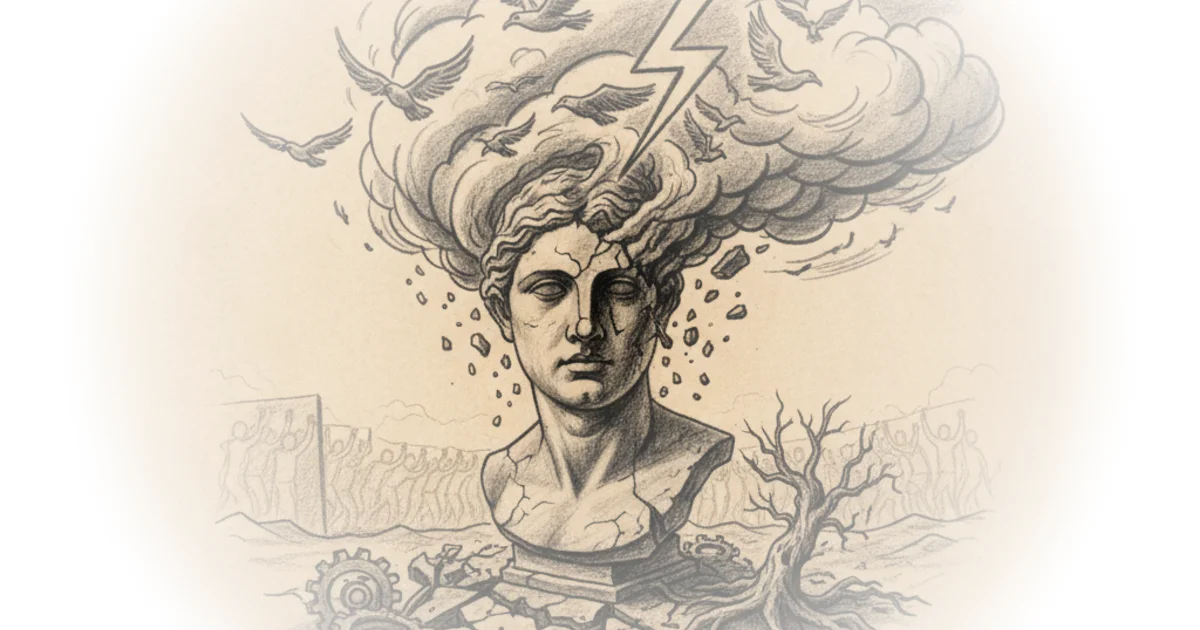
The author connects this directly to the inflation and supply chain issues that have plagued the economy. By refusing to acknowledge the ongoing biological threat, the administration and other incumbent governments "hamstrung any response to address worker shortages, immigration associated with this, and supply chain issues and its associated inflation that are caused by repeat covid infections." This framing is powerful because it moves the blame from abstract economic theories to a specific, unaddressed health crisis. It echoes the lessons from deep dives into Long COVID, where the data shows that one in three UK healthcare workers now suffers from symptoms, a statistic that explains the systemic strain on essential services. Critics might argue that other factors, such as fiscal stimulus or geopolitical conflicts, played a larger role in inflation, but De Cruz's insistence on the biological undercurrent of economic instability offers a necessary corrective to purely financial explanations.
The Abandonment of Collective Care
The piece takes a sharp turn into the moral economy of the pandemic, contrasting the early, anomalous collective responses with the abrupt return to "everyone for themselves." De Cruz highlights how emergency measures, such as prioritizing homeless and incarcerated people for vaccines and providing universal free school meals, were rolled back once the political need for "normalcy" returned. She writes, "The message the US, and other incumbent governments gave with this was very clear: the pandemic is an anomaly. Business as usual is everyone for themselves."
This shift is presented as a deliberate political choice that eroded trust. The author argues that the mainstream media participated in this erasure by "retrospective demonizing of pandemic measures," reducing complex public health strategies to simple "lockdowns" while ignoring the safety nets that were dismantled. As De Cruz puts it, "They conveniently forget to mention other pandemic measures such as healthcare accessibility and free school lunches to make people think that any collective response to a pandemic is bad." The result, she suggests, was a population that felt materially worse off and socially isolated. This connects to the broader theme of the Great Learning, where the author later contrasts this modern abandonment with ancient philosophies of governance that demanded rulers "love the people" as family. The contrast between the brief moment of collective care and the subsequent withdrawal is the emotional core of her argument.
The people are now not anymore the populace governments have to be concerned about and bear responsibility for. They are now reduced to voters, and voters are powerless except at the ballot box.
The Politics of the Dispensable
Perhaps the most provocative section of De Cruz's commentary is her analysis of how the treatment of the vulnerable has fueled the rise of the far right. She argues that when governments signal that it is acceptable for the disabled and long-term ill to "fall by the wayside," they are effectively endorsing a eugenic logic that far-right parties eagerly exploit. "If you have been telling voters for years that it's okay, indeed even the right thing to do, to trample on the vulnerable in pursuit of your own goals, can it be surprising that people straight out vote for parties that center such a message?" This is a bold claim, linking mask bans and the removal of health protections directly to the political success of parties that center on individualism and exclusion.
De Cruz extends this logic to the climate crisis, noting that incumbent governments have failed to address violent weather events while simultaneously criminalizing protests. In this context, she argues, far-right rhetoric becomes attractive not because it is rational, but because it offers an "illusion of control." Citing Bruno Latour, she suggests that these movements are distinct from historical fascism because their central element is "climate change denial." The promise of a nostalgic past, such as the slogan "take back control," appeals to those who feel powerless against both the virus and the changing climate. De Cruz observes that young men, in particular, are drawn to messages of "individual control, individually getting fit and wealthy," which serve as a pipeline to far-right content. This analysis reframes the far-right not just as a political choice, but as a psychological coping mechanism for a population that has been told it is on its own.
Bottom Line
Helen De Cruz's strongest contribution is her refusal to accept the narrative that voters are simply irrational or hateful; instead, she traces their turn toward chaos to a very rational response to a government that failed to protect them from a biological reality. The argument's greatest vulnerability lies in its tendency to treat the pandemic as the singular root of all current political fractures, potentially underweighting the decades-long erosion of the welfare state that preceded the crisis. However, her synthesis of biological data, economic policy, and moral philosophy provides a compelling, if unsettling, lens through which to view the current global political landscape.