This piece from Natural Selections offers a rare, first-person chronicle of how personal grief can morph into a radical, life-altering response to a global crisis. Unlike standard pandemic retrospectives that focus on policy failures or viral statistics, the article traces the psychological arc of a parent who, devastated by loss, sought control through isolation and eventually found a paradoxical freedom on the open road. It is a story not just of a virus, but of how the definition of "safety" can fracture a family and reshape their entire worldview.
The Anatomy of Panic
The narrative begins in the raw aftermath of a mother's death in early January 2020, a timing that Natural Selections notes was "a month of cloudy memories and searing emotions that rushed up so fast and strong that I thought I would faint." The author describes a desperate need to find a tangible problem to solve, leading to a frantic preparation for a biological collapse. The piece reports, "Looking back I realize I was so desperate to cling to anything solvable, anything tangible, that I could sink my intellectual teeth and claws into and forget about the terrible loss." This psychological driver is crucial; it reframes the early prepper behavior not merely as paranoia, but as a coping mechanism for unresolved trauma.
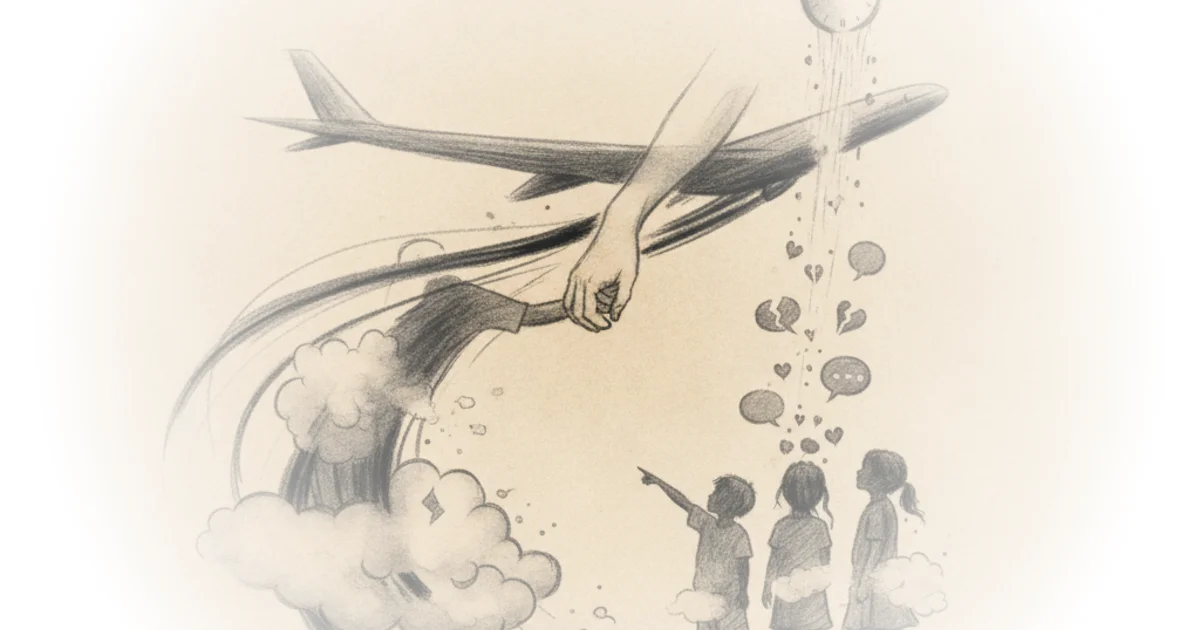
The author's intuition about the virus's severity was sharpened by a medical professional friend who warned, "They are saying it's like SARS again." This reference to the 2003 outbreak of Severe Acute Respiratory Syndrome (SARS) serves as a critical historical anchor. Just as the SARS epidemic of 2002-2003 had a high mortality rate and triggered global panic, the author saw the early reports from China as a precursor to a similar global threat. The author's husband, who had lived in China during that earlier crisis, dismissed the fear, arguing, "China would NEVER allow themselves to lose face like this." This clash of perspectives highlights the difficulty of interpreting early signals when official narratives and personal experience diverge.
"We don't have a government. We have an economy."
The piece argues that the author's initial fear of the virus was quickly overshadowed by a critique of the institutional response. When the author questioned why airports weren't closed, the husband's defense of the political status quo led to the stark realization that "We don't have a government. We have an economy." This line cuts to the core of the article's political critique: the perception that institutional priorities were aligned with financial stability rather than public health safety. Critics might note that this view overlooks the immense logistical and economic complexity of closing borders during a fast-moving pandemic, but the author's point remains that the gap between official reassurance and on-the-ground reality felt insurmountable.
The Road as Sanctuary
As the crisis deepened, the family's response shifted from stockpiling supplies to a complete withdrawal from society. Natural Selections describes the decision to pull their children from school as a moment of "relief," noting, "I couldn't contain my relief after sending that email and knowing we were going into isolation; safe, locked away with everything we needed, for a while." However, the definition of safety soon evolved. When it became clear that remote learning would extend indefinitely, the family decided to leave their home entirely.
The narrative transforms into a travelogue of escape. The author recounts, "On August 15, 2020, we set off from the Carolinas with even our dog in tow in a 31 foot RV toward the golden West." The piece describes this period as a "timeless trance of endless sunny days, desert sunsets and campfires under the stars." This section of the article is particularly striking for its depiction of a family finding agency in a world that felt out of control. The author writes, "To say this epic adventure was an amazing positive in a time of desperation and authoritarianism would be a huge understatement." The term "authoritarianism" here is used to describe the perceived overreach of public health mandates, framing the RV journey as an act of resistance.
"We were all just people living life in the moment, not defined by anyone's standards but our own."
The author contrasts the freedom of the road with the constraints of the pandemic, noting that in national parks and campgrounds, they "barely knew we were even in a pandemic." This observation raises a complex question about the nature of risk and community. While the family felt safe and free, critics might argue that this isolation came at the cost of social cohesion and that the lack of pressure to mask or distance in these settings ignored the broader public health risks. The piece, however, maintains that for this family, the psychological toll of confinement was a greater danger than the virus itself.
The Unresolved Scars
The narrative takes a somber turn as the family returns home in 2021, facing the arrival of vaccines. The author describes the intense social pressure to vaccinate, with friends posting online, "we will be there and we are fully vaccinated!" Yet, influenced by a sister-in-law who claimed the vaccines were dangerous, the family chose to wait. The piece reports the sister-in-law's warning: "They've never been able to get one of those mRNA vaccines to actually work, and they are dangerous." This claim, which contradicts the overwhelming scientific consensus on the safety and efficacy of mRNA technology, is presented as a pivotal moment in the family's decision-making.
The author admits that the family eventually contracted the virus twice, once in late 2021 and again in the summer of 2022. The description of the youngest child's illness is visceral: "As he vomited in my arms, burning with fever, the fear of having made a terrible mistake took hold and nearly made me insane with regret." This moment of vulnerability is the emotional core of the piece. Despite the fear, the author concludes, "I have no regrets in retrospect about not taking those vaccines or allowing them for my children, but I humbly must admit that survivor bias is real and things could have turned out very differently for us."
"The scars we carry from those days are on the inside."
The piece ends with a reflection on the lingering impact of the pandemic years. The author notes that the conversation has shifted, with friends treating the topic as a "dirty, shameful secret that everyone just wants to pretend away." The final image is that of an "invisible tattoo," a permanent mark of the experience that cannot be erased. The author writes, "In the end, I was given the terrible knowledge that safety and control and illusions, like an invisible tattoo that I wear inside of me, that can never be erased or forgotten." This metaphor powerfully encapsulates the article's central theme: that the pandemic was not just a health crisis, but a profound psychological event that altered the family's perception of reality forever.
Bottom Line
Natural Selections delivers a compelling, if controversial, account of a family's journey through the pandemic, grounding a global event in the intimate details of grief, fear, and the search for freedom. The piece's greatest strength lies in its unflinching portrayal of the psychological toll of isolation and the complex, often contradictory, ways individuals make sense of crisis. However, its reliance on anecdotal evidence to challenge established medical consensus and its framing of public health measures as "authoritarian" leaves it vulnerable to criticism from those who view the pandemic through a different lens. The article serves as a reminder that for many, the pandemic was less about a virus and more about a fundamental loss of trust in the institutions meant to protect them.