Cory Doctorow delivers a stinging critique of modern finance by arguing that we are not witnessing a technological revolution, but a massive diversion of capital into speculative fantasies. While the public debates whether artificial intelligence will steal jobs, Doctorow insists the far more immediate danger is an economy where institutions abandon reality to chase "vibes" and memestocks, defunding actual science to fuel billionaire egos.
The Illusion of Value
Doctorow begins by dismantling the narrative of Elon Musk's post-2020 success, pointing out a stark contradiction between net worth and tangible output. He cites John Quiggin to highlight that while Musk's nominal wealth has exploded from $20 billion to $1 trillion since 2020, his actual commercial record is a string of failures involving assets that "literally exploded."
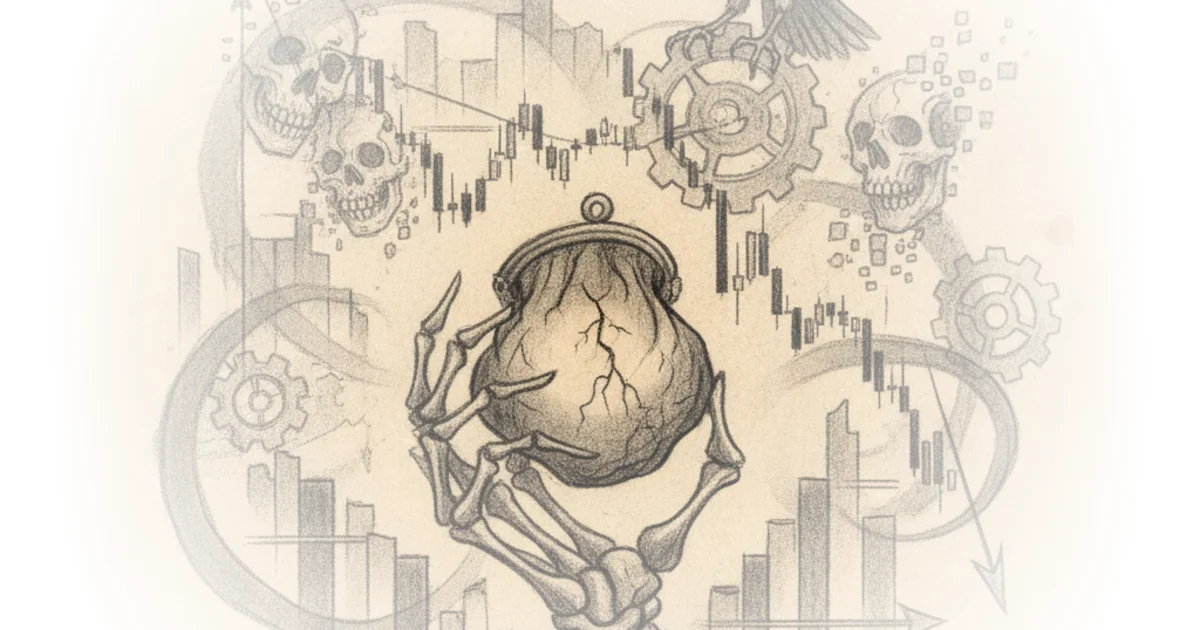
The author writes, "the post-2020 Musk is the Musk of Starship, robotaxis, Cybertrucks and Twitter — a string of commercial flops and assets that literally exploded." This framing is effective because it separates market valuation from utility, forcing readers to confront the disconnect between stock prices and real-world value. Doctorow argues that we have entered an era where "financial markets fail in the task of valuing assets accurately," and the institutions meant to correct this have simply given up.
This logic extends beyond individual companies to the broader financial system. Doctorow notes that Bitcoin, once shunned by sober banks like Goldman Sachs, is now embraced not as currency but as a "tradeable collectible." He observes that "people have largely stopped calling it crypto currency because no one is even pretending that it's a form of money." This observation aligns with the breakdown of the Efficient-Market Hypothesis; if markets cannot distinguish between a useful tool and a speculative bubble, they cease to function as mechanisms for capital allocation.
The true risk of AI to your job isn't: "an AI will do your job." It's: "an AI salesman will exploit your boss's infinite horniness for replacing mouthy workers with pliable machines to sell him a chatbot that can't do your job, and then your boss will fire you and replace you with that inept, defective chatbot."
The Real Dead Economy
Doctorow critiques Owen McGrann's "Dead Economy Theory," which posits that AI will simply take all jobs. Doctorow argues this is a misdiagnosis of the problem. He contends that the real threat is not automation replacing labor, but capital being siphoned away from productive activity into speculative bubbles. The administration and corporate leaders are prioritizing the hype of artificial general intelligence over actual medical breakthroughs.
He describes a scenario where "horrified NIH lifers begged the DOGE boys not to shut down long-running medical research projects," only to be laughed at by those claiming that "GAI" is about to cure cancer. Doctorow writes, "You could hardly ask for a better example of investing in vibes over value than shutting down real cancer research to free up money for teaching more words to the word-guessing machine because it's about to become God and cure cancer."
This argument draws on Goodhart's Law: when a measure becomes a target, it ceases to be a good measure. By targeting stock prices and hype metrics rather than health outcomes or productivity, the system optimizes for the wrong things. The author warns that "Goldman Sachs isn't merely all-in on crypto — it's all-in on the Spacex IPO," accepting claims that Musk's assets will grow one hundredfold in 40 months without evidence of underlying utility.
Critics might argue that speculative investment is a necessary fuel for high-risk innovation, and that we cannot know which "vibes" will eventually yield tangible results. However, Doctorow counters this by highlighting the active defunding of proven research to chase unproven theories. He states, "The actual dead economy risk is that our institutions and markets will continue to move capital from productive activity into memestocks, vibes, and bubbles."
That's not just a dead economy — it's one that'll kill everyone you love and everything that matters.
Bottom Line
Doctorow's most compelling contribution is reframing the AI anxiety from "will machines take our jobs" to "are we funding the wrong things?" His argument holds up well against historical precedents of financial bubbles, where valuation decouples from reality until a collapse occurs. The piece's greatest vulnerability lies in its reliance on specific, high-profile examples like Musk and DOGE, which may feel anecdotal to some, but the underlying mechanism of capital misallocation is a systemic issue that demands urgent attention.