Rick Rubin's conversation with Daron Malakian transforms a standard musician interview into a visceral time capsule of metal's most volatile evolution. Rather than offering a dry history lesson, the piece captures the raw, unscripted adrenaline of a fan stepping onto the world's biggest stage to save a legend's show, all while tracing the genre's relentless drive toward extremity.
The Unlikely Savior
Rubin frames the narrative around a singular, surreal moment where fandom collides with professional necessity. He recounts how Malakian, then an unknown opener for System of a Down, found himself thrust into the spotlight when Metallica's lead singer was injured. "I turn to my tech and I go, 'Listen, man, go tell their tech that I know a lot of their [ __ ]'" Malakian recalls, highlighting the sheer audacity of a twenty-two-year-old offering to fill in for a global icon. The story gains its power from the lack of preparation; there was no rehearsal, only muscle memory forged in a garage years prior.
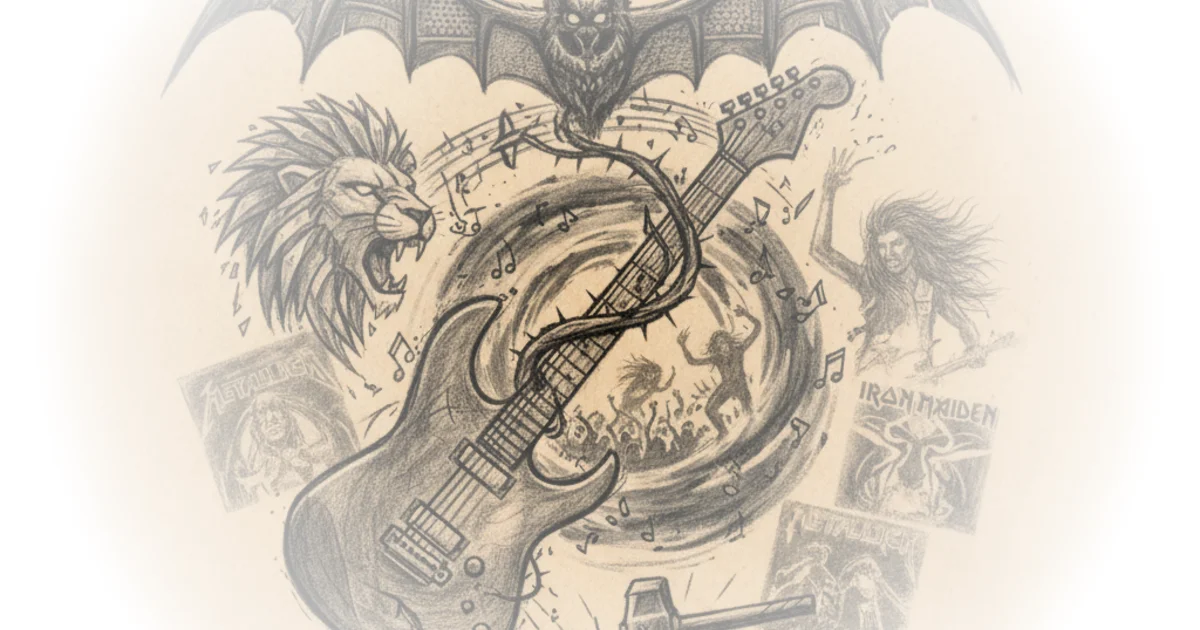
The coverage effectively uses this anecdote to illustrate the deep, almost spiritual connection metalheads have with the music. Malakian describes the scene: "I'm up there with Metallica playing Master of Puppets in front of 60,000 people... I'm wearing a white tank top and a Lakers sweats." This contrast between the casual attire and the monumental setting underscores the chaotic, democratic nature of the genre. Rubin notes that the band didn't even know the setlist would change mid-song, yet they navigated the transition from "Master of Puppets" to "Sanitarium" without missing a beat. "I didn't even know it was going to happen. And it happened," Malakian admits, capturing the improvisational spirit that defines live metal.
I'm up there with Metallica playing Master of Puppets in front of 60,000 people... I'm wearing a white tank top and a Lakers sweats.
Critics might argue that focusing on a single lucky break overlooks the years of grinding that actually built Malakian's career. However, Rubin uses this story not as a definition of success, but as a testament to the genre's culture of shared knowledge and readiness.
The Escalation of Extremity
Shifting from personal anecdote to historical analysis, Rubin and Malakian dissect the rapid acceleration of metal's intensity throughout the 1980s. The dialogue moves from the polished thrash of Metallica to the raw aggression of bands like Kreator and the emerging grindcore scene. Rubin observes that while early Metallica showed clear Iron Maiden influences, later works like Master of Puppets marked a moment where the band "found their voice." This evolution is presented not as a calculated marketing move, but as an organic push for heavier sounds.
The conversation then pivots to the German thrash scene and the rise of bands like Kreator, where the vocals began to take on a "black metal vocal vibe" that was ahead of its time. Malakian recalls the shock value of these sounds: "You can see how for like adults hearing something like this or hearing rap music for the first time was just like it's not even music. It's some other thing." Rubin highlights how this extremity was the primary draw for young fans, noting that the genre's appeal lay in its ability to constantly outdo itself. "What drew me to it was it just it's like heavier than the last thing," Malakian explains, tracing the lineage from Venom to Slayer, and finally to the blast beats of Napalm Death.
The discussion on grindcore bands like Carcass and Brutal Truth reveals a fascinating paradox: the music became so fast it lost its rhythmic definition, turning into "white noise." Rubin points out that this intensity was so overwhelming that some listeners found it relaxing, comparing the constant blast beats to a "vacuum cleaner." This observation reframes the chaos of extreme metal as a form of sonic meditation for its devotees.
What drew me to it was it just it's like heavier than the last thing.
A counterargument worth considering is whether this relentless pursuit of speed and aggression alienated the genre's broader audience. While Rubin and Malakian celebrate the technical evolution, the sheer density of the sound described might explain why metal remained a subculture rather than crossing over to the mainstream in the same way as grunge or hip-hop.
Bottom Line
Rubin's coverage succeeds by blending a high-stakes personal story with a rigorous historical autopsy of metal's sonic evolution. The strongest element is the seamless transition from Malakian's adrenaline-fueled stage rescue to the philosophical drive behind the genre's increasing extremity. The piece's vulnerability lies in its reliance on oral history, which, while vivid, lacks the broader industry context of why these sounds resonated so deeply at that specific moment in time.