Rohin Francis exposes a dangerous paradox in modern healthcare: the very institutions that champion evidence-based medicine are often the first to elevate individual practitioners to the status of infallible rockstars, creating a culture where fame supersedes facts. This isn't just about bad actors; it is a systemic failure where the medical establishment's hunger for a savior narrative blinds it to scientific reality, turning desperate patients into devotees and research into a circus. The stakes are not merely reputational but mortal, as the cult of personality grants dangerous individuals the power to dictate life-and-death outcomes.
The Myth of the Medical Savior
Francis argues that the medical field has stubbornly clung to the "great man" model of history, ignoring the collective nature of scientific progress. He writes, "In the era of evidence-based medicine, should we still be practicing eminence-based medicine and elevating academic researchers or clinicians to rockstar status?" This question cuts to the heart of the issue. The author suggests that even the most skeptical, science-literate professionals fall into the trap of "magical thinking" when a breakthrough is packaged with the authority of a celebrity. The allure of a single genius solving complex problems is so potent that it overrides the slow, incremental reality of how science actually works.
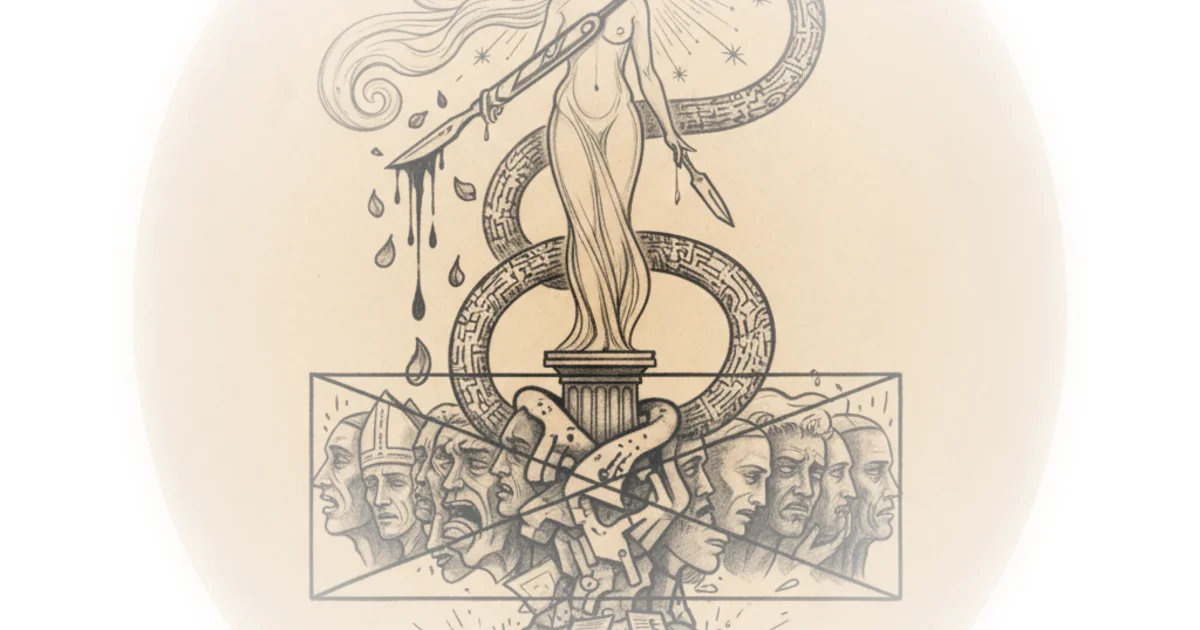
This framing is particularly effective because it shifts the blame from individual charlatans to the ecosystem that empowers them. Francis notes that while society mocks those who believe in pseudoscience from pop culture figures, "they engage in the same magical thinking when it's packaged in a way to appeal to their own biases, i.e. by dawning the clothes of respectable science." The danger lies in the fact that unlike a social media influencer who might just sell a supplement, these figures are granted authority over human lives. The pandemic era provided stark examples, where figures like Didier Raoult and Pierre Kory became "legitimate cult figures" whose followers believed in miracle cures with religious fervor, ignoring the lack of data.
When we start treating scientists like stars, we end up with many of the problematic traits of fandom that we find elsewhere with the celebrity exploiting and lying to those that support them because they believe in their cause.
Critics might argue that charismatic leadership is necessary to drive innovation and secure funding for high-risk research. However, Francis counters that this dynamic often protects fraudsters long after the alarm bells should have rung, as the system becomes too invested in the narrative to pivot.
The Playbook of Deception
The commentary dissects specific case studies to illustrate how the "rockstar doctor" playbook operates, moving from the absurd to the catastrophic. Francis examines the case of Sergio Canavero, who claimed to be on the verge of performing a human head transplant. The author highlights the absurdity of the claim, noting that Canavero's solution for reconnecting the spinal cord was "no more sophisticated than a 5-year-old's plan to reattach the head of a beetle they just decapitated." Francis points out that Canavero relied on the trope of the "iconoclast or whistleblower whose colleagues try to silence him," a narrative device that effectively shields the doctor from legitimate scrutiny.
The author's critique of the media's role here is scathing. He observes that journalists reported these outlandish claims as facts, repeating the lie that earlier primate head transplants were successful. "A basic fact check takes just minutes," Francis writes, yet the press failed to do it. This highlights a critical vulnerability in science journalism: the tendency to prioritize the spectacle of a "pioneer" over the rigorous verification of their claims. The result is a public misled by a "fairy tale of a medical savior."
The narrative then shifts to the more devastating case of Piero Anversa and his work on cardiac stem cells. Francis describes how Anversa became a "rockstar doctor" with a "financially well-supported lab" after claiming to have found a way to regenerate heart muscle. The author explains that this success created a situation where the researcher became "too big to fail." Even when other scientists published evidence that the work was not reproducible, Harvard Medical School offered Anversa a full professorship rather than investigating the discrepancies.
When you build someone up as your star player, bring in the press and the big bucks publishing in the biggest journals in the world, you make them too big to fail.
This section underscores the institutional inertia that protects these figures. Francis notes that when the fraud was finally exposed, with over 30 studies retracted, the damage was already done. Patients who had their hopes raised were left devastated, and the field of cardiac stem cell research was set back by years. The author's point is clear: the rush to anoint a savior creates a feedback loop where the cost of admitting error becomes too high for the institution to bear.
The Human Cost of Hype
Finally, Francis turns to the tragic case of Paolo Macchiarini, whose story involves "scientific fraud, death, betrayal, a love parallelogram, and the Pope." Macchiarini was celebrated for his work on synthetic tracheas lined with stem cells, a procedure that was hailed as a "new dawn" for organ transplantation. However, the reality was that patients died, and the procedures were fundamentally flawed. Francis describes the situation in Stockholm, where Macchiarini was recruited by the Karolinska Institute, the very body that decides the Nobel Prize in Medicine.
The author's analysis here is particularly poignant. He notes that Macchiarini's success was built on a foundation of "tall stories or over ambitious claims" that were accepted because they fit the desired narrative of medical breakthrough. The author writes, "Just imagine how many patients got their hopes up only to have them dashed when nothing similar could be achieved." This highlights the ultimate victim of the cult of personality: the patient, who is left with false hope and often, irreversible harm.
Francis concludes by reflecting on the broader implications of these cases. The pattern is consistent: a charismatic figure makes an extraordinary claim, the media and institutions amplify it, and the scientific community is slow to correct the record until it is too late. The author suggests that the medical profession must move away from this "eminence-based medicine" and return to a model that values collective verification over individual stardom.
Bottom Line
Francis's argument is a powerful indictment of a medical culture that prioritizes the myth of the genius over the rigor of the scientific method. His strongest point is the identification of the "too big to fail" dynamic, which allows fraud to persist long after the evidence should have discredited it. The piece's biggest vulnerability is that it offers a diagnosis of the problem without a clear prescription for how to dismantle the celebrity machinery that drives it. Readers should watch for how institutions respond to the next wave of medical hype, as the pressure to find a savior remains as strong as ever.
The human mind clings on to things it believes to be true. We struggle to turn our battleships round.