This piece from Reason cuts through the noise of campus protests to ask a question that defines the limits of free speech in America: can a university ban a demonstration simply because it fears the message will be unpopular, or because it assumes the group will act like others who came before them? The article reports on a federal judge's refusal to dismiss a lawsuit alleging that the University of Texas preemptively silenced a Palestine solidarity protest based on viewpoint discrimination rather than concrete evidence of disruption. For busy readers tracking the erosion of civil liberties, the critical detail isn't just the suspension of one student, but the legal precedent that could allow administrators to silence any group they deem "too disruptive" based on speculation alone.
The Preemptive Strike on Speech
The core of the conflict lies in the timing and the reasoning behind the university's intervention. Reason reports that "UT, however, preemptively ordered the protest cancelled the night before it was scheduled to occur." This wasn't a reaction to chaos; it was a prediction of it. The administration's logic relied on a dangerous assumption: that because other groups had set up encampments elsewhere, this specific group at UT would do the same. The piece notes that the university "alleges that it understood PSC to have the same plans for its protest as those organized at other universities by Students for Justice in Palestine ('SJP'), a separate national group, of which PSC is not a chapter."
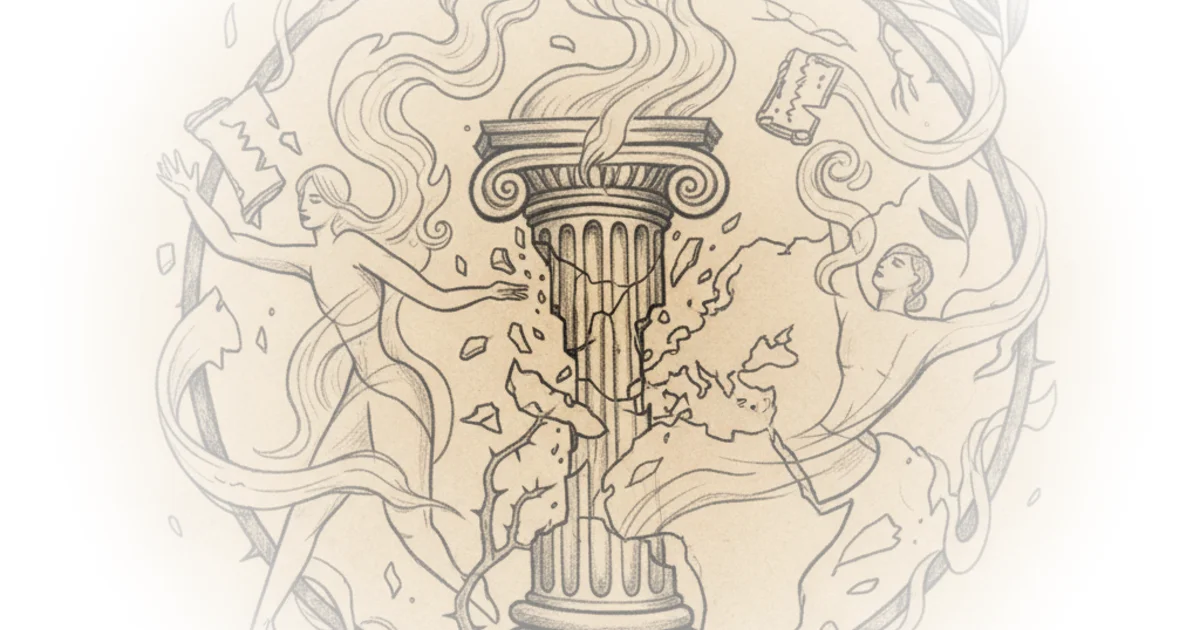
This conflation of distinct organizations based on shared ideology is where the First Amendment argument gains its teeth. The administration effectively punished a local student group for the actions of a national entity they were not part of. The piece highlights that "Qaddumi and the other students testify they agreed with UT officials, who approached them at the scene, to use 'no masks, no tents, and no amplified sound' at the protest." Despite this explicit compliance with safety requests, the students were arrested and suspended. The evidence suggests a disconnect between the university's stated safety concerns and the actual behavior of the protesters, raising the question of whether the ban was truly about order or about the content of the message.
"Mere demonstration in support of a disfavored or unpopular viewpoint is not a substantial, material disruption."
This quote from the court's analysis, as cited by Reason, is the anchor of the entire legal battle. It invokes the spirit of Tinker v. Des Moines (1969), the landmark case that established students do not "shed their constitutional rights to freedom of speech or expression at the schoolhouse gate." The article argues that the university failed to meet the high bar set by Tinker, which requires proof of "substantial disruption" rather than a mere fear of it. The court noted that "speech that would disrupt a high school could be allowed at, and even fundamental to, UT," emphasizing that universities are meant to be centers of vigorous, often uncomfortable, debate.
The Danger of Selective Enforcement
The piece delves deeper into the argument of selective enforcement, suggesting that the university treated this protest differently than others with similar time, place, and manner characteristics. Reason points out that Qaddumi "cites record evidence that UT officials have not preemptively canceled similar protests sharing other viewpoints, and that UT has not made mass arrests of students or barred students from campus based on demonstrations similar in time, place, and manner." The student organizer drew parallels to Black Lives Matter protests in 2014 and demonstrations against Henry Kissinger in 2016, which proceeded without such heavy-handed intervention.
The university's defense rests on the idea that the PSC's social media posts about "taking back our university" were indistinguishable from the tactics used by SJP at other schools. However, the piece argues that this reasoning is flawed because "PSC (as opposed to SJP) declared no intent to disrupt campus operations." The court found that the university's fear was based on "social media communications from PSC conveying an intent to 'occupy' campus," yet the Department of Public Safety had independently analyzed the event and found "no indicators of planned or potential disruptive activity or credible threats at this time."
Critics might argue that universities have a duty to anticipate violence and that the "occupy" rhetoric was a genuine warning sign of imminent lawless action. Yet, the piece counters that "speech may be a substantial and material disruption where it is likely to incite or produce imminent lawless action," and that "announcing generally that one intends to violate a campus rule later" does not meet that threshold. The distinction is crucial: a vague threat of future rule-breaking is not the same as an immediate incitement to riot.
The Human Cost of a Disciplinary Record
Beyond the legal theory, the article underscores the tangible, life-altering consequences for the student at the center of this storm. Qaddumi was not just suspended; he was "banned from campus" and carries a "permanent disciplinary record" that "may be required to disclose it on future graduate school applications or professional licensing applications." This is the real-world impact of the administration's decision: a student's future career and education are held hostage by a protest that the police themselves deemed non-threatening.
The piece notes that the Student Conduct Board initially found that Qaddumi should receive only a "deferred suspension," but the university's appellate office overturned this, finding he should be suspended for three semesters. This escalation highlights the institutional pressure to make an example of the protest leaders. The court's refusal to grant summary judgment to the university suggests that the facts of the case are too messy and contradictory to be resolved without a full trial. As the article states, "these issues center on material fact questions appropriate for resolution at trial."
"Otherwise, a state university could cancel a protest at its sole discretion, then punish students for proceeding with a protest alone, without a showing of likely substantial, material disruption."
This warning from the court, as reported by Reason, strikes at the heart of administrative overreach. If universities can cancel protests based on their own "boundless discretion" and then punish students for ignoring that cancellation, the First Amendment becomes a hollow promise. The article makes it clear that the "state may constitutionally impose content-neutral prohibitions on a particular manner of speech, but it may not condition that speech on obtaining permission from state official in that official's boundless discretion."
Bottom Line
The strongest part of this argument is its reliance on the stark contrast between the university's fears and the actual, peaceful conduct of the students, backed by an independent police assessment that found no threat. The piece effectively uses the Tinker standard to expose the fragility of the administration's position. However, the argument's biggest vulnerability lies in the difficulty of proving "viewpoint discrimination" in court, where universities often have wide latitude to define "disruption." Readers should watch for the trial's outcome, as it will determine whether a university can silence a group simply because they are afraid of what the group might do, rather than what they actually did.