Will Menaker: The End of the Left-Liberal AllianceA podcast host argues that the Democratic Party has been hollowed out by donors and empire, that Trump won because he actually offered something to voters, and that a new political realignment is already underway.", ## The Collapse of the Left-Liberal Alliance
Will Menaker sees something in American politics that many analysts miss: the left-liberal alliance isn't just fracturing — it's over. In his analysis, the Democratic Party has become a hollow vessel that no longer represents any meaningful political tradition beyond serving its donors.
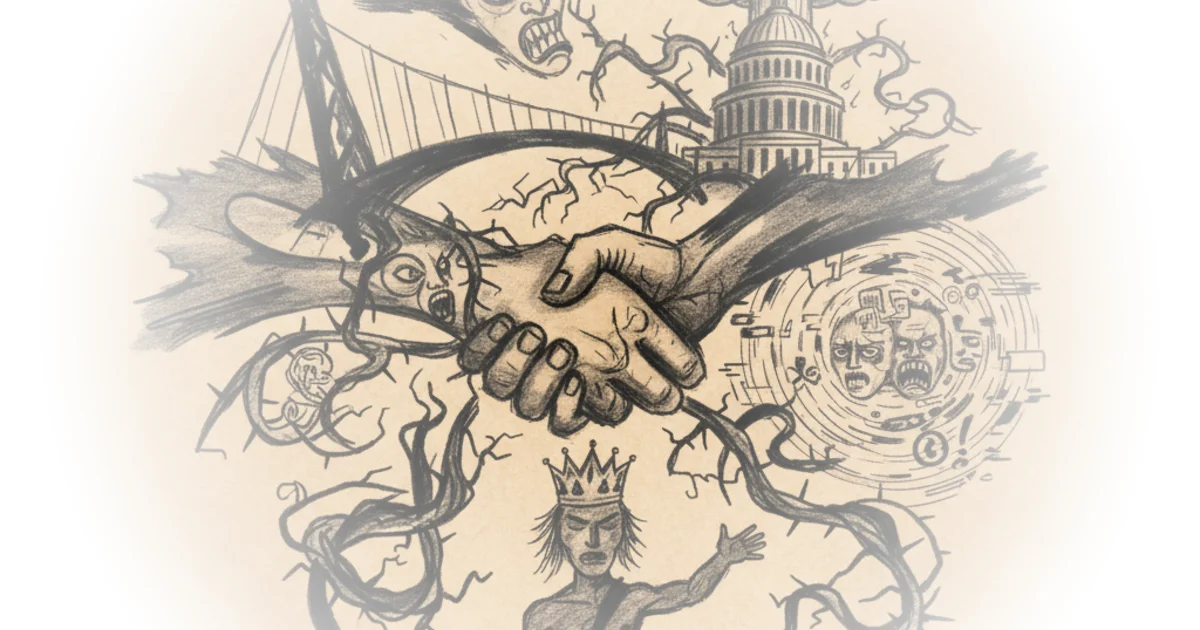
The evidence? The party ran a campaign against its own base this election. They chased an imaginary moderate voter on spreadsheets rather than offering anything to their actual constituents: young people, working class voters, people of color. The result was predictable — half the price for the full fat Republican version.
Why Trump Won
The simplest explanation is also the most accurate: more people voted for him than voted for his opponent. But Menaker digs deeper into what happened within the Democratic Party.
Joe Biden didn't step down after the 2022 midterms like LBJ did with a clear signal to find a real primary. Instead, Democrats shuffled their candidate like a shambling corpse — first pushing an elderly man, then replacing him with Kamala Harris. She got a brief honeymoon period where people felt relief at not voting for Biden. Then it collapsed.
The party ran as a campaign against Donald Trump while simultaneously running a campaign against their own base. They offered nothing to anyone. Their actual beliefs? Supporting Israel, supporting Wall Street, supporting donors — but no core principles voters could rally around.
The New Right and Political Realignment
Menaker has some skepticism about talk of political realignment, but he sees something real in the emergence of what people call the new right. Through Trump, he's seen a countercultural shift: voting Republican no longer means wearing a suit and tie. It's become weird. It's okay to be strange and vote Republican.
This isn't about new political commitments or genuine opposition to American Empire. It's rebranding — slobs versus snobs, as Menaker puts it. The same political obsessions, but with different branding.
What Do the Parties Actually Stand For?
Looking at 40 years of decline, Menaker sees both parties representing the same interests: capital and empire, more efficiently than the rightwing does. The New Deal paradigm ended in the late 1970s. Both parties now reflect that ideological shift — a society where nothing exists except the market.
The Democrats represent exactly what they've always represented since he was born: donors, Wall Street, American military empire. The language changed post-2016 to talk about bodies and spaces and privilege, but who they stand for hasn't changed at all.
Who Represents Labor Now?
Workers themselves aren't represented by any political party in this country. Maybe podcasters, maybe unions — particularly in the public sector where they still exist. But no one in either party is speaking for working people.
Critics might note that Trump's cabinet picks could surprise everyone. He's zigzagged across the spectrum with strange choices. Some observers believe he governed like any other Republican president would, but others think he might actually surprise on populism.
Bottom Line
This piece's strongest argument is that the Democratic Party offered voters nothing — while Trump at least offered entertainment and a sense of fighting back against cultural elites. Its vulnerability lies in its certainty: if you're listening to someone who first became politicized through opposition to the Iraq War, you may be hearing an ideological lens that colors everything. The shift is real but whether it represents genuine working-class representation or just rebranding remains unclear.