This piece from The Baffler delivers a jarring reality check: the most expensive real estate in Southern California is literally sliding into the ocean, and the solutions being proposed are as fragile as the ground beneath them. It is not just a story about climate change; it is a forensic accounting of a century-long gamble where financial ambition consistently overrode geological reality. For the busy reader, this is a crucial case study in how we value property over safety, and why the bill for that delusion is finally coming due.
The Geology of Greed
The Baffler opens by dismantling the illusion of stability in the Palos Verdes Peninsula. While the region recently enjoyed its first drought-free winter in twenty-five years, the piece argues that the resulting rainfall has exposed a fatal flaw in the landscape: "Its terrain is underlain by layers of bentonite clay that, when wet, enable entire masses of earth to separate and slide from the more stable ground beneath." This is not a new discovery, but a recurring nightmare that has been ignored for generations.
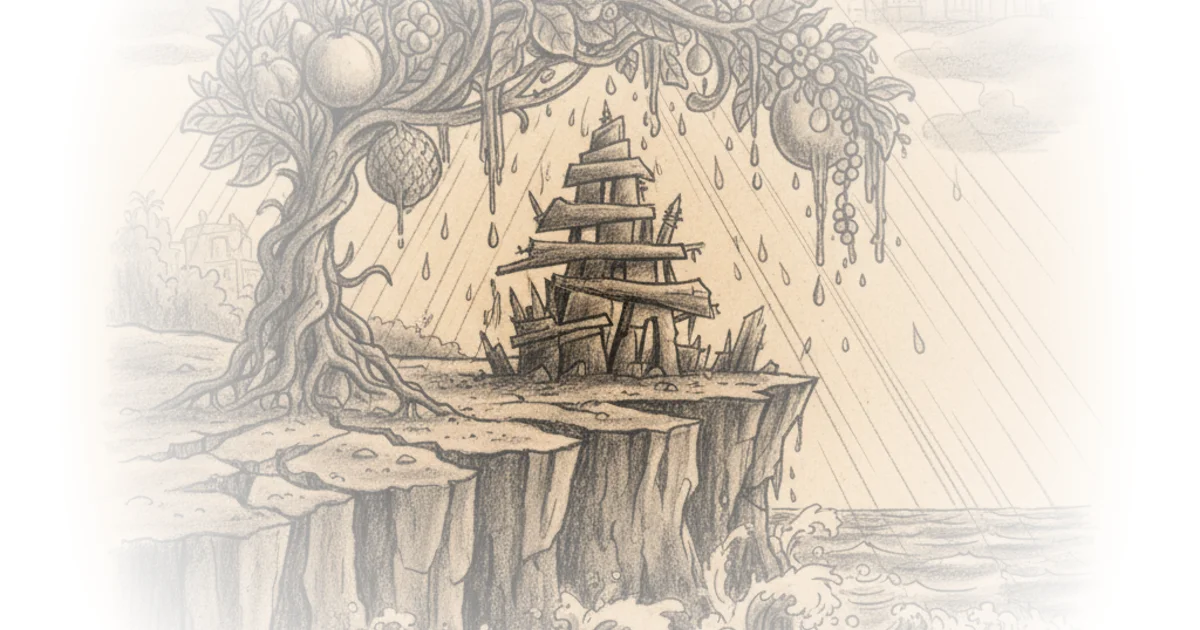
The narrative traces this back to Frank A. Vanderlip, the East Coast financier who, over a century ago, envisioned the peninsula as a new Amalfi Drive. Unburdened by the knowledge of the unstable ground, Vanderlip pressed ahead, hiring the Olmsted Brothers to design a paradise for the wealthy. The piece notes that by 1925, roads were carved and lots sold, but the Great Depression paused the dream. Post-war developers, however, resumed the work with denser subdivisions, setting the stage for disaster.
"The problem has plagued the peninsula for hundreds of thousands of years, but when combined with more recent development in especially hazardous areas and the increasing power of storms, it has grown demonstrably worse—and more costly."
The argument here is compelling because it refuses to treat the current crisis as an anomaly. Instead, it frames the 2022-2024 landslides as the inevitable climax of a long history of negligence. The piece details how, in 1956, road construction triggered a massive slide that destroyed over a hundred homes. Engineers attempted to fix it with steel-reinforced caisson shear pins, a method the article compares to "nailing down a book sliding off a table." It failed. The land lurched forty feet toward the sea.
Critics might argue that engineering has advanced since the 1950s, suggesting that modern technology could solve these issues. However, the piece systematically dismantles this optimism by listing decades of failed attempts, from the $40 million drainage projects of the 1980s to the temporary embankments of the 1990s. Each fix was a stopgap that eventually succumbed to the relentless pressure of the earth.
The Economics of Displacement
The core of the coverage shifts to the absurdity of the current situation: a luxury community where residents are living in conditions the article describes as "Third World." Despite the area's average household income of $367,000 and property values reaching millions, the infrastructure has collapsed. The Baffler reports that after shifting ground sparked a fire and severed power lines, utility providers deemed it too dangerous to restore service. Now, 174 homes remain without electricity, and residents are forced to rely on generators and propane tanks.
"It's so Mickey Mouse, so substandard... You have a luxury community with world-class golf courses and amazing views of the ocean, but some homeowners are literally living in Third World conditions."
This quote from a structural assessor cuts to the heart of the absurdity. The piece highlights the irony of Villa Narcissa, a $10.5 million estate that was once Vanderlip's vision, now running on a fifty-six-kilowatt generator. The human cost is palpable; residents like Steven Barker are forced to make impossible calculations about survival, weighing the cost of solar panels against the reality of living on the edge of a disaster zone.
The article also scrutinizes the political response, noting that while politicians blame climate change, the deeper issue is the decision to build there in the first place. A landslide moratorium has been on the books since 1978, yet it has been rendered "toothless" by legal carve-outs and court rulings. The piece details how courts have sided with property owners, arguing that restrictions deprived them of economically viable use, even when the land was actively moving.
"Politicians are quick to blame climate change for the peninsula's woes—but while the storms of recent years were almost certainly intensified by a warming climate, the deeper problem is that we built there in the first place, despite evidence that the land was unstable."
This distinction is vital. It shifts the blame from an unpredictable weather event to a predictable policy failure. The coverage also touches on the disparity in federal aid, noting that the voluntary buyout program for Rancho Palos Verdes is allocating over $2 million per home, a stark contrast to the $18,000 cap for wildfire victims who displaced 150,000 people. This comparison underscores how the value of property often dictates the value of human safety in the eyes of the state.
The Unpayable Bill
The piece concludes by questioning who will ultimately pay for this retreat. The administration's Inflation Reduction Act was lobbied for funding, but the money never materialized, partly because drought conditions had temporarily masked the severity of the threat. Now that the ground is moving again, the question of funding remains unanswered. The Baffler suggests that the only viable solution may be a "wholesale retreat," but the economic and political machinery required to execute such a plan is nonexistent.
"Those that call the Palos Verdes Peninsula home now find themselves approaching a crossroads: Will they double down on costly, ineffective measures to stabilize the land and protect private property, or is a wholesale retreat from paradise in order?"
This framing forces the reader to confront the limits of adaptation. We can engineer drainage systems and build retaining walls, but if the geological foundation is fundamentally unstable, these measures are merely delaying the inevitable. The piece implies that the true cost of this "slipshod paradise" is not just in dollars, but in the erosion of trust in our ability to manage the environment.
Bottom Line
The strongest part of this argument is its refusal to let climate change serve as a scapegoat for a century of poor land-use planning; it correctly identifies that the disaster was baked into the blueprint from the start. Its biggest vulnerability is the lack of a concrete path forward, leaving the reader with the grim realization that the only solution—abandoning the land—is politically impossible. Watch for how local courts and the federal government will navigate the coming wave of buyout requests, as the precedent set here will define coastal development policy for decades to come.