More Perfect Union exposes a hidden architecture of sameness that has quietly colonized the American dining experience, arguing that a single corporate entity is responsible for the homogenization of food from New York diners to Alaskan breweries. The piece is notable not just for its investigative reach, but for its willingness to trace the flavor of a jalapeno popper back to a specific supply chain decision made in a boardroom decades ago. This is a story about how the pursuit of efficiency has stripped the soul out of our plates, and why the next time you taste something identical in two different states, you are tasting a monopoly.
The Architecture of Sameness
The investigation begins with a simple, unsettling hypothesis: can you get the exact same food from totally different restaurants? More Perfect Union sets out to test this by ordering identical items like fried pickles and funnel cake fries across five states. The author writes, "Are we trapped into eating the same mediocre food from New York to Alaska? And if so, why? And who's behind it?" This framing is effective because it moves the blame from individual chefs to a systemic force, inviting the reader to become a detective in their own dining habits.
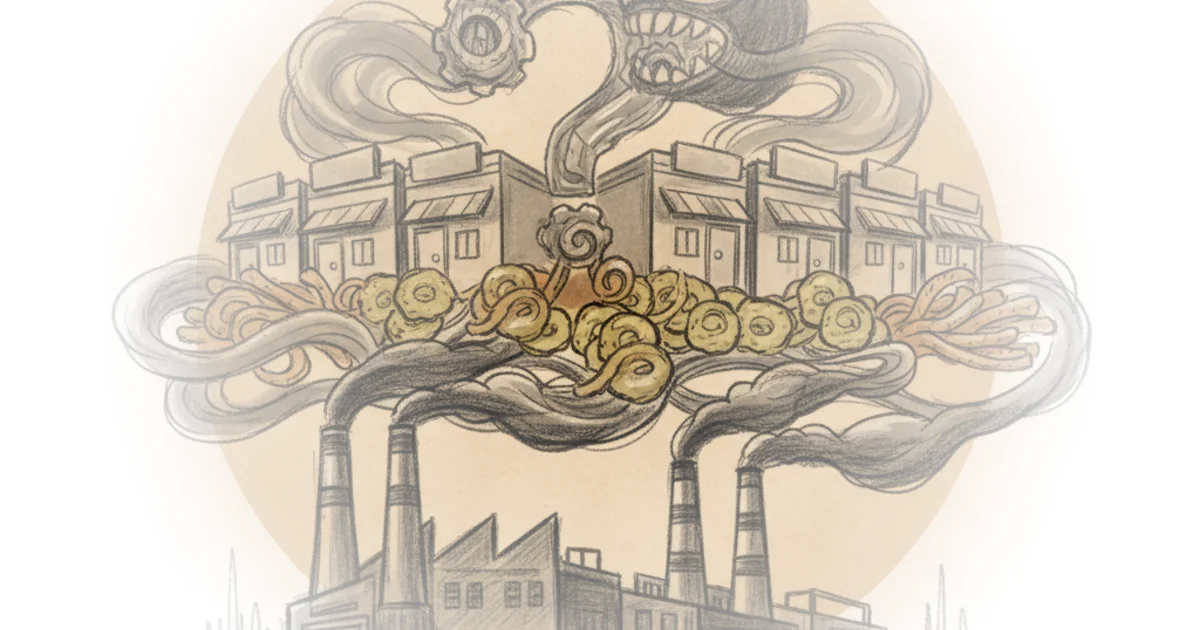
The answer points to C&S Wholesale Grocers, a massive distributor that the author identifies as the primary suspect. As More Perfect Union explains, C&S operates as a "broadliner," supplying everything from paper products to meat and produce, a model that began with a merger of nine distributors in 1969. The author notes that C&S "didn't become this giant through organic growth, but instead it became a giant through relentless acquisitions that went unchecked," having absorbed over 150 companies. This historical context is crucial; it reframes the current food landscape not as a natural evolution of the market, but as the result of aggressive consolidation that went largely unchallenged for half a century.
"The innovation of Sysco was it was the first national company to essentially offer everything a restaurant needs."
The narrative contrasts this national behemoth with Ellen Walsh Roseman, a restaurant owner in Harland, Iowa, who fights to keep her supply chain local. While C&S sources from massive, often exploitative producers like Driscoll's and Tyson to "ek out savings," Roseman sources from local farms. The author argues that this shift has profound consequences: "Basically, any dark part of the food system has moved offshore, which makes policing it really, really hard to do." This connection between the food on your plate and labor abuses abroad is the piece's most powerful ethical lever, suggesting that the low price of a frozen appetizer is subsidized by human suffering.
Critics might note that the article places significant weight on the assumption that all national distributors rely equally on exploitative labor, potentially overlooking efforts within the industry to improve supply chain transparency. However, the specific examples of forced labor in the seafood supply chain provide a chilling counterweight to the convenience of frozen food.
The Cost of Convenience
The commentary then shifts to the economic mechanics of this system, revealing how C&S's dominance allows it to dictate terms to everyone from farmers to truckers. The author highlights that C&S has used its market power to pass inflation costs to customers, increasing earnings by 159% during the pandemic while claiming "no intention of competing on price." This is a stark illustration of how a lack of competition breeds complacency and greed. The text states, "Smaller restaurants have almost no negotiating power with Sysco. And so if you are in a rural area where there, you know, aren't any other distributors, then restaurants really don't have many options at all."
This lack of choice extends to the quality of the food itself. The author describes how C&S floods restaurants with ultra-processed fillers, noting that a Pennsylvania diner owner discovered his burgers contained soy protein filler. The piece argues that "frozen food, it turns out, isn't just a facet of the Sysco business model. It drives it." This is a vital distinction; it suggests that the frozen food industry exists primarily to facilitate the logistics of a monopolized distribution network, rather than to serve consumer demand for convenience.
"The system isn't exactly working out for restaurant owners or local distributors either."
The investigation concludes with the author's field test, confirming the hypothesis that the same frozen products appear in disparate locations. "Jalapeno Popper. Never been to this restaurant, never been to the city, but it just tastes like something I've had a hundred times in Omaha," the author observes. This moment of realization is the emotional climax of the piece, transforming an abstract economic argument into a tangible sensory experience for the reader.
The Path Forward
The final section of the piece looks toward potential solutions, focusing on antitrust enforcement. The author suggests that regulators could "look at some of these deals and say maybe we went too far. Like maybe we let Sysco acquire too many companies and we should unwind some of those and break up Sysco." This call to action is grounded in the precedent of breaking up other monopolies, such as Ticketmaster, offering a concrete, albeit difficult, path to restoring regional variety.
The author concludes by emphasizing what is lost in this consolidation: "In this giant food system, something is being lost. regional variety, local jobs, local businesses, and just having a unique meal, a meal that's different." This summary of the stakes elevates the argument from a critique of food quality to a defense of local culture and economic diversity.
"We are always interested in stories about how corporations are changing the world around us."
Bottom Line
More Perfect Union delivers a compelling, well-sourced indictment of how supply chain consolidation has eroded the uniqueness of American dining, successfully connecting the dots between a frozen appetizer and global labor abuses. While the piece occasionally leans heavily on anecdotal evidence from a single distributor, its core argument—that market dominance has led to a race to the bottom in quality and ethics—is supported by the author's rigorous field testing and historical analysis. The strongest takeaway is the urgent need for antitrust intervention, not just to lower prices, but to save the very idea of a distinct local food culture.