Robin James delivers a startling genealogy that connects the sonic rebellion of 1990s grunge to the white supremacist politics of the modern far-right, arguing they share a common DNA rooted in market logic rather than genuine dissent. This isn't just a music history lesson; it is a structural critique of how capitalism and fascism both rely on the "fungibility" of meaning to repackage old hierarchies as fresh, revolutionary choices. For a busy reader trying to understand why reactionary movements feel so strangely familiar yet marketed as new, this analysis cuts through the noise by exposing the economic machinery behind the label "alt."
The Myth of the Alternative
James begins by dismantling the romantic notion that "alternative" rock was ever truly outside the system. Citing music scholar Theo Cateforis, she traces the term's origins to a specific industry strategy designed to sell authenticity as a commodity. "The concept of 'an alternative' was associated with the oppositional politics and lifestyle of the counterculture," James notes, but she quickly pivots to show how this was co-opted. The industry didn't just adopt the aesthetic; it weaponized the idea of "choice" to create a brand that connoted rebellion without the actual risk. As James writes, "Alternative's true flowering emerged in the mid to late twentieth century…this language of choice and options became a crucial signature."
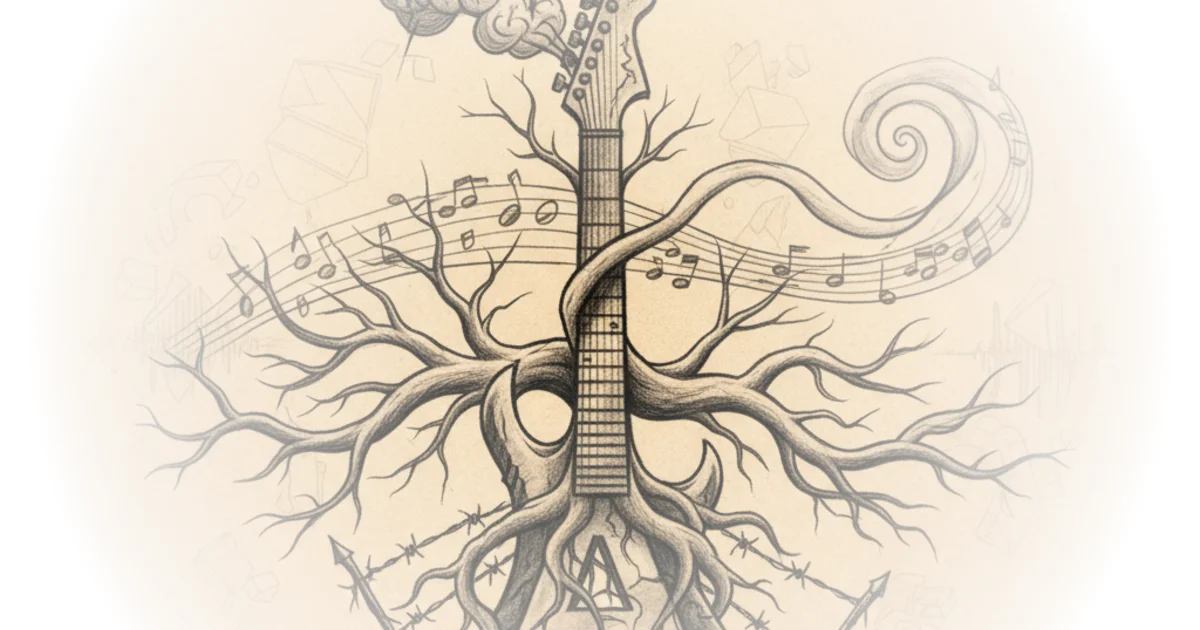
This framing is crucial because it reveals that the "alt" in alt-rock was never about a political stance, but about market segmentation. The genre was constructed to appeal to a specific demographic—white men—by positioning itself against "pop," which was coded as feminine and inauthentic. James argues that this created a "rock-style hipness on steroids," where white men appropriated Black aesthetics to claim elite status over other white men while excluding women and people of color. The argument holds water because it shifts the focus from the music itself to the industry's demographic targeting. However, one might argue that this economic reductionism risks ignoring the genuine, albeit limited, spaces of solidarity that did exist within those scenes, even if they were ultimately commodified.
Like the "alt-" in alt rock, the "alt-" in alt-right is also used to zhuzh up well-worn biases by presenting them as something supposedly new and different.
The Fungibility of Meaning
The piece's most provocative leap is connecting this market-based "alternative" to the ideological vagueness of the alt-right. James draws on the work of her colleague Alex Reed to suggest that fascism, much like the music industry, relies on rendering all content fungible—stripping ideas of their specific history to make them usable for any agenda. She explains that figures like Richard Spencer exploit this instability. When asked to define the movement, Spencer claimed, "In some ways the alt-right is arbitrary... If you don't like it, you can, you know, talk about linguistics."
James dissects this evasion brilliantly. By refusing to pin down a definition, Spencer mirrors the music industry's strategy of selling a "vibe" rather than a substance. The "alt-" prefix becomes a tool to launder old, toxic ideas. James writes, "The American, market-based concept of alternative can represent old hierarchies as new dissent, but it targets that dissent in no particular direction, making it just as easy for the owner of Tesla to claim the label 'alt' and the sounds of alt rock as it is for Tom Morello to do so." This is a powerful observation: the lack of definition isn't a bug; it's a feature that allows the label to be adopted by anyone seeking to appear rebellious while maintaining the status quo. Critics might note that equating a musical genre with a hate movement could seem like a stretch, but James grounds this in the shared mechanism of "performative newness" rather than direct ideological overlap.
The Red State Connection
Moving from theory to history, James uncovers a direct line between the deregulation of radio and the political hardening of alternative rock. She points to the Telecommunications Act of 1996, which allowed massive consolidation of media ownership. When corporations like Clear Channel bought up stations, they needed to avoid overlap. If a market already had a country station, the new acquisition was formatted as "alternative." James notes, "Like country, the alternative format was demographically targeted to white people (typically white men 18-24); that's why it made sense as a compliment to country – alt rock targeted more or less the same red-state-y demographic in a somewhat different way."
This historical detail is the piece's smoking gun. It explains why a genre born of counterculture became the soundtrack for "red state rock." The industry didn't just reflect conservative demographics; it actively engineered a format to serve them, effectively neutering the genre's rebellious potential. James concludes that the "alt-" in alt-right is the logical evolution of this same financialized media environment. Just as the music industry used "alternative" to re-center white patriarchy under the guise of freshness, the tech industry now uses the same logic to amplify white supremacy. "Alt rock's story is significantly a story about a financializing radio industry," she writes, "just as the alt right's story is significantly a story about a financialized tech industry."
Bottom Line
Robin James's strongest contribution is exposing the "fungibility" of the "alt" label as a deliberate strategy to obscure reactionary politics behind a veil of novelty. The argument's vulnerability lies in its heavy reliance on structural determinism, which may underplay the agency of individuals who genuinely believed they were part of a counterculture. However, the connection drawn between media deregulation and political radicalization offers a vital framework for understanding why today's extremist movements feel so commercially polished. Readers should watch for how this same "alternative" branding is applied to other sectors, from finance to technology, as the next frontier for laundering old biases.
The "alt-" in "alt-right" enacts a performance of a break moreso than it describes a substantive ideological shift in the underlying conceptual grounds.