Tim Mak delivers a chilling assessment of national security risk, arguing that the FBI director's planned trip to Moscow is less a diplomatic gesture and more a potential intelligence catastrophe. The piece stands out not for its speculation, but for its reliance on the specific, hard-won warnings of Peter Strzok, a former deputy head of the FBI's Counterintelligence Division who knows Russian tradecraft better than almost anyone in Washington. For busy leaders tracking the evolving war in Ukraine and the stability of U.S. institutions, this is a critical warning: the administration may be handing legitimacy to a hostile state while exposing its top law enforcement official to sophisticated compromise.
The Illusion of Parity
Mak frames the story around a fundamental asymmetry in intelligence capabilities. While the narrative in some circles suggests Russian intelligence is overstretched or incompetent, Mak highlights Strzok's insistence that this view is dangerous. "The traditional Russian ability to conduct intelligence operations — whether that's recruiting sources within a foreign intelligence service, conducting disinformation or perception management type activities — is excellent, world-class," Strzok tells Mak. This quote dismantles the notion that the U.S. can negotiate from a position of casual confidence. The author effectively uses Strzok's background—his Cold War academic roots and his work on the 2010 sleeper agent network—to establish why his skepticism carries weight.
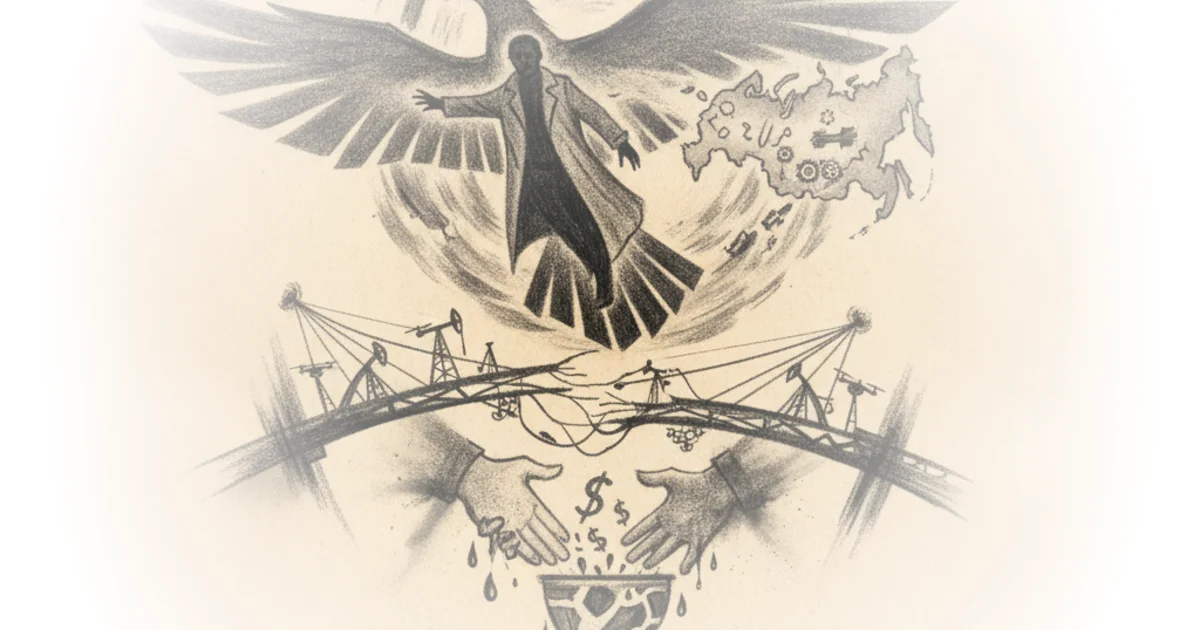
The core of Mak's argument is that the current FBI leadership lacks the institutional memory and operational caution required for such a high-stakes environment. He notes that the last time an FBI director visited Russia was over a decade ago, prior to the 2016 election interference and the invasion of Ukraine. By juxtaposing this historical gap with the current administration's eagerness to engage, Mak suggests a dangerous disconnect between policy and reality. He writes that Strzok fears the visit will devolve into "a lot of wining and dining, prestigious private tours of the Hermitage, jet skis, helicopter rides — all the finer things that Russians know how to leverage very well." This imagery is not merely colorful; it underscores the specific vulnerability of psychological manipulation, a tactic the FSB has perfected.
"If you're not particularly bright or diligent to begin with, your best effort simply won't be as good as the best effort of someone at the 50th percentile."
Critics might argue that some level of engagement is necessary to manage shared threats, such as terrorism or nuclear proliferation. Mak acknowledges this, noting that minimal channels of communication have existed even during the Cold War, citing the pre-Boston Marathon bombing intel sharing. However, he quickly pivots to the reality of the current relationship: "Neither side trusts the other." In this context, a physical visit by a director with no prior federal law enforcement experience, as Strzok points out, creates a vulnerability that goes beyond standard diplomatic protocol.
The Architecture of Compromise
Mak delves deep into the technical and biological risks of the trip, moving beyond standard political criticism to the mechanics of counterintelligence. He details how the FSB, the successor to the KGB, operates with a level of political integration that the FBI cannot match. "Intelligence as an idea and as an activity is woven into Russian foreign policy and state activity in a way that doesn't exist in the West and certainly not in the United States," Strzok concludes. This distinction is crucial; it explains why a "business as usual" approach to a meeting in Moscow is a fatal error.
The article raises a particularly disturbing point regarding biological data. Mak explains that Russian intelligence could harvest DNA from hair, saliva, or waste to identify physiological vulnerabilities or family ties. He notes that this fear is why European leaders like Macron and Scholz refused PCR tests in Russia in 2022. "Can they avoid hopping on the phone and posting something to their Instagram or sending something on a Signal chat? I don't know," Strzok admits regarding the security of the delegation's communications. This uncertainty highlights the sheer scale of the surveillance state the director would be walking into.
The author also scrutinizes the personal history of the FBI director, Kash Patel, noting his controversial past interactions with Russian-linked entities. Mak points out that Patel was paid $25,000 by a Kremlin-linked film company for a documentary that framed the "deep state" as a conspiracy against the previous administration. "Whether Patel is simply being opportunistic — trying to curry favor and gain power — or whether he genuinely believes these things, taken together, I wouldn't want someone like that going into Russia," Strzok reflects. This is a sharp, necessary critique that moves the conversation from abstract policy to specific personal risk.
"Each foreign leader's visit silently papers over the atrocities Russia is committing daily in Ukraine. If Patel goes to Russia as planned, every handshake he takes will be covered in blood."
This section of the piece is where Mak's editorial voice is most potent. He connects the potential diplomatic win for the Kremlin to the ongoing human suffering in Ukraine. By framing the visit as a propaganda victory that legitimizes a pariah state, he forces the reader to consider the moral cost of "normalizing" relations while the war continues. The reference to the bridge being built between Russia and North Korea to supply weapons for the war against Ukraine serves as a grim backdrop, reminding the reader that while the U.S. considers diplomatic overtures, the conflict is intensifying.
The Institutional Void
The final layer of Mak's analysis addresses the broader institutional decay within the FBI. He highlights that Strzok, despite being fired for sending text messages criticizing a former president, remains the expert on the very threat the current administration seems eager to downplay. Strzok's dismissal for political reasons, contrasted with the appointment of a director who dismisses the "Russiagate hoax," creates a narrative of institutional inversion. "In 2017/18, I proved the Steele Dossier was fictitious intelligence, weaponized by corrupt FBI officials to deceive a federal judge and unlawfully spy on then presidential candidate Trump's campaign — all paid for by his opponent," Patel is quoted as saying. Mak uses this to illustrate the ideological gap between the current leadership and the professional intelligence community.
The piece also touches on the "active measures" and "Operation RYAN" historical contexts, subtly reminding the reader that Russia's disinformation campaigns are not new, but a core tenet of their strategy. The fear is that the current administration, by dismissing these threats as hoaxes, is blinding itself to the very tactics being used against it. Mak argues that the lack of experience in federal law enforcement among the new leadership means they are walking into a trap they do not even recognize. "There are countless vulnerabilities they can — and, in my view, will — try to exploit," Strzok warns.
"Each new meeting creates legitimacy, another propaganda victory for Moscow. Each foreign leader's visit silently papers over the atrocities Russia is committing daily in Ukraine."
This framing is effective because it shifts the focus from the personality of the officials to the structural consequences of their actions. It suggests that the trip is not just a security risk for one man, but a strategic blunder for the United States that aids the adversary's narrative.
Bottom Line
Tim Mak's piece is a masterclass in connecting specific intelligence tradecraft to high-level policy failures, using Strzok's expertise to expose the fragility of the proposed diplomatic overture. The argument's greatest strength is its refusal to treat the visit as a neutral diplomatic event, instead framing it as a potential vector for biological and psychological compromise that could cripple U.S. counterintelligence for years. However, the piece's reliance on Strzok's personal grievances with the current administration, while relevant, risks allowing political bias to cloud the purely technical security assessment. The reader must watch for whether the administration proceeds with the trip despite these warnings, which would signal a profound disregard for the intelligence community's assessment of the threat landscape.