Ruth Reichl doesn't just review restaurants; she maps a philosophy of eating that treats the farm, the kitchen, and the diner as a single, breathing organism. In this piece, she argues that the true value of the Hudson Valley isn't its scenery, but its ability to sustain a radical form of hospitality where the menu is a conversation, not a contract. For the busy professional seeking a reset, Reichl offers a compelling case that the most efficient way to reconnect with the world is to slow down and let a chef read your desires rather than your order.
The Art of the Unwritten Menu
Reichl anchors her argument in a specific, transformative experience at Blue Hill at Stone Barns, a venue that functions as much as a research lab as a dining room. She describes the setting not as a place of luxury, but of intentional waste reduction and deep ecological integration. "The restaurant in the former Rockefeller dairy barn raises a great deal of the food that appears on the plate," she notes, highlighting a system where "even the bones are turned into charcoal. Nothing goes to waste." This isn't just sustainability marketing; Reichl suggests it fundamentally alters the flavor profile and the diner's psychological state.
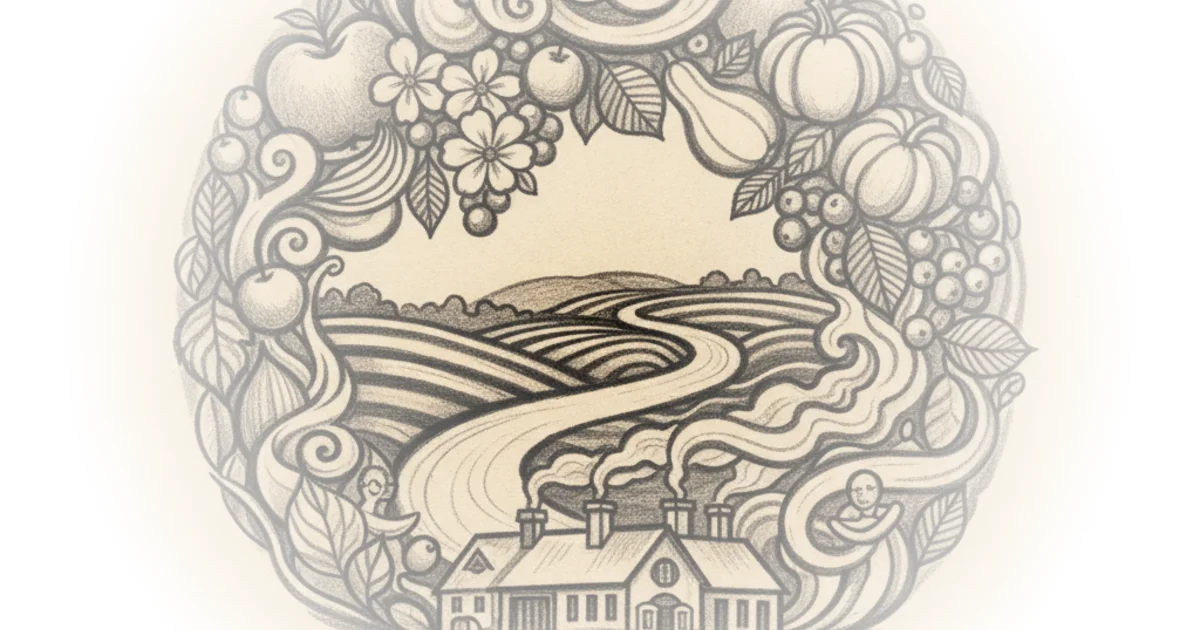
The core of her argument rests on the absence of a traditional menu. She writes, "There is no menu; you simply put yourself in their hands and the staff intuits your desires." This is a bold claim in an industry driven by predictability and risk management. Reichl posits that this vulnerability creates a unique intimacy: "I doubt that any two tables get the same meal." The evidence she provides is the meal itself—a parade of microscopic vegetables and forgotten cuts of meat that defy standard culinary expectations. She describes "tiny tomatoes that burst into the mouth" and "pig heart 'pastrami' so delicious it would make any offal-hater change her mind."
This meal was so much fun to eat; I don't think I've ever laughed so much at dinner.
Reichl's framing here is effective because it shifts the metric of success from technical perfection to emotional resonance. She argues that the kitchen is actively watching the diners, adjusting the course of the evening in real-time. "All through the meal I could sense a silent communication between the front of the house and the back," she observes. This dynamic, she claims, is what you do at home when cooking for family, but rarely see in a commercial setting. Critics might note that this level of customization requires an unsustainable level of labor and is inaccessible to most restaurants, but Reichl's point is about the ideal of dining, not the economic feasibility of scaling it. The value lies in the proof of concept: that food can be a relationship, not a transaction.
A Landscape of Localism
Moving beyond the flagship experience, Reichl expands her lens to the broader Hudson Valley, treating the region as a cohesive ecosystem of flavor. She moves from the high-concept artistry of Stone Barns to the grounded, earthy realities of other local institutions. She praises Stissing House for its "darkly romantic" ambiance and modern menu, and Gio Batta for its owner's foresight in moving to the area "before the term 'farm to table' had been coined." This historical context adds weight to her recommendation; she isn't just finding good food, she is identifying a long-standing cultural shift in how the region produces and consumes.
Her description of Churchtown Dairy is particularly evocative, quoting the farm's mission to "bring beauty back to dairy farming." She notes the founder's belief that "small is beautiful in the world of agriculture, because when the scale is right - when it is good for the farm family, good for the animals, and good for the land - there is beauty." This is a direct challenge to the industrial agricultural model that dominates the American food supply. Reichl uses this to argue that the Hudson Valley offers a tangible alternative to the homogenized food system.
She also highlights the importance of discovery, recommending spots like The Aviary for its "moody" atmosphere and Asian-influenced local sourcing, and Samascott's Garden Market for its "venerable" family-owned status. Even when she admits to a gap in her own experience, as with The Cliff House, she includes it because the community consensus is so strong. "I'd be remiss to leave it out," she writes, reinforcing the idea that the region's value is collective and shared.
At Stone Barns you aren't just paying for a meal, you're forging a relationship.
The piece also ventures into the realm of flavor preservation and global connection, discussing a bottle of osmanthus drinking vinegar from Lindera Farms. Reichl connects this obscure flavor to a thousand-year-old Chinese poem, noting that the scent is "transplanted from the moon." This juxtaposition of local Hudson Valley agriculture with ancient global traditions underscores her broader thesis: that good food is a bridge between time, place, and people. She contrasts this with the thick, syrupy balsamic of a famous Italian chef, arguing that the local, seasonal version offers a more "elusive" and "intoxicating" experience.
The Bottom Line
Ruth Reichl's strongest move is reframing the restaurant review as a manifesto for a different kind of economy—one based on relationships, seasonality, and the rejection of waste. The piece's greatest vulnerability is its reliance on a specific, resource-intensive model of dining that few can access, yet it succeeds by offering a vision of what is possible rather than a practical guide for every diner. For the reader, the takeaway is clear: the most profound culinary experiences aren't found in the most expensive ingredients, but in the most attentive relationships between the land, the cook, and the eater. Watch for how this philosophy of "intuitive dining" begins to influence the broader restaurant industry, even if the full Stone Barns model remains a rare exception.