This piece cuts through the noise of border security debates by spotlighting a collision between national policy and sacred geography that few have examined with such specificity. The Pillar reports on a federal lawsuit seeking to seize land in New Mexico for a wall, but the real story lies in the diocese's claim that the structure is not a security measure, but "a monument to something that goes against the teachings of the Catholic faith." For listeners tracking the intersection of law, religion, and migration, this conflict offers a rare glimpse into how federal power reshapes local landscapes, echoing historical tensions seen when eminent domain was used to construct the Christ the Redeemer statue in Rio de Janeiro—a project that also required navigating complex land rights to establish a global symbol.
The Clash of Symbols
The core of the argument presented by The Pillar is not merely about property lines, but about competing visions of safety and sanctity. Deacon Jim Winder, chancellor of the Las Cruces diocese, frames the potential wall as a visual affront to the existing 29-foot marble statue of Christ the King that has watched over the mountain since 1939. The piece quotes Winder's stark comparison: "You might as well put up a sign that's an advertisement for a porn shop next to the statue. The wall is the equivalent." This analogy is jarring, yet it effectively illustrates the diocese's position that the government's proposed infrastructure devalues the spiritual purpose of the site.
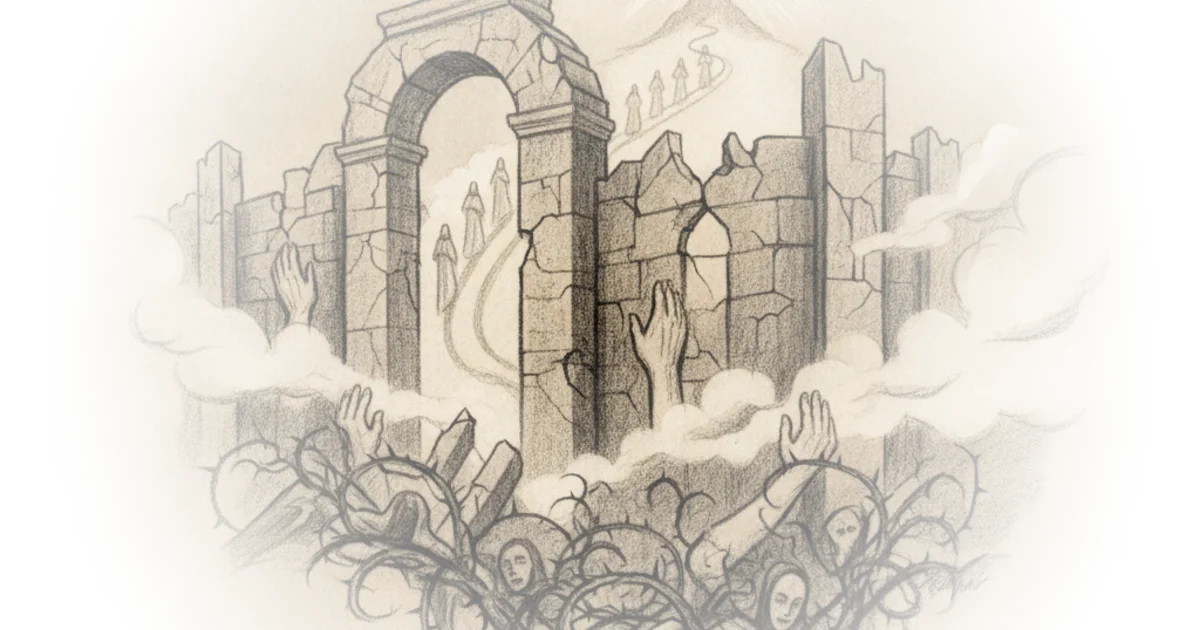
The Pillar notes that this isn't a new conflict; the Diocese of Las Cruces has managed this border property since 1982, and for years, they have worked in tandem with federal agents to deter crossings without physical barriers. The article highlights a successful partnership established under previous administrations, where sensors and patrols replaced the need for concrete or steel. "The area is so heavily patrolled, and there's so many sensors that I don't think a jackrabbit can make it through there without being detected and stopped," Winder tells the publication. This suggests that the current push for a wall may be driven more by political signaling than operational necessity.
The wall would be a monument to politics, it's a monument to something that goes against the teachings of the Catholic faith.
Critics might argue that even effective patrols cannot fully secure a porous border, and that the federal government's mandate to prevent human trafficking requires permanent physical barriers regardless of local cooperation. A U.S. Customs and Border Protection agent speaking on background counters the diocese's optimism, stating that the area was once "basically controlled by the cartel" and remains a corridor for smuggling. The piece acknowledges this tension but leans heavily on the diocese's data: since 2025, illegal crossings have dropped to near zero in the immediate vicinity due to technology, not walls.
The Economics of Eminent Domain
Beyond the symbolic clash, the article exposes a contentious financial dispute that complicates the government's legal standing. The Pillar reports that the federal offer for the land was $183,071, a figure Winder describes as "well below fair market value." To underscore the disparity, the piece points out that just months prior, the government paid New Mexico nearly four times that amount—$798,500—for a smaller parcel of land further from town.
"It is a bit of an affront to us that the government made an offer for the land, but it's one-tenth of what they offered to the state of New Mexico," Winder says. This financial inconsistency raises questions about whether the "least intrusive approach" required by religious freedom laws is being ignored in favor of a cheaper, faster seizure. The article notes that the government has already begun staging construction equipment near the site while simultaneously filing for expedited condemnation, a legal maneuver that would allow them to take possession before payment is finalized.
The Pillar also highlights the federal claim that the wall will not impact pilgrims, with a spokesperson insisting access remains open because the cross is "a quarter mile or 1,300 to 1,400 feet north of the border." However, the diocese argues that the visual and psychological intrusion of a 30-foot steel bollard wall on the southern face of the mountain fundamentally alters the experience of the pilgrimage. The piece suggests that while the government cites Executive Order 14165 to justify the "Smart Wall," they are overlooking the cultural and religious weight of the location, which has served as a junction for indigenous tribes and Catholic faithful alike since Father Lourdes Costa proposed the site in 1933.
Bottom Line
The Pillar makes a compelling case that this legal battle is less about border security efficacy—which both sides admit is currently high due to sensors—and more about the federal government's willingness to override religious objections for political symbolism. The argument's strongest point lies in the diocese's evidence of successful, non-intrusive cooperation; its vulnerability rests on the assumption that current technology will remain effective against evolving smuggling tactics without a physical barrier. Readers should watch the July 28 hearing closely, as the court's decision could set a precedent for how far the executive branch can go when federal security mandates collide with sacred land rights.