This piece does something rare in baseball history: it treats a labor dispute not as a footnote to the 1994 strike, but as the defining trauma that broke the sport's soul for a generation. The Baseball Nerd argues that the collusion of the mid-1980s was not merely a negotiation tactic, but a calculated theft of $280 million that proved the free-agent market worked exactly as players claimed, even as owners pretended it didn't.
The Silence of the Market
The narrative hinges on a chilling image: Kirk Gibson, the league's premier power hitter, going bird hunting while his agent received the same polite rejection from every general manager in the league. The Baseball Nerd writes, "The agent called every other team. He got the same answer from all of them. Gibson re-signed with Detroit for $1.2 million a year, less than he had asked for, because there was nowhere else to go."
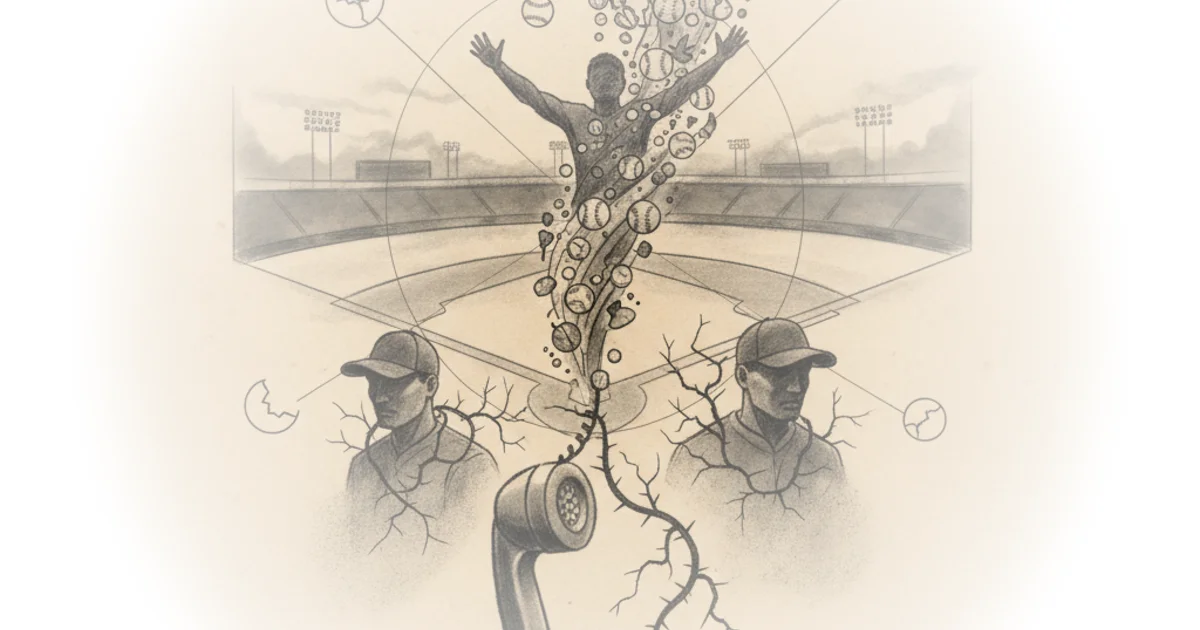
This framing is powerful because it shifts the focus from abstract economics to human desperation. The author illustrates how the market didn't just cool down; it was surgically removed. The silence was deafening. In the offseason before 1985, 20 of 46 free agents moved teams. In the offseason after the owners' secret pact, only four moved, and those were players their original clubs had already discarded.
The piece correctly identifies that this wasn't a natural economic correction. As The Baseball Nerd puts it, "They had stolen back the system Messersmith and McNally had broken open ten years earlier." This reference to the 1975 arbitration case is crucial context; it reminds the reader that the owners were actively dismantling a legal victory they had already lost. The owners didn't just stop bidding; they coordinated to ensure no one else would bid either.
The market had vanished overnight. It would take three years of arbitration hearings, 618 exhibits, and 14,028 pages of testimony to prove what everyone in baseball already suspected: the owners had secretly agreed not to compete for each other's free agents.
The Businessman's Blueprint
The article places the blame squarely on the administrative leadership, specifically Peter Ueberroth, the commissioner who arrived with the mindset of an Olympic organizer rather than a sportsman. The Baseball Nerd describes Ueberroth's meeting with owners in St. Louis, where he presented a stark choice between winning and profit. "If I sat each one of you down in front of a red button and a black button... you are so damned dumb, most of you would push the red button," Ueberroth told them. "Go solve it."
This quote is the pivot point of the entire scandal. The author argues that Ueberroth didn't just suggest collusion; he effectively handed the owners a blueprint for it. By framing the issue as a choice between financial ruin and profitability, he gave them permission to act in concert. The subsequent formation of the "Information Bank," a database where teams logged every contract offer to prevent accidental overbidding, was the direct result of this executive branch directive.
Critics might note that Ueberroth was reacting to genuine financial instability among small-market teams, and that the owners were indeed spending recklessly. However, the author effectively counters this by highlighting the inversion of values: "In Collusion II, the average free agent salary actually declined by 16 percent while MLB revenues rose 15 percent." This data point destroys the defense that owners were merely cutting costs to survive; they were cutting costs to increase profit margins while the game was booming.
The Human Cost of a Blank Contract
The most visceral section of the commentary details how star players were forced to accept humiliating terms. The Baseball Nerd highlights Andre Dawson, who walked into the Cubs' office with a blank contract, asking them to fill in a fair number. "The Cubs wrote in $500,000, less than half what he had made the previous year. Dawson signed it on the spot."
This anecdote is devastating because it shows the complete erosion of leverage. Dawson, a future Hall of Famer, was so desperate to leave a team with artificial turf that he accepted half his previous salary. The author notes that Dawson went on to win the National League MVP that season, making it "one of the most lopsided bargains in baseball history." The framing here is excellent: it proves that the owners' fear of paying players what they were worth was entirely unfounded. The players delivered elite performance even when underpaid, proving the market value was real and the suppression was artificial.
The piece also touches on the personal toll on Kirk Gibson, who was attacked personally by the Tigers' front office after he finally left. "When I left Detroit, a lot was said about me. They attacked me and my character and said things about my family," Gibson recalled. This adds a layer of emotional weight that pure financial analysis often misses. The owners didn't just steal money; they stole dignity.
The Unresolved Legacy
The article concludes by connecting the 1980s collusion to the 1994 strike and the current landscape of the 2027 Collective Bargaining Agreement. The Baseball Nerd writes, "The owners had not changed. They had just changed their methods." The author argues that while the mechanisms have shifted from explicit collusion to service-time manipulation and luxury tax thresholds, the goal remains identical: "pay players less than the market says they are worth, and make it look like policy."
This is the piece's strongest argument. It refuses to let the $280 million settlement be seen as a clean resolution. As the author notes, "No owner was suspended. No executive was fired." The lack of personal accountability meant the culture of the league remained intact. The bitterness festered, leading directly to the cancellation of the 1994 World Series. The players knew the game was rigged, and they refused to play by those rules again.
The owners paid $280 million for the privilege of having suppressed him. The collusion era did not end cleanly with the $280 million settlement. The poison it introduced into the relationship between owners and players lingered for years.
Bottom Line
The Baseball Nerd delivers a searing indictment of a system that prioritized profit over the integrity of competition, using the specific, heartbreaking story of Kirk Gibson to anchor a massive historical scandal. The piece's greatest strength is its refusal to treat the collusion as a mere administrative error, instead framing it as a deliberate, organized theft that fundamentally altered the relationship between the league and its stars. The only vulnerability is that it assumes the current generation of players fully understands the depth of this historical betrayal, a lesson that may be lost without the kind of vivid storytelling this piece provides.