In a political climate where censorship often hides behind bureaucratic language, Texas officials have dropped the pretense, openly labeling a standard sex education comic as "demonic" and vowing to punish schools that keep it. This piece from Reason cuts through the hyperbole to reveal a disturbing reality: the state is not just challenging a book, but actively restructuring the educational landscape to enforce a specific moral worldview under the guise of parental rights.
The Rhetoric of Protection
The article opens by dissecting the press conference held by Texas Lt. Gov. Dan Patrick, who framed the removal of books as a crusade. "We're coming for the books," Patrick declared, a statement Reason notes was delivered with the theatrical flair of a cartoon supervillain. The piece argues that this rhetoric is not merely colorful; it is a deliberate strategy to infantilize women and students alike. Patrick explicitly stated, "These are books that are so disgusting, so filthy, so dirty, so vulgar, so pornographic that for the ladies here, I wouldn't even open it and show you," adding that he excluded female senators from viewing the material to "protect" them.
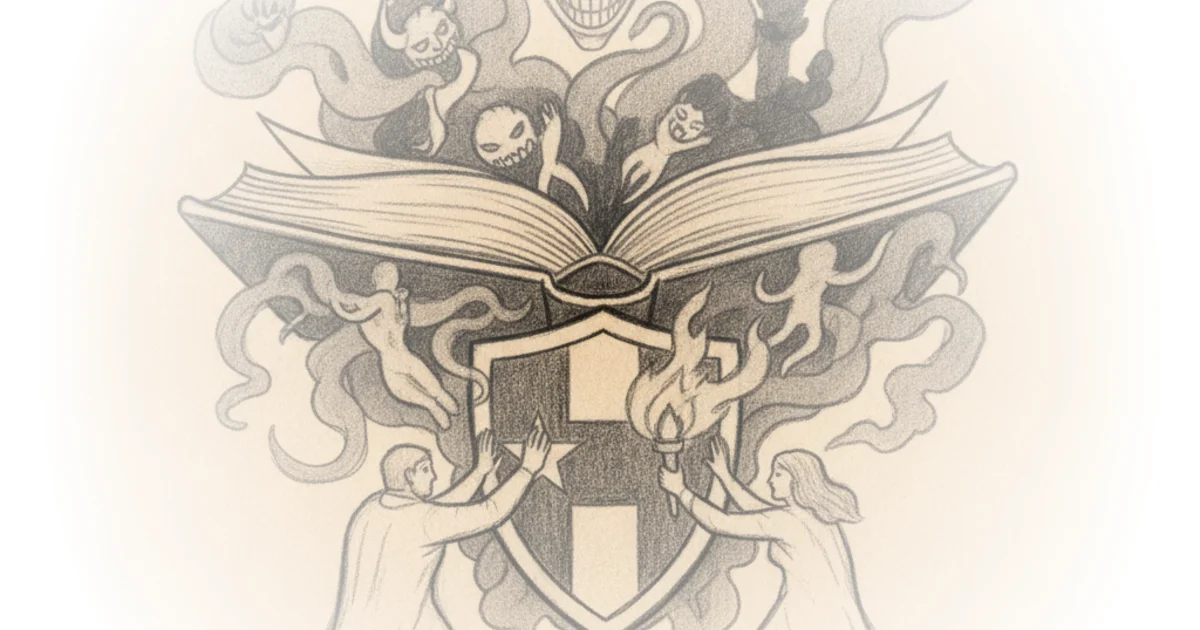
Reason observes that this dynamic is historical, not new. The commentary draws a sharp parallel to the Comics Code Authority of the 1950s, where moral guardians similarly claimed to shield children from "corrupting" influences, only to sanitize art and stifle honest discussion about human behavior. By invoking this history, the piece suggests that the current push in Texas is less about the specific content of Let's Talk About It—a graphic novel by Erika Moen and Matthew Nolan covering consent, contraception, and body image—and more about who gets to define what is appropriate for young people.
Sex censorship has always been rooted in patriarchal 'protection' of children and women (whom they consider children).
The article points out the absurdity of the targeted content. The book in question includes frank discussions about masturbation, polyamory, and the reality that "gender is so much bigger than male and female." Yet, Patrick's office flagged pages merely for mentioning that inserting objects without a flared base can lead to a hospital visit. The piece argues that the administration's outrage is performative, designed to signal moral superiority rather than address any genuine obscenity. While critics might argue that parents have a right to challenge library materials, the scale of this effort—2,200 books targeted, including classics like The Bluest Eye and The Perks of Being a Wallflower—suggests a systematic purge rather than selective curation.
The Mechanism of Control
The commentary shifts to the legislative machinery behind the rhetoric. The piece highlights that while officials claim, "We're not banning books," the practical effect is a de facto ban enforced through financial coercion. Reason reports that Patrick is pushing for legislation that would "lower a school's accountability grade if it has any copies of a challenged book on its shelves." This creates a high-stakes environment where school districts, fearing the loss of funding or reputation, will likely comply without question.
This approach mirrors the dynamics seen in Florida's Parental Rights in Education Act, where the language of "parental rights" was used to effectively silence classroom discussions on gender and sexuality. The article notes that the Texas strategy leaves little room for local autonomy, forcing schools to choose between their educational mission and state mandates. "That's quite different from individual school librarians, administrators, or boards deciding not to stock those books on their own school's shelves," the piece argues, emphasizing that the state is overriding local decision-making to impose a uniform standard of moral purity.
The human cost of this policy is the removal of vital resources from students who cannot afford to buy books privately or access public libraries that may face similar pressure. The article suggests that if the goal is to prevent teenagers from learning about sexuality from online pornography, then removing comprehensive, age-appropriate guides like Let's Talk About It is counterproductive. As the piece notes, "if we don't want teenagers to learn about sexuality largely from online porn, then books like this—which talk about a wide range of relationship and sexuality topics in a frank way—could be important."
The Broader Context of Digital and Physical Surveillance
Beyond the Texas book ban, the commentary weaves in a broader critique of how authorities are increasingly intervening in the lives of young people, both in physical libraries and digital spaces. The piece briefly touches on a $16.68 billion settlement by Meta, where the company agreed to restrict children's usage of social media platforms. While this addresses a different issue, Reason connects the dots: in both cases, the solution proposed by authorities and corporations is increased restriction and surveillance rather than education or autonomy.
Similarly, the article mentions growing congressional interest in federal law enforcement's use of hacking tools to access Americans' phones, noting that "there exists little public information regarding its scope, frequency, or operational safeguards." This trend of expanding state power, whether to police library shelves or monitor digital devices, creates an environment where privacy is eroded in the name of protection. The commentary suggests that these moves are part of a larger pattern where the executive branch and state legislatures are increasingly willing to bypass traditional checks and balances to enforce their vision of safety.
We don't want an everything app on one piece of everything tech. We want our tech everywhere, to follow us as we move throughout the world, all feeding into a personalized digital ecosystem.
This observation about the future of technology serves as a metaphor for the current political climate: a desire to control every aspect of the environment, from the books on a shelf to the data on a phone. The piece argues that this totalizing approach ignores the complexity of human development and the importance of free inquiry.
Bottom Line
The strongest element of this analysis is its unflinching exposure of the paternalism underlying the Texas book ban, revealing how "protection" is often a code word for control. However, the piece's greatest vulnerability lies in its assumption that local school boards will always resist state pressure; history shows that fear of funding cuts can quickly silence dissent. The reader should watch for the upcoming legislative session in Texas, where the threat of downgrading school accountability grades will test whether local educators can withstand the weight of state-imposed censorship.