Jeff Stein's latest analysis for SpyTalk cuts through the noise of current headlines to reveal a chilling historical pattern: the current escalation against Venezuela mirrors the calculated political theater of the 1989 invasion of Panama. This is not a standard geopolitical update; it is a forensic examination of how administrations manufacture crises to solve domestic political problems, using the same playbook of dubious pretexts and exaggerated threats that has failed us before.
The Playbook of Manufactured Crisis
Stein argues that the administration's recent seizure of an oil tanker and its rhetoric regarding drug trafficking are not genuine security responses, but rather a desperate search for a casus belli. He writes, "As the president searches for a saleable pretext for attacking Venezuela and overthrowing its leader, Nicolas Maduro, the United States is approaching a largely forgotten anniversary that helps explain what is happening: the Dec. 20, 1989 invasion of Panama." This framing is crucial because it shifts the focus from the alleged crimes of the target to the political desperation of the aggressor.
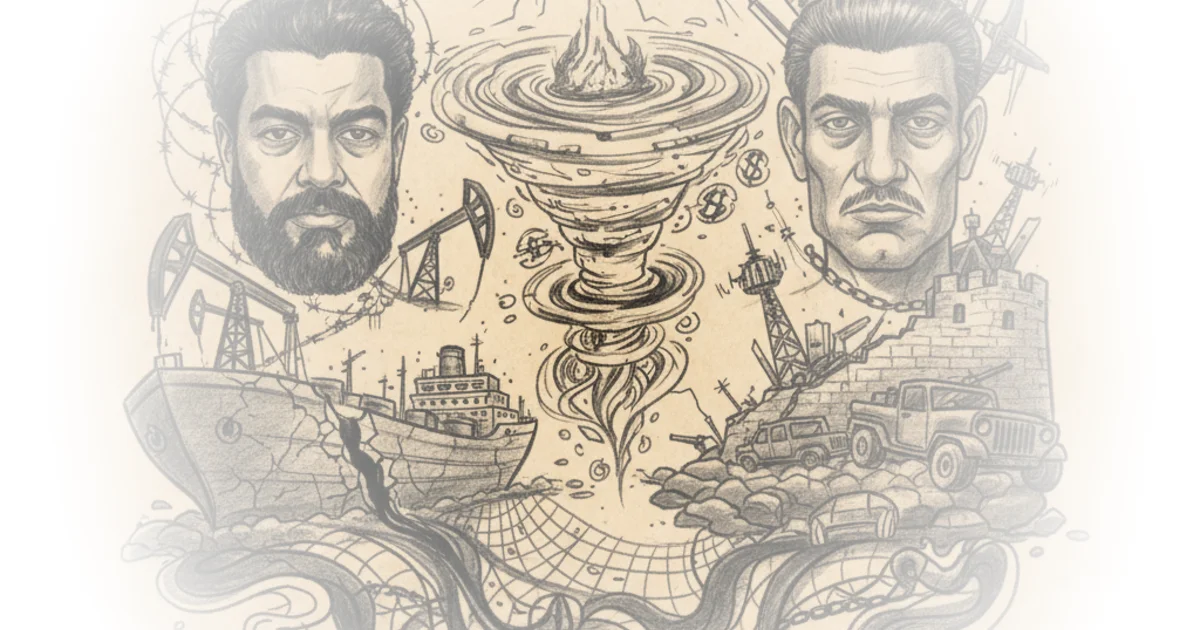
The author draws a direct line between the current claims of a Venezuelan cartel flooding the U.S. with fentanyl and the historical record. Stein notes, "This, too, mirrors Bush's playbook for Panama. Bush claimed he invaded the isthmus 'to safeguard the lives of Americans [and] to combat drug trafficking.'" The evidence suggests these claims are convenient distractions. As Stein puts it, "What went unmentioned was the real reason for invading Panama. High-ranking military and civilian dissenters in the administration said Bush used Noriega and the invasion for his own domestic political goals—to appear to be a strong, decisive leader." This historical parallel is particularly potent when considering the Gulf of Tonkin incident, where a fabricated naval engagement was used to justify a massive escalation in Vietnam, proving that the machinery of war often runs on fiction.
The drug case was so secondary to Bush's actual political goals that prosecutors had to rewrite the original indictment against Noriega after the invasion just to ensure it would hold up.
Stein's analysis holds up under scrutiny because it relies on declassified records and the testimonies of insiders rather than current press releases. However, critics might argue that the comparison to Panama oversimplifies the current geopolitical landscape, where Venezuela's ties to Russia and Cuba present a more complex strategic challenge than the isolated dictatorship of the late 80s. Yet, the core mechanism—using a foreign villain to distract from domestic unpopularity—remains strikingly consistent.
The Scale of the Coming Catastrophe
The piece takes a somber turn when contrasting the size and military capacity of the two nations. While the 1989 invasion of Panama was a swift, albeit bloody, operation against a small force, Stein warns that a similar approach in Venezuela would be disastrous. He writes, "A U.S. attack on Venezuela would be a catastrophe on a completely different scale. It would be 'cool' to invade Venezuela, Trump told staff, according to John Bolton, because the country was 'really part of the United States.'" This quote exposes a dangerous disconnect between the desire for military action and the reality of the terrain.
Stein highlights the sheer disproportion of force required, noting that Venezuela has a landmass twice the size of California and a population of 28 million, dwarfing Panama's 4.6 million. The author points out that the U.S. military would face a force of over 125,000 personnel, potentially supported by 200,000 militia fighters. The comparison to the 2003 invasion of Iraq is not hyperbolic; Stein cites experts who predict a similar unraveling: "There would be 'chaos for a sustained period of time with no possibility of ending it,' Douglas Farah, a Latin America expert and president of IBI Consulting, told SpyTalk last month." This warning is essential for readers to understand that the human cost would not be a footnote but the defining feature of any conflict.
The argument is strengthened by the admission that non-lethal options exist but are being ignored. Stein reveals that "Maduro has reportedly signaled a willingness to leave Venezuela as long as he and his family members had full legal amnesty... and the removal of all U.S. economic sanctions. Trump rejected the deal." This rejection suggests that the goal is regime change at any cost, not a negotiated settlement. The parallel to the pre-invasion diplomatic failures in Panama, where officials blocked a potential peaceful exit for Noriega, reinforces the idea that the path to war is being deliberately chosen over peace.
Institutional Dissent and the Human Cost
Perhaps the most disturbing element of Stein's coverage is the evidence of internal dissent within the U.S. military and intelligence communities. Just as General Frederick F. Woerner Jr. resigned in 1989 over the Panama invasion, Stein reports that "Adm. Alvin Holsey, the current head of the Southern Command, is retiring over disagreement with Defense Secretary Pete Hegseth's campaign of extrajudicial attacks on small boats in the Caribbean." The stakes of this dissent are high, with reports of "at least 22 such assaults, killing 87 people."
Stein does not shy away from the legal and moral implications of these actions, noting that critics charge them are "illegal, potential war crimes, or even blatant homicides." The article underscores the tragedy of ignoring expert warnings: "The Trump administration does not appear to properly assess what the threat and strategic interests are," Farah said. "The complexities of any of the available courses of action may elude them." This is a stark reminder that when political will overrides strategic reality, the result is often a loss of life that serves no national interest.
The human cost is the central theme of the conclusion. Stein reminds readers that while the 1989 invasion succeeded in its immediate political aim for George H.W. Bush, it ultimately failed to secure his presidency, as "Americans cared more about the economy than they did about Noriega or Saddam Hussein." He warns that "That could be Trump's fate as well. But this time, the cost could be far higher." The piece forces the reader to confront the reality that the "wimp factor" or the need for a distraction is not a valid reason to risk a regional war that could kill thousands.
Bottom Line
Jeff Stein's argument is at its strongest when it connects the dots between historical precedents and current events, revealing a pattern of manufactured consent for war that is both cynical and dangerous. The piece's greatest vulnerability is its reliance on the assumption that the administration will not pivot, but the evidence of rejected diplomatic overtures suggests the path is already set. Readers should watch for the next escalation in rhetoric, as the gap between political necessity and military reality widens, threatening to turn a Caribbean crisis into a humanitarian disaster.