Natalie Wexler delivers a sobering diagnosis of a federal education system that is simultaneously retreating from its research duties and failing to translate existing science into classrooms. While the immediate news cycle fixates on budget cuts, Wexler argues the deeper crisis is a decades-long disconnect between cognitive science and the daily reality of teachers, a gap that threatens to leave the most vulnerable students behind.
The Research Vacuum
The piece opens by contextualizing the recent drastic cuts to the Department of Education. While federal funding constitutes only about 10 percent of K-12 spending, Wexler notes that this money is almost entirely directed at the most vulnerable students—those from low-income families and those with learning difficulties. The immediate reaction to frozen funds being released is overshadowed by the long-term erosion of the department's research arm. Consultants are losing contracts, and the atmosphere is dire. As one consultant told The 74, "It just feels like we're going back into the dark ages."
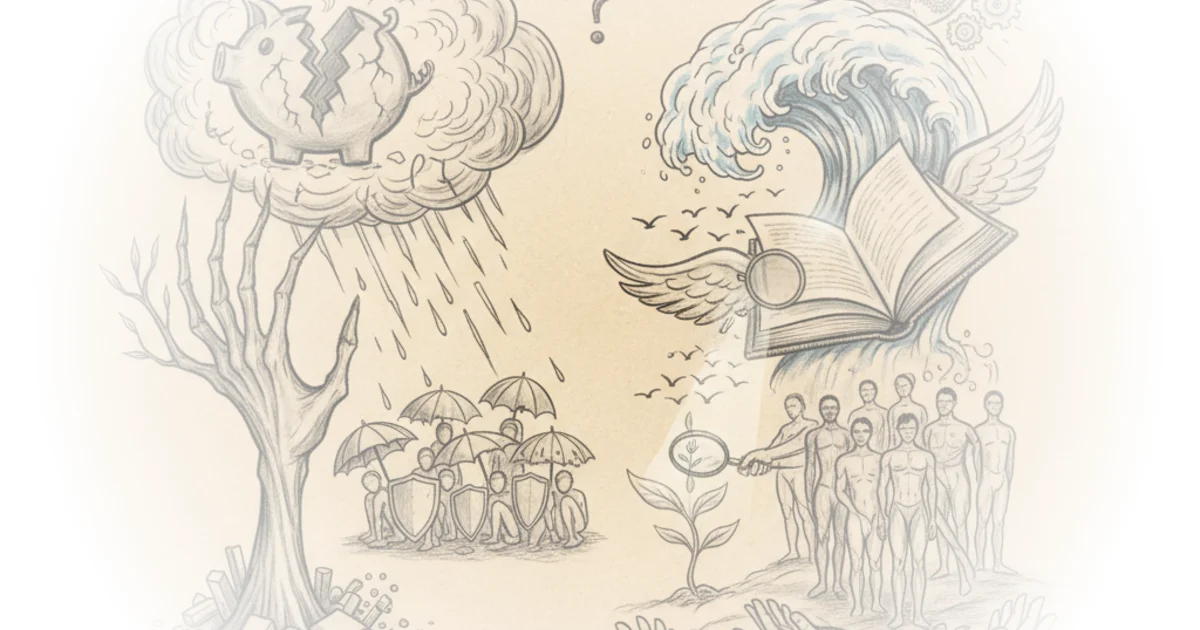
Wexler is careful not to romanticize the current state of federal research. She acknowledges that while some data is essential for testing, much of it has been "useless—or even misleading." The core of her argument here is that volume of study does not equal quality of insight. Just because an intervention is studied more often doesn't mean it is better; it often just means it is easier to study. Furthermore, the research has been adept at tracking student failure but has failed to provide actionable solutions. The federal Institute of Education Sciences created the What Works Clearinghouse (WWC) to bridge this gap, yet Wexler points out that its "Practice Guides" are often too dense and vague to be useful. A guide on teaching writing, for instance, might advise students to "use different kinds of sentences" without explaining how to teach that skill. This lack of practical utility means that even when research is illuminating, it has little impact on what happens in classrooms.
Critics might argue that the federal government's role should be limited to funding, leaving implementation to local districts. However, Wexler counters that without a clear federal standard, district leaders are left "unequipped to navigate the billion-dollar world of school-based products and services," often relying on evaluations that don't even consider evidence of effectiveness.
"Promoting evidence from cognitive science... would include findings like the importance of building knowledge for reading comprehension and learning in general."
The Cognitive Science Opportunity
Wexler pivots to a provocative suggestion: rather than funding new, expensive comparative studies that the government is unlikely to support, a slimmed-down agency should focus on publicizing the vast body of existing cognitive science that teachers rarely hear about. She lists principles that contradict current educational orthodoxy, such as the value of retrieval practice, deliberate practice, and explicit instruction over discovery learning. The problem, she argues, is not a lack of data but a lack of dissemination. The WWC issued only one Practice Guide on these topics in 2007, and it strangely limited its relevance to subjects like science and math, ignoring the profound implications for reading comprehension.
The author contrasts the US situation with countries like England, Australia, and New Zealand, where government support has helped spread knowledge of cognitive science. In these nations, educators are more receptive to these findings. Wexler notes a curious irony: while she has a packed speaking schedule in the US and Australia, she has "yet to be asked to speak in England," despite the enthusiasm there. This suggests that the US education system is uniquely resistant to scientific evidence, perhaps due to a deeply ingrained belief system that views education as a "belief-based profession" rather than a science-based one.
The Politicization Trap
The most complex part of Wexler's analysis addresses the political risks of federal involvement. She argues that in the current polarized environment, any administration—especially a conservative one—endorsing cognitive science could backfire. Education issues are almost always politicized, and to some educators, advocating for knowledge-building or systematic phonics is seen as a right-wing agenda. Wexler writes, "If Education Secretary Linda McMahon were to come out tomorrow in favor of, say, retrieval practice, I imagine that many American teachers... would only see it as confirmation that teaching approaches designed to enable students to retain information are inherently right-wing."
This politicization is not unique to the US; she notes that even in England and Australia, government efforts to promote science-informed teaching have faced politically tinged pushback. The risk is that a federal endorsement could alienate the very teachers the government hopes to help. Wexler suggests that state governments could take the lead, expanding their focus from early reading to general learning, but she admits this is a "big just" given that teachers are already overwhelmed by the "science of reading" movement.
"Teachers in the US may not be clamoring to learn cognitive science, but they are desperate for a way to help their students become better writers."
A Pragmatic Path Forward
So, how do we get the message to teachers without triggering political defenses? Wexler proposes a strategy that bypasses abstract theory in favor of practical application. She suggests accessible introductions to the basics of cognitive science, similar to how Emily Hanford's podcast demystified phonics. She also advocates for curriculum materials grounded in scientific evidence, so teachers don't have to translate theory into practice themselves. She highlights specific curricula that align with this evidence, noting that they focus on rich content rather than abstract skills.
The most compelling part of her argument is the focus on writing instruction. Wexler recounts her work in a high-poverty district in Louisiana, Monroe City, where teachers were unfamiliar with terms like "retrieval practice" but were desperate to help students write clearly. By embedding writing instruction in a content-rich curriculum, teachers inadvertently applied cognitive science principles. As one teacher in Monroe observed, "We realized that teaching students to write clearly was actually teaching them to think clearly." This approach allows educators to benefit from the science without needing to buy into the ideology. Wexler concludes that the most effective strategy might be to stop leading with calls for the "science of learning" and instead say: "Hey, need help teaching your kids to write? I found something that works."
Critics might note that this pragmatic approach risks diluting the broader scientific message, potentially leaving teachers without a deep understanding of why their methods work. However, Wexler's point is that in a fractured political landscape, results may be the only bridge left to cross.
Bottom Line
Wexler's strongest argument is her reframing of the solution: the path to better education isn't more federal research or political mandates, but rather practical, content-rich curricula that naturally embed cognitive science principles. Her biggest vulnerability lies in the assumption that teachers can be reached through writing instruction alone without addressing the systemic lack of training in cognitive science. The reader should watch for whether state-level initiatives can fill the void left by the federal retreat, or if the politicization of education will continue to stall progress.
"If we want a fairer and more effective education system in the US, we might not want to lead with calls for the 'science of learning'—especially if they come from the federal government."
The Path Forward
The ultimate verdict is that the federal government's withdrawal from education research creates a vacuum that cannot be filled by ideology alone. Wexler's proposal to focus on writing as a vehicle for cognitive science offers a tangible, less polarized entry point for reform. The challenge remains whether the education establishment can embrace these evidence-based practices without the heavy hand of federal policy, or if the current political climate will continue to obscure the science that could transform classrooms.