Tom van der Linden argues that Christopher Nolan's filmography is not a collection of sci-fi puzzles about time and gravity, but a rigorous philosophical inquiry into the human inability to access objective truth. While most critics get lost in the mechanics of the plot, van der Linden identifies a consistent moral thesis: our obsession with factual certainty is a trap that prevents us from defining who we truly are.
The Illusion of Objective Reality
Van der Linden begins by dismantling the common perception of Nolan's work as mere spectacle. He notes that while audiences are captivated by the "manipulation of time" and non-chronological structures, they often miss the deeper existential struggle. "The real revelation is not the putting together of the puzzle it is about what they reveal about the characters what they reveal about us," he writes. This reframing is crucial; it shifts the viewer's focus from solving a mystery to confronting a psychological reality. The author suggests that Nolan's characters are not heroes conquering the unknown, but prisoners of their own perception.
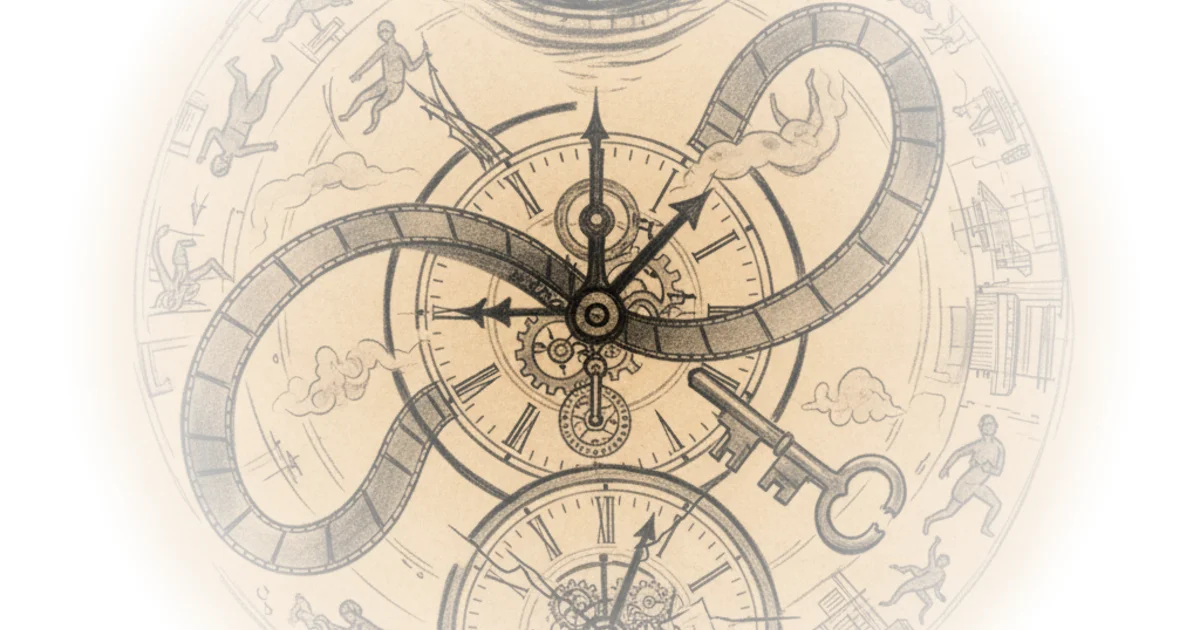
The core of the argument rests on the distinction between ontology (what exists) and epistemology (what we can know). Van der Linden posits that Nolan is less interested in the nature of reality and more interested in the limits of human knowledge. "We are imprisoned in our own views," the author observes, noting that characters like Leonard in Memento or Cobb in Inception desperately try to anchor themselves in facts—notes, photographs, totems—only to find those anchors unreliable. "Memory can change the shape of a room... they're just an interpretation they're not a record," van der Linden paraphrases, highlighting how the films expose the fragility of memory and the malleability of truth.
We see the world subjectively which means that the reality we experience is not a direct external one but one that is filtered through our perception through our consciousness.
This analysis holds up remarkably well against the filmography. The author effectively argues that the "twists" in Nolan's movies are not just narrative tricks but demonstrations of how subjective bias distorts our understanding of events. However, a counterargument worth considering is whether this philosophical reading risks over-intellectualizing the visceral, emotional impact of the films. Not every viewer is looking for a Kierkegaardian lesson; many simply enjoy the tension of the unknown.
The Kierkegaardian Turn
The piece takes a significant leap when van der Linden connects Nolan's work to the philosopher Søren Kierkegaard. The author explains that for Kierkegaard, identity is not defined by detached reason or scientific fact, but by "passionate engagement" and the values we choose to hold. "You don't want the truth you make up your own truth," van der Linden quotes, clarifying that this is not about denying facts like "two plus two equals five," but about recognizing that our deepest motivations are driven by subjective conviction rather than objective data.
This is the essay's most distinctive contribution. Van der Linden suggests that Nolan's tragic characters are those who refuse to accept this subjectivity. They cling to a false sense of objectivity to avoid the terrifying responsibility of choosing their own values. "They seek some kind of salvation in objective reality and then get frustrated when that reality eludes them," the author writes. By insisting on facts, these characters remain in a state of "existential despair," unable to move forward because the external world refuses to conform to their internal logic.
Critics might argue that this binary between "facts" and "faith" is too stark. In the real world, scientific evidence and personal belief often coexist without one negating the other. Yet, within the specific narrative logic of Nolan's films, van der Linden's point lands with precision. The characters who fail are indeed those who cannot distinguish between what is true and what they need to be true to function.
The Leap of Faith
Ultimately, van der Linden argues that the "victorious" characters in Nolan's universe are those who embrace uncertainty. They stop looking for external validation and instead make a "leap of faith" into their own subjective truths. "What happens happened," the author notes, quoting a line that signifies the acceptance of a reality that cannot be proven but must be believed. This shift allows characters to take responsibility for their actions and define themselves by what they believe, rather than what they can prove.
The author concludes that this is the key to Nolan's moral philosophy: we must accept that we are subjective beings. "If they come to embrace their ontological uncertainty... they can start looking inward they can examine themselves with honesty take responsibility for their choices," van der Linden writes. This is a powerful synthesis of the director's themes, suggesting that the ultimate heroism in a Nolan film is not saving the world, but saving oneself from the paralysis of doubt.
You don't believe in god or in future or anything outside of your own experience the rest is belief and i don't have it.
Bottom Line
Tom van der Linden's analysis successfully cuts through the noise of plot mechanics to reveal a coherent, if demanding, philosophical framework underlying Nolan's work. The strongest part of the argument is the connection between the failure of objective certainty and the necessity of subjective commitment. Its biggest vulnerability lies in potentially downplaying the role of external, objective reality in favor of a purely internal narrative, but for a busy reader seeking depth, this piece offers a compelling lens that transforms how one watches these films. Watch for how this framework applies to Nolan's future projects, where the tension between fact and belief will likely only intensify.