Tim Mak does more than report on fencing matches; he exposes how international sports federations have become unwitting accomplices in normalizing an ongoing war of aggression. This piece is notable because it refuses to accept the "apolitical" shield that major sporting bodies use, instead tracing a direct line from the money and influence of Russian oligarchs to the decision to let aggressors compete alongside their victims on the world stage.
The Battlefield Beyond the Arena
Mak begins not with policy, but with the visceral reality of an athlete standing across the piste from someone whose state is actively destroying her home. He writes, "As soon as Russia began its full-scale invasion of Ukraine in 2022, the sports arena also turned into a battlefield." This framing is crucial because it dismantles the illusion that competition can exist in a vacuum when one side is committing genocide. The author grounds this abstract concept in grim statistics: over 650 athletes and coaches have been killed in Russian attacks, while thousands more serve in the armed forces.
"When you see a Russian fencer before you, it's not just an opponent; you also see everything that is happening in your country, in the news."
This quote from Ukrainian fencer Yuliia Bakastova, relayed by Mak, carries a weight that policy briefs cannot convey. The author argues that the return of Russian athletes under "neutral" status—and increasingly with national symbols—is not a gesture of peace but a strategic victory for Moscow. As Mak notes, participation brings visibility and respect, gradually eroding the moral clarity of the conflict. He points out that while Ukraine's athletes are displaced and traumatized, Russia is leveraging its financial power to re-enter the fold.
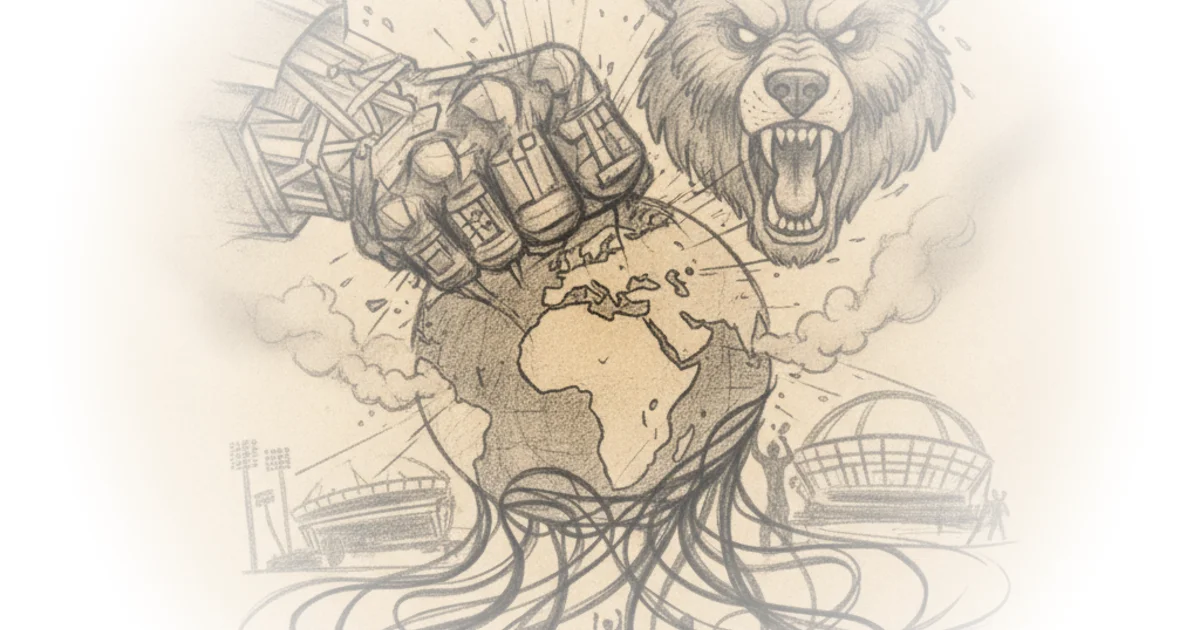
Critics might argue that excluding all Russian citizens from sport punishes individuals for their government's actions, violating the spirit of universal human rights. However, Mak counters this by highlighting the systemic nature of the issue: the "neutrality" often masks state sponsorship and propaganda opportunities, as seen when a "neutral" ski mountaineer claimed silver at the 2026 Winter Olympics only to be celebrated in Russian media as a national hero.
The Oligarchic Grip on Global Sport
The piece's most damning revelation concerns the structural corruption within international federations. Mak identifies the International Fencing Federation (FIE) as a primary example, noting that for years it was chaired by Alisher Usmanov, one of Russia's wealthiest oligarchs. "Everyone knows that Russia will not stop," Bakastova warns in the text, but Mak adds context: Russia wants power and to be listened to, regardless of the cost.
The author details how Usmanov was re-elected in November 2024 only to step down days later when sanctions threatened the federation itself. This sequence suggests a system designed to absorb shock while maintaining influence. "Russia is just a bubble," Mak quotes Bakastova saying, but the article argues this bubble is inflated by billions in investment and political maneuvering that has successfully pressured federations like the World Kickboxing Federation to reinstate Russian national symbols as early as March 2025.
"Participation in top competitions brings Russia and its undemocratic counterparts visibility, respect, and fame and gradually normalizes their crimes by placing aggressors next to their victims on the winners' pedestal."
This argument is the core of Mak's critique: normalization is a policy goal for Moscow, and international sports bodies are the delivery mechanism. The author does not shy away from the human cost of this normalization, citing the case of Ukrainian skeleton racer Vladyslav Heraskevych, who was disqualified for wearing a helmet honoring fallen athletes. While officials called it a rules violation, Mak frames it as an act of remembrance in the face of erasure.
The Power of Persistence and Rule-Bending
Despite the systemic pressure to conform, Mak highlights how individual acts of defiance have forced institutional change. He recounts the story of Olha Kharlan, who refused a handshake with a Russian fencer at the 2023 World Championships in Milan. This single act of non-cooperation led to a rule change allowing athletes to salute or touch blades instead. Mak uses this to illustrate a broader theme: discipline and persistence can alter the game.
"You need to be disciplined and believe in what you do. Sometimes you need time to achieve something. If you really put yourself into your work and do everything for it, the answer will always be there."
This sentiment from Bakastova serves as a counter-narrative to the despair of war. Mak weaves this personal resilience with the broader geopolitical struggle, showing that while the administration in Moscow seeks to erase Ukrainian identity through force and influence, the athletes are fighting back on their own terms. The article references the 2018 Novi Sad championships where Ukraine stood second to Russia even before the full-scale invasion, foreshadowing the current tension.
Bottom Line
Tim Mak's strongest contribution is his refusal to let international sports remain a sanctuary for war crimes; he effectively argues that allowing aggressors to compete under any flag legitimizes their actions. The piece's greatest vulnerability lies in its reliance on individual anecdotes to explain complex geopolitical maneuvering, which may underestimate the bureaucratic inertia of federations resistant to political pressure. Readers should watch whether the upcoming 2026 Winter Olympics will see a reversal of these trends or further entrenchment of Russian influence under the guise of neutrality.