Jordan Schneider's latest analysis for ChinaTalk does something rare in political reporting: it treats the opaque, high-stakes machinery of the Chinese Communist Party not as a sterile bureaucratic process, but as a chaotic, theatrical drama where ambition, vanity, and murder collide. While most coverage of the current administration's purges focuses on dry statistics or factional maps, Schneider argues that the sheer "campiness" of these events reveals the fragility of the system itself. By revisiting the spectacular downfall of Bo Xilai through the lens of a wuxia novel and a buddy cop film, the piece suggests that the "normalised" nature of today's purges is a dangerous illusion masking a regime prone to self-immolation.
The Hero's Return and the Cult of Personality
Schneider frames the narrative of Bo Xilai not as a standard political rise, but as a genre-bending story of a "fallen prince" attempting a "revenge trope" to reclaim his glory. He writes, "Bo Xilai in 2007... embodies this trope (although he is obviously not a conventional hero)." This framing is effective because it immediately humanizes a figure often reduced to a cautionary tale, showing how personal vanity drove policy. Schneider details how Bo, the son of a revolutionary, sought to outshine his peers with grandiose projects, such as building the world's largest city square in Dalian and erecting a ceremonial column larger than the one in Beijing. "Rumors even alleged that Jiang Zemin was shocked when he first saw the huábiǎo in Dalian during a visit," Schneider notes, highlighting how Bo's thirst for influence bordered on the delusional.
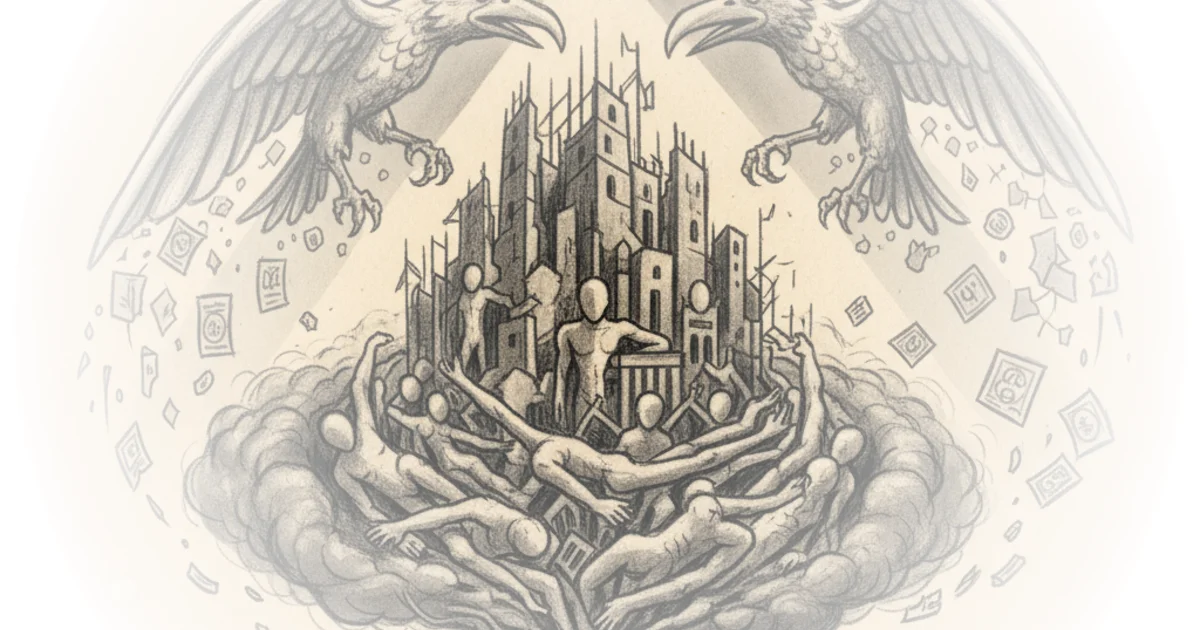
The author's choice to describe Bo as a "debauched ruler" who hosted fashion shows with government funds and created a squad of policewomen on horseback serves to illustrate the disconnect between the party's austere public image and the internal reality of its elites. "He was both an ambitious princeling and a debauched ruler," Schneider writes, a juxtaposition that underscores the systemic rot that allows such excesses to flourish until they become a liability.
"Bo's life fundamentally embodies this trope... Forced into exile, the disgraced noble prince swears to bide his time in the shadows as he slowly accumulates resources and plans for his return to glory."
Critics might argue that focusing on Bo's personal eccentricities distracts from the structural reasons for his purge, yet Schneider uses these details to prove that in a system lacking transparent succession rules, personality clashes and vanity are the primary drivers of political survival.
The Buddy Cop Dynamic and the Cost of "Cleaning Up"
The commentary shifts to the Chongqing era, where Schneider identifies a "buddy cop" dynamic between Bo and his police chief, Wang Lijun. This section is crucial for understanding the human cost of the administration's anti-corruption drives. Schneider notes that the "Smashing Black, Singing Red" campaign resulted in "nearly 5,000 arrests" and "65 people executed or sentenced to life imprisonment." He writes, "The operation's massive scale was enough for Beijing to become wary of Bo," suggesting that the administration's tolerance for purges has limits when they threaten central authority.
Schneider paints Wang Lijun as a figure of "narcissism" and "inferiority complex," a man who "switched his ethnicity from Han to Mongolian" to gain political advantages and fabricated credentials to appear more elite. "Wang was as narcissistic as Bo, if not more," Schneider observes, noting that Wang's entourage of camera-carrying assistants and his demand for Photoshopped photos reveal a desperate need for validation. This characterization is vital because it strips away the myth of the disciplined party cadre, replacing it with a portrait of opportunism.
However, the piece does not shy away from the brutality of their partnership. The campaign was not just about numbers; it was about terror. "With Bo's backing, Wang confidently unleashed Chongqing's anti-corruption campaign that terrorized the city and made excessive surveillance and paranoia the new normal," Schneider writes. This is a stark reminder that for the average citizen, these high-level power struggles manifested as a police state.
"Wang was no princeling, a fact which clearly haunted him... To take advantage of the affirmative action policies that benefit ethnic minorities, Wang switched his ethnicity from Han to Mongolian."
A counterargument worth considering is whether focusing on Wang's personal flaws minimizes the systemic nature of the corruption he uncovered. Yet, Schneider's point stands: in a system where loyalty is paramount, the tools used to enforce order often become the very weapons used to destroy their masters.
The Slap and the Spectacle of Defection
The climax of Schneider's narrative is the moment the alliance shattered, triggered by the murder of British businessman Neil Heywood and the subsequent cover-up involving Bo's wife, Gu Kailai. Schneider describes the murder as a "riskiest option" for an ESL tutor turned money launderer, driven by a dispute over money and the harassment of Bo's son. "Gu viewed Heywood as a threat that needed to be neutralised," Schneider writes, noting that she chose poisoning for its simplicity.
The turning point, according to the author, was a physical altercation that symbolized the collapse of the political order. "When Gu falsely denied her role, Bo slapped Wang for his ungratefulness and betraying him," Schneider recounts. "This slap was the turning point that 'shattered the last shreds of [Wang's] illusions about dignity.'" This moment is pivotal because it transformed a bureaucratic dispute into a personal vendetta that forced Wang to seek asylum in the US consulate, an act Schneider describes as "cosplaying as an old man" to escape.
The author draws a parallel to the "Wang Lijun incident" of 13 years ago, noting that it remains the only "crack that allowed us a rare glimpse into the party's shrouded political intrigue." By framing Wang's defection as a "win-win situation" where "Bo got taken down, and Wang saved his skin," Schneider highlights the chaotic, almost farcical nature of the purge. "Wang's strategy of causing massive political damage at his own expense ensured that Bo could not easily kill him, albeit at the cost of the party's reputation," he writes.
"This slap was the turning point that 'shattered the last shreds of [Wang's] illusions about dignity,' according to a police officer in Chongqing."
The human cost here is profound. While the article focuses on the political maneuvering, the reality is that a murder was committed, a man was poisoned, and a city was terrorized, all to protect the reputation of a single family. The "campiness" Schneider identifies is a thin veneer over deep, systemic violence.
The Administration's Normalized Purges
Schneider concludes by connecting the Bo Xilai saga to the current landscape under the current administration. He argues that while purges are now a "normalised feature," they still invite "new political divinations, rumours of succession politics, and new speculations on the cabinet's factional alignments." He writes, "Under Xi's regime, CCP purges have been exceptional in terms of quantity and quality. Xi has now purged more officials than Mao ever did, and he is not stopping."
This comparison to the Mao era is a bold claim that underscores the intensity of the current political climate. Schneider suggests that the "fanfare, the drama, the campiness" of these purges are not just entertainment but symptoms of a system that relies on fear and instability to maintain control. "Unfortunately, because of the party's opaque politics, we are rarely privy to the internal processes of a successful purge and can only debate about the outcomes once the dust settles," he laments.
"Under Xi's regime, CCP purges have been exceptional in terms of quantity and quality. Xi has now purged more officials than Mao ever did, and he is not stopping."
Critics might argue that comparing the current administration's purges to Mao's era is hyperbolic, given the different economic and social contexts. However, the sheer scale of the removal of officials suggests a level of internal cleansing that rivals historical precedents, driven by a centralization of power that leaves little room for dissent.
Bottom Line
Schneider's piece is a masterclass in using narrative flair to illuminate the dark, chaotic underbelly of Chinese politics, proving that the "campiness" of these purges is a dangerous distraction from the human suffering they cause. The strongest part of the argument is its ability to humanize the abstract machinery of the party, showing how vanity and personal grudges can topple empires. Its biggest vulnerability is the reliance on a single, sensationalized historical case to explain a complex, evolving political reality, but the core insight remains: in a system without rules, the drama is the only truth we have.