Tim Mak delivers a jarring reality check: four months after a U.S. military operation upended Venezuela's leadership, the promised liberation for political prisoners has evaporated, replaced by a quiet, grinding stalemate. While global headlines have pivoted to new geopolitical flashpoints, Mak documents a grim continuity where the same intelligence apparatus that once tortured dissidents now operates under a new flag, leaving hundreds of families in a state of suspended animation. This is not a story of regime change, but of regime persistence.
The Illusion of Amnesty
Mak anchors his narrative in the visceral experience of Gloria Morales, a mother who traveled hundreds of miles to Caracas after hearing a January 2026 promise of total amnesty. The author writes, "As soon as I heard the news, I decided to travel to Caracas. I wanted to ensure my son's freedom: a political prisoner of Maduro's regime." Yet, the reality on the ground contradicts the official narrative of a clean break. Mak points out that while the executive branch in the United States moved on to other theaters of conflict, the interim administration in Venezuela, led by former intelligence chief Delcy Rodriguez, has failed to deliver on its core pledge.
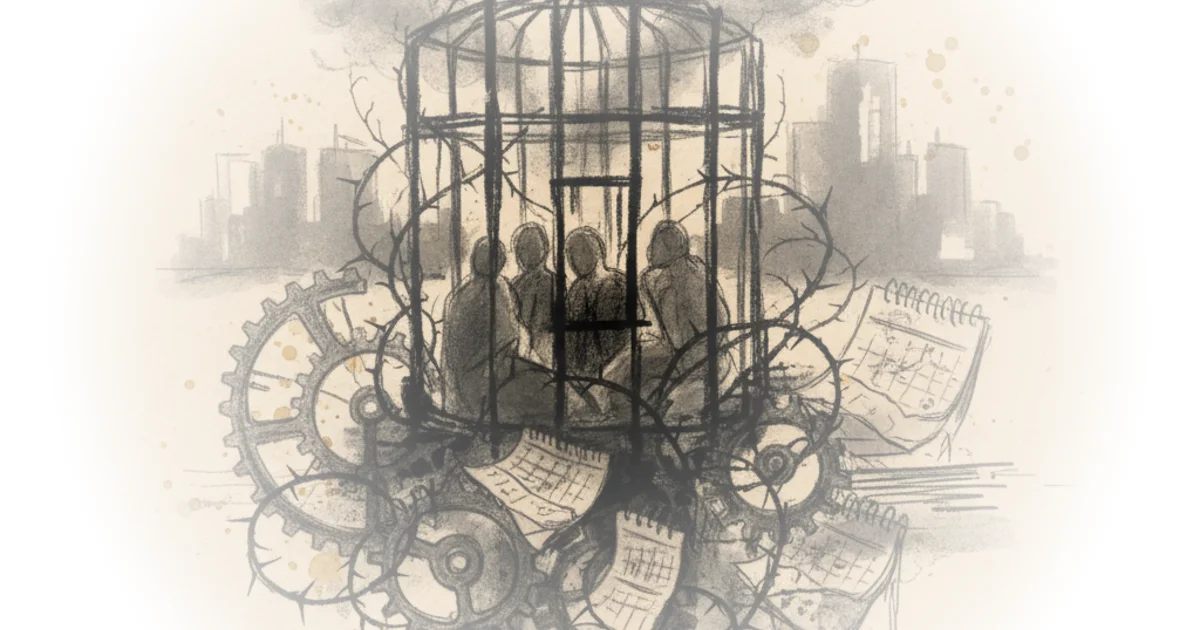
The coverage highlights a disturbing continuity in personnel and power structures. Rodriguez, who took over the presidency after the U.S. operation, is the same leader of the Bolivarian National Intelligence Service (SEBIN) who oversaw the apparatus of repression for years. Mak notes that despite her promises of a better judicial system, the prisons remain full. The author observes, "More than 115 days have passed since Delcy Rodríguez took power and the amnesty hasn't reached Gloria's son, alongside more than 500 women, men, and teens captured by the regime without due process."
This framing is effective because it strips away the geopolitical spectacle of the U.S. intervention to focus on the human cost of the transition. It forces the reader to confront the fact that removing a head of state does not automatically dismantle the machinery of the state. Critics might argue that institutional reform takes time and that the interim government faces immense logistical hurdles, but Mak's evidence suggests the delay is systemic rather than accidental. The new leadership appears to be managing the old system rather than replacing it.
"We have more dignity than them."
The Persistence of the Shadow State
Mak's reporting draws a direct line between the current protests and the dark history of El Helicoide, the former shopping mall converted into a torture center and SEBIN headquarters. He details how families gather nightly at this site, a location deeply scarred by the 2020 "Operation Gideon" aftermath, to demand justice. The author writes, "Every night since Maduro's capture, the relatives of political prisoners gather at El Helicoide with candles and photos of their loved ones to demand their freedom."
The piece underscores that the threat of violence has not dissipated. Despite the change in the presidency, SEBIN officers are still recording protesters and detaining demonstrators without warning. Mak captures the exhaustion and resilience of the families, quoting one mother who says, "I've gone to court multiple times, and they always tell me to give up. But I won't. I won't because there is a better chance for justice right now." This sentiment reveals a fragile hope that the new administration might be held accountable, even as the evidence suggests otherwise.
The economic context provided by Mak adds another layer of desperation. With inflation soaring and the minimum wage effectively worthless, families are forced to choose between survival and protest. The author notes, "The economic pressure is suffocating too... I'm crashing at a friend's house in the meantime, because all of us that are protesting today have no income." This detail is crucial; it explains why the protests are not just about political freedom but about basic survival, making the administration's failure to address economic stagnation a matter of life and death.
A Stalled Transition
The article concludes with a sobering assessment of the political trajectory. Mak reports that the interim president has already begun rolling back the very amnesty that sparked the initial hope, outlawing it after just 64 days. The author writes, "On April 23, Rodríguez outlawed the amnesty after 64 days since it was enacted." This reversal signals a return to the old ways, where the state retains the power to define who is a criminal and who is innocent.
Mak's choice to focus on the daily rituals of the protesters—the lighting of candles, the chanting of "Justice, justice!"—serves as a powerful counter-narrative to the official press releases. He writes, "Now we are not afraid to protest again," highlighting a shift in the psychological landscape of the opposition. However, the piece also acknowledges the limitations of this resistance. The families are waiting for a Supreme Court announcement on elections, a legal process that remains uncertain. As Mak puts it, "Legally, the interim presidency only has 90 days to rule before the Venezuelan people have the right to vote in a new ruler." The clock is ticking, but the outcome remains unclear.
Bottom Line
Tim Mak's reporting is a vital correction to the narrative of a successful regime change, exposing the stubborn reality that removing a dictator does not instantly liberate a nation. The strongest part of the argument is its unflinching focus on the continuity of the intelligence apparatus under new management, proving that institutional decay cannot be fixed by a single military strike. The piece's biggest vulnerability is its reliance on the hope of legal processes in a system that has historically ignored them, leaving readers to wonder if the 90-day window for elections will ever truly open.