Thomas Peermohamed Lambert tackles a quiet cultural panic: the fear that modern masculinity has abandoned the interiority of literature for the cold calculus of self-help strategy. The piece is notable not for its answer, but for its diagnostic precision, tracing a line from a commuter's obsession with Robert Greene to the Booker Prize-winning fiction that dares to inhabit the minds of men who cannot articulate their own despair.
The Crisis of the Inner Life
Lambert opens with a vivid, almost cinematic observation of a young man on a London train, a figure who embodies a specific, anxious brand of ambition. "He looked put-together, ambitious, very London," Lambert writes, noting the man's intense engagement with a book on business strategy rather than a novel. This scene serves as the catalyst for a broader existential dread: the realization that the tools men use to navigate their lives—KPIs, political memes, online IQ scores—are fundamentally at odds with the messy, unquantifiable nature of human consciousness.
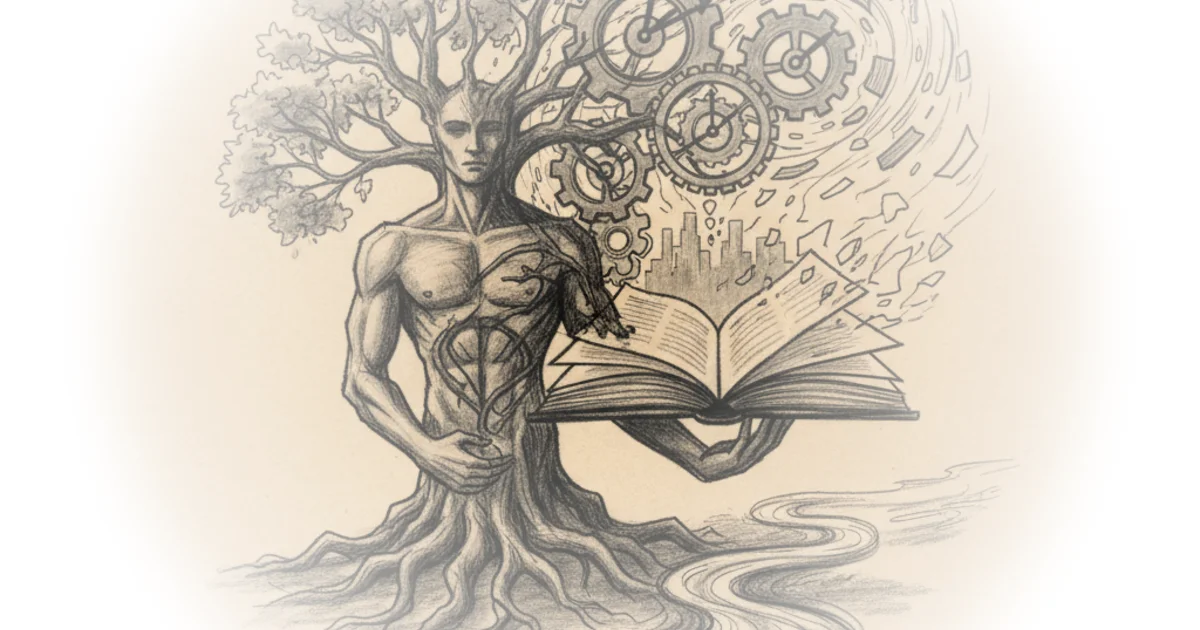
The author's anxiety is palpable as he confronts the disconnect between his own vocation and the reality of his peers. "Literary virtuosity or authentic masculinity: pick one," he posits, suggesting a false dichotomy that has trapped a generation of men. This framing is effective because it moves beyond the usual hand-wringing about men reading less to question what kind of reading they are doing. The shift toward texts like The 48 Laws of Power, with its advice to "USE SELECTIVE HONESTY AND GENEROSITY TO DISARM YOUR VICTIM," signals a retreat from empathy into transactional survival.
Literary virtuosity or authentic masculinity: pick one.
Critics might argue that Lambert romanticizes the literary experience, ignoring that strategy guides offer practical utility in a hyper-competitive economy. Yet, the piece suggests that the cost of this utility is a hollowing out of the self, a trade-off where men become efficient operators but lose the capacity to understand their own motivations.
The Antidote in Fiction
The narrative pivots when Lambert turns to the recent Booker Prize winner, David Szalay, whose work offers a counter-narrative to the sterile ambition seen on the train. Lambert highlights Szalay's career-long obsession with "male philistinism," describing his characters as men who "do not read, or write, or sometimes even think much at all." This is not a dismissal, but a compassionate excavation. Lambert argues that Szalay's genius lies in his ability to render these blank, affectless psyches with a profound humanity.
In discussing Szalay's earlier works, Lambert notes how the author captures the "quiet despair of the salesman who knows that nothing he is selling has any value." The analysis deepens when examining Szalay's stylistic evolution, particularly his use of the present tense to convey a character's dislocation from time. "It is a style that has served him well; though in truth, less and less so in recent years," Lambert observes, pointing out how the grammatical rigidity mirrors the character's inability to process the past or plan for the future. This connection between form and psychological state is the article's strongest analytical move.
The reference to the Booker Prize context adds necessary weight; Szalay's win in 2016 for All That Man Is was contentious, with debates over whether a collection of linked stories constituted a novel. Lambert reframes this "disunity" as a feature, not a bug, arguing that the book captures the "sheer, entropic force that governs most lives." This aligns with the broader literary tradition of the Booker, which has historically championed works that challenge narrative conventions, much like the 2011 winner, The Finkler Question, which similarly explored male identity through fragmented, introspective lenses.
The Violence of Inarticulacy
The commentary reaches its zenith in its analysis of Szalay's latest novel, Flesh. Lambert contrasts the ironic distance of earlier British comic fiction with the raw, unmediated experience of Szalay's protagonist, István. The author notes that while previous scenes were played for laughs, Szalay now "steadfastly, even militantly, refuses to subject the scene to irony."
Lambert illustrates this with a harrowing description of István's internal monologue regarding a sexual encounter, where the character observes physical details with a chilling lack of romantic filter. "She shows him her breasts. The nipples are weird — surprisingly big, and brown, and with these little things like warts on them," Lambert quotes, demonstrating how the prose forces the reader to confront the unvarnished reality of the character's perception. This is not a triumph of representation, Lambert argues, but a triumph of form that allows us to inhabit a mind that is "far less literate, cultured, and respectable than their authors'."
The comparison to Dostoevsky is apt here. Lambert suggests that István possesses a "unfinalizability," a capacity to "outgrow, as it were, from within and to render untrue any externalizing and finalizing definition of them." This challenges the reader to see the violence and repression not as moral failings, but as the inevitable result of a man trying to force his chaotic interior life into the rigid structures of modern success.
Finally, it proclaims, a book by a man, for men, about a man who is somehow paradigmatically manly because he is violent and repressed and ambitious and Hungarian.
Lambert dismantles this superficial reading, arguing that the true power of Flesh lies in its ability to show the "basic incommensurability between what Istvan feels and what he can put into words." The tragedy is not that the man is violent, but that he is desperate to be "wise, dependable, responsible, successful" and finds himself trapped in a language that cannot express his need.
Bottom Line
Thomas Peermohamed Lambert's most compelling argument is that the solution to the crisis of modern masculinity is not more self-help strategy, but a deeper, more uncomfortable engagement with fiction that refuses to judge its subjects. The piece's greatest strength is its refusal to treat men as a monolith, instead revealing the specific, tragic loneliness of the man who has everything but cannot say why he is unhappy. However, the analysis risks overlooking the structural economic forces that drive men toward transactional worldviews, focusing heavily on the psychological rather than the systemic. The reader should watch for how this literary approach translates into broader cultural conversations about male mental health and the role of art in fostering empathy for those who have lost the ability to speak their truth.