Kings and Generals delivers a rare historical deep dive that treats the First Crusade not as a sudden explosion of religious fervor, but as the inevitable collision of a decaying empire and a rising nomadic power. While many summaries stop at the call to arms, this piece meticulously reconstructs the administrative rot within the Eastern Roman Empire that made the loss of Anatolia possible. For a busy reader, the value here is the causal link: the Crusade wasn't just a reaction to a holy city's plight, but a desperate geopolitical maneuver by a fractured West to fill a vacuum created by Byzantine incompetence.
The Pinnacle and the Plunge
The narrative begins by establishing the sheer scale of the loss, contrasting the golden age of Basil II with the chaotic succession that followed. Kings and Generals writes, "The reign of Basil II was the Pinnacle of the Eastern Roman Empire... he managed to endure Civil War defeats and Corruption to eventually crush his enemies." This sets a high bar that makes the subsequent decline all the more tragic. The author argues that the empire's collapse wasn't due to a single battle, but a systemic shift from meritocracy to court intrigue.
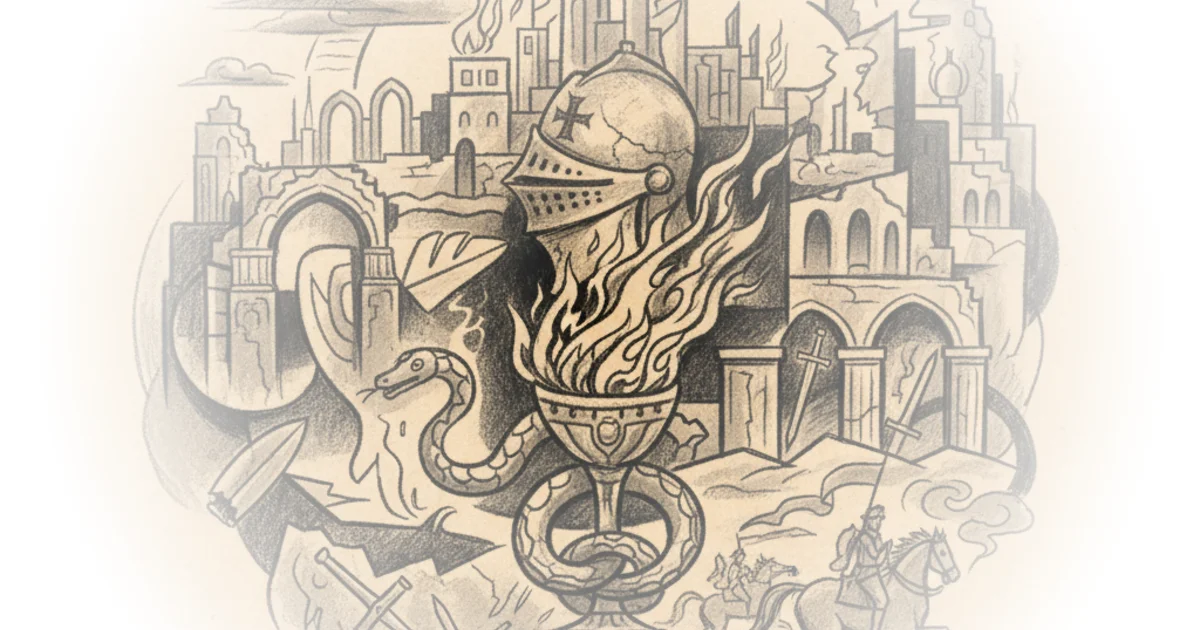
The coverage details how the Macedonian dynasty crumbled under Constantine VII, who "spent most of his time hunting feasting and blinding Nobles." Kings and Generals notes that this era marked a turning point where "the Empire now preferred Court Intrigue and plotting to Merit and good leadership." This framing is crucial; it shifts the blame from external enemies to internal decay. The author paints a picture of an administration so consumed by survival that it ignored the existential threat on its borders. As the text puts it, "the tradition of handing out huge gifts at the coronation ceremony to earn the Loyalty of followers exhausted the rich treasury Basil Left Behind."
The Empire now preferred Court Intrigue and plotting to Merit and good leadership.
Critics might argue that focusing so heavily on the Byzantine court distracts from the genuine military prowess of the Seljuks, who were indeed a formidable force regardless of Roman weakness. However, the piece effectively demonstrates that the two factors were mutually reinforcing; the empire's inability to field a professional army gave the Seljuks the opening they needed.
The Seljuk Onslaught and the Failure of Response
As the narrative moves to the 11th century, the focus shifts to the rise of the Seljuk Turks and the catastrophic failure of the Byzantine response. Kings and Generals describes the Seljuks as a force where "nomadic military Traditions met Sunni Islam and the combination fueled by the concept of jihad Unleashed itself on the Islamic world." The author highlights the strategic blunder of the Byzantine court, which, upon the sack of Ani, chose to "prosecute members of The Armenian clergy while focusing entirely on the Italian lands they were losing."
This specific detail is a powerful indictment of the leadership's priorities. The text argues that the empire's reaction was not just slow, but misdirected: "Constantinople's only response was not to send an army and pick up the pieces but to prosecute members of The Armenian clergy." This highlights a profound disconnect between the capital and the frontier. The author further explains that this lack of interest was coupled with a "disintegration of the professional Army decreased Army salaries lack of repairs on Border Forts and Reliance on Mercenaries."
The entry of Romanos IV Diogenes is framed as a last-ditch effort to reverse this decline. Kings and Generals notes that Romanos was forced to make a choice: "the man was to marry her and defend the Empire against its enemies or die." The author portrays Romanos as a competent leader hamstrung by a hostile court. Despite his efforts to drill a "mob of peasants and undisciplined mercenaries" into a fighting force, the structural issues were too deep. The piece notes that while Romanos was campaigning, "the court was plotting forcing Romanos to balance his military campaign with administrative duties."
The Climax at Manzikert
The buildup to the Battle of Manzikert is presented as a tragedy of logistics and intelligence. The author details Romanos's massive mobilization, noting his army included "Bulgarians, Pechenegs, Oguz Turks, Armenians, and Normans for a total of 40,000." The strategic decision to split the force to cover more ground is described, but the author points out the fatal flaw in the execution. When the secondary contingent panicked and withdrew, "the Byzantine Force panicked and withdrew to Melitene without sending words to Romanos."
Kings and Generals emphasizes the speed of the Seljuk response, stating that Alparslan "abandoned Aleppo in May and rushed towards the lake with Incredible speed even losing many men who drowned crossing the Euphrates." The contrast between the Byzantine hesitation and the Seljuk urgency is the core of the argument. The author writes that Romanos and his advisers "considered this to be an act of panic and assumed the sultan would need time to gather new recruits," a fatal miscalculation that sealed the empire's fate.
Decades of Decay and lack of funds had turned the once Fierce army into a mob of peasants and undisciplined mercenaries.
A counterargument worth considering is whether the split of the army was a necessary risk given the terrain, or if a unified force could have held the line. The text suggests the latter, implying that the fragmentation of command was the true killer, not just the numerical superiority of the enemy.
Bottom Line
Kings and Generals succeeds in reframing the First Crusade as the downstream effect of Byzantine institutional collapse rather than a simple religious crusade. The strongest part of this argument is the detailed chronicle of how court politics directly enabled military defeat. The biggest vulnerability is the heavy reliance on the narrative of Byzantine incompetence, which occasionally overshadows the genuine adaptability of the Seljuk forces. Readers should watch for how this specific dynamic of administrative decay versus external pressure repeats in other historical contexts.