Devin Stone doesn't just review a classic courtroom comedy; he dissects why My Cousin Vinny remains the gold standard for legal realism in Hollywood, arguing that its enduring popularity stems from a rare commitment to procedural truth over dramatic convenience. While most legal thrillers sacrifice accuracy for spectacle, Stone contends that this 1992 film succeeds because it treats the courtroom as a place of logic, not just theater, offering a masterclass in how evidence actually dismantles a prosecution's case.
The Mechanics of a Valid Stop
Stone begins by addressing the film's opening sequence, where the protagonists are pulled over by police. He notes that while the situation feels chaotic, the legal foundation is surprisingly sound. "When a policeman stops your car it's generally considered a seizure for Fourth Amendment purposes," Stone explains, emphasizing that the stop was justified by probable cause given the grisly nature of the nearby murder and the matching vehicle description. He clarifies that once the stop is lawful, the officer's order for occupants to exit the vehicle is a standard safety protocol, not an arbitrary power grab.
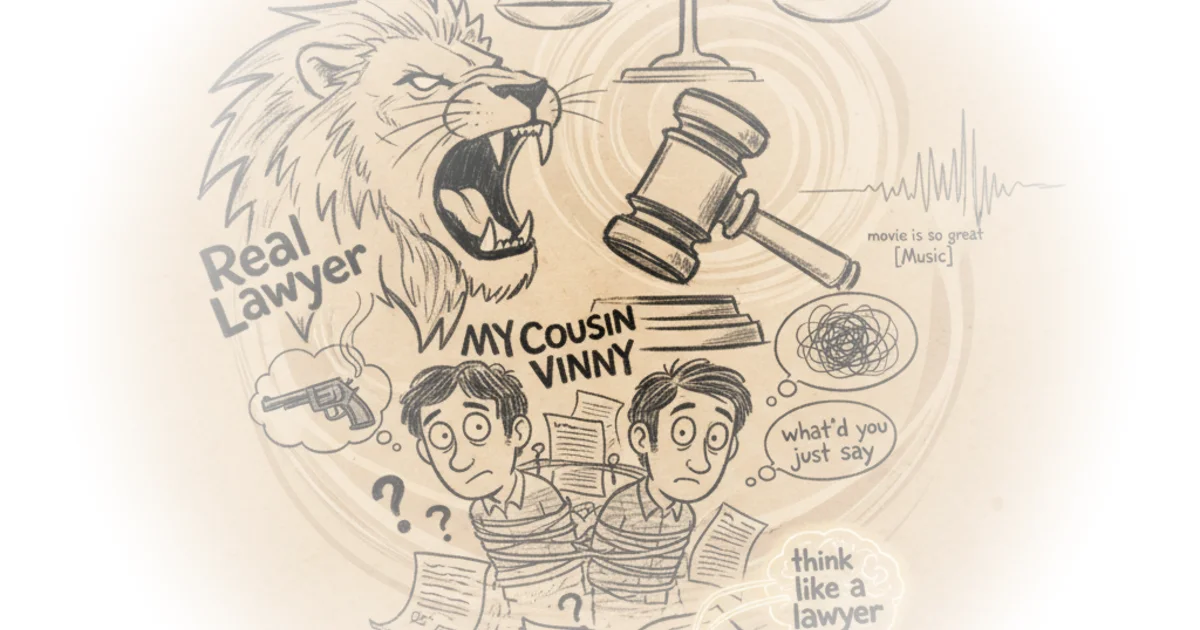
The commentary then shifts to the police lineup, a scene often glossed over in fiction. Stone points out a critical flaw that the movie correctly identifies: the lineup was "unnecessarily suggestive" because the defendants were the only ones in the group who fit the physical description, creating a "substantial likelihood of misidentification." This attention to the mechanics of due process is what separates the film from its peers. As Stone puts it, "if we roll the clip back we can see that the two defendants here look nothing like the rest of the people in the lineup... that is likely to be unnecessarily suggestive and to create a false positive which is exactly what happened here." This observation underscores a vital lesson: the system is designed to fail when procedures are sloppy, and the film exposes that failure without needing to villainize the police.
The Constitutional Duty of Disclosure
One of the film's most memorable moments involves the defense attorney charming the prosecutor into handing over files. Stone debunks the cinematic trope that this was a result of the lawyer's "smoothing" or personal charisma. Instead, he grounds the scene in the Supreme Court precedent of Brady v. Maryland. "The government has a duty to disclose material certainly all exculpatory evidence but generally that translates to all the material that the prosecution has," Stone writes, noting that the prosecutor's compliance was a constitutional obligation, not a favor.
He argues that the film accurately portrays the stakes of this rule: "Failure to disclose that evidence whether willful or inadvertent is a due process violation." By showing the prosecutor turning over files only after being reminded of the law, the movie illustrates the adversarial system's checks and balances. Stone adds that modern pre-trial filings require even more transparency, ensuring that "no one is sandbagged when they actually get to trial." Critics might argue that real-world Brady violations are more common than the film suggests, but Stone's point remains that the movie correctly identifies the legal requirement, even if the protagonist's method of obtaining it is dramatized.
The prosecutor was constitutionally obligated to turn over his files to Joe Pesci; it had nothing to do with his smoothing and to not do so would be what's called a Brady violation.
The Art of the Cross-Examination Trap
The commentary reaches its peak when analyzing the cross-examination of the eyewitness, Mr. Tipton. Stone praises the film for depicting a cross-examination that relies on logic and contradiction rather than shouting matches. He highlights how the defense attorney traps the witness by focusing on the timeline of breakfast preparation. "Joe Pesci is being a little bit argumentative here but what he's doing is he is setting a factual and logical trap for the witness to show that the witness doesn't have the kind of veracity or truthfulness that would be necessary to convict," Stone observes.
The analysis deepens as Stone explains the danger of introducing facts not in evidence. He notes that the attorney's question about "instant grits" versus "real grits" relies on external knowledge that the witness must confirm. "You got to be really really careful when you're doing a tactic like what Joe Pesci is doing and it can work out but it's very very dangerous on cross because you don't know which way it's gonna go," he warns. This nuance is often lost in legal dramas, where lawyers seemingly know everything instantly. Stone appreciates that the film shows the risk involved in such high-stakes questioning.
Finally, Stone lauds the use of physical evidence to dismantle the witness's credibility. By walking the witness through the photos of his dirty window and the trees obstructing the view, the attorney forces the witness to admit the impossibility of his testimony. "He is using effectively incontrovertible evidence no one's gonna dispute what these pictures are," Stone writes, explaining that the attorney is "walking the witness down a logical path that he's not going to be able to get out of." The scene demonstrates that the most powerful tool in a lawyer's arsenal is not a dramatic speech, but the slow, methodical accumulation of small, undeniable facts.
Bottom Line
Stone's analysis confirms that My Cousin Vinny endures not because it is a perfect legal document, but because it understands the fundamental architecture of the American justice system: the truth is found in the details, from the legality of a traffic stop to the texture of grits. While the film takes liberties with courtroom decorum and the speed of legal proceedings, its core depiction of how evidence is tested and how witnesses are dismantled remains unmatched in popular culture. For anyone seeking to understand how a defense actually works, this film offers a more accurate roadmap than most law school textbooks.