Chris Chappell delivers a blistering, satirical autopsy of the Chinese Communist Party's latest contradictions, arguing that Beijing has finally achieved the chaotic global posture it secretly desired. By juxtaposing mass executions of scam lords with outrage over a Grammy award, Chappell exposes a regime that is simultaneously ruthless and absurdly thin-skinned. For the busy observer, this piece is essential because it strips away the diplomatic veneer to reveal a leadership that is overextended, paranoid, and increasingly isolated.
The Hypocrisy of "Order"
Chappell begins by dismantling the narrative of Chinese stability, pointing out the grim reality of the "Myanmar scam mafia." He notes that while the Communist Party claims to uphold order, their own citizens were being tortured and forced into labor by Chinese-run criminal syndicates until the state finally intervened. Chappell writes, "The Chinese Communist Party does not like them. Probably mostly because beatings, torture, and forced labor are their jobs." This sharp irony highlights the regime's selective morality; they only crack down when the criminal enterprise threatens the state's image or control, not necessarily out of humanitarian concern.
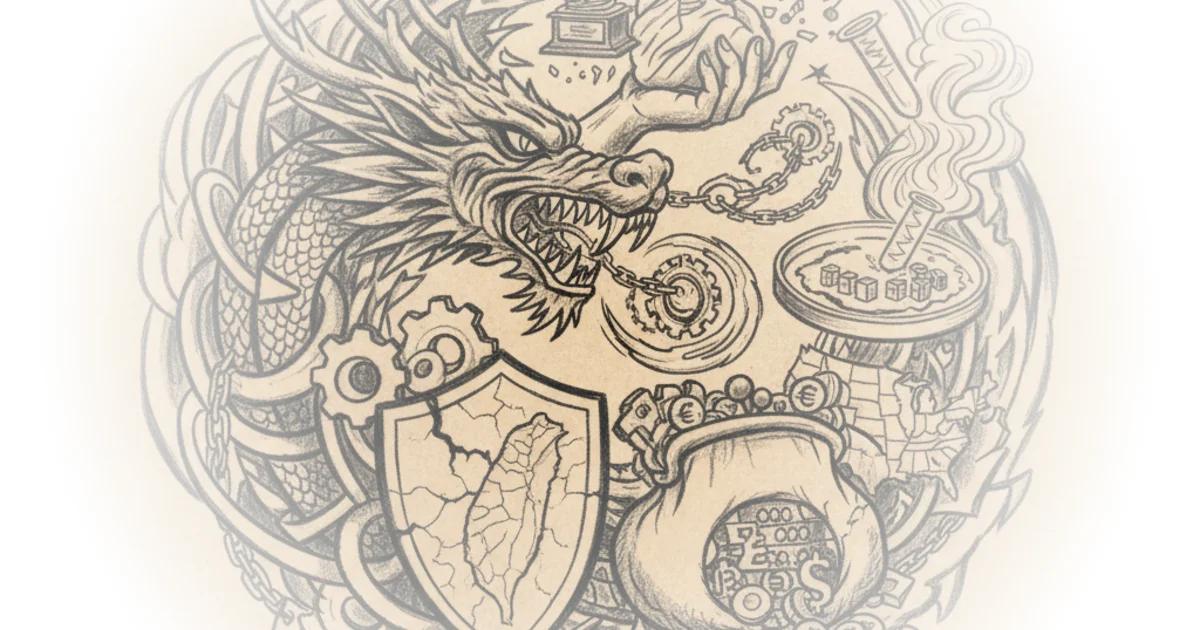
The author then pivots to the party's disproportionate reaction to cultural events, specifically the Dalai Lama winning a Grammy for an audiobook on meditation. Chappell mocks the Foreign Ministry's statement: "We firmly oppose relevant parties using art awards as a tool for anti-China political manipulation." He finds the absurdity in Beijing treating an audio book about ego as a national security threat, asking, "I don't know what's worse, being upset about an award for an audio book on meditations for crying out loud or saying that the Grammys are a relevant party." This framing effectively illustrates how the CCP's paranoia has seeped into every corner of global culture, turning a spiritual award into a geopolitical incident.
Critics might argue that the Dalai Lama remains a polarizing figure for Beijing due to his role in the Tibetan independence movement, making the reaction less about the award and more about the symbol. However, Chappell's point stands that the method of protest—condemning a Grammy—reveals a desperate attempt to control the narrative on a global stage where they hold little sway.
Geopolitical Bluffs and Biological Risks
The commentary shifts to the Pacific, where Chappell examines Australia's move to reclaim a strategic port in Darwin from a Chinese-owned group. He highlights the disconnect between Chinese rhetoric and reality, quoting their ambassador who called the move "unethical and no way to do business." Chappell's retort is biting: "Hopefully, Australia calls their bluffs. And if China complains, Australia can just say this is what happens for trusting an island full of criminals." This suggests that Beijing's economic leverage is weakening as nations prioritize security over profit.
"Folks, this is a good time to remind you to do some research on the property before you Airbnb."
In a jarring transition, Chappell details the discovery of an illegal biological laboratory in a Las Vegas Airbnb, run by individuals with ties to China. He notes the bizarre circumstances: "The house was being rented out as an Airbnb... Several people who entered the house became ill with respiratory issues." While the author treats this with dark humor, the underlying evidence of unlabeled vials and respiratory illness paints a picture of unregulated, high-risk activity. A counterargument worth considering is that this appears to be the work of rogue actors rather than a state-sponsored operation, yet the connection to a federal case in California suggests a broader, systemic issue of illicit biotech networks operating in plain sight.
The Taiwan Dilemma and Global Alliances
Chappell turns his attention to the internal political strife in Taiwan, where opposition parties are blocking a $40 billion defense budget increase. He mocks the opposition's desire to "deescalate tensions" with China, sarcastically asking, "What's their plan? Offer Taiwan to the CCP on a silver platter with all the trimmings like in a Bugs Bunny cartoon?" This vivid imagery underscores the danger of appeasement in the face of an aggressive neighbor. He reinforces this with a quote from Senator Dan Sullivan: "Shortchanging Taiwan's defense to couch out to the Chinese Communist Party is playing with fire." Chappell adds his own twist, noting that "playing with fire insinuates there's a chance you won't get burned. This is more like sticking your face in a fire and yelling smile."
The piece also touches on the shifting trade dynamics, noting that India may be gaining leverage by aligning closer to the US. Chappell observes that with new trade deals, "it's easy to see why India will be getting richer and stronger and probably less reliant on China." This suggests a fragmentation of the global economy that Beijing cannot easily control.
Finally, Chappell addresses the diplomatic theater surrounding the war in Ukraine, where Western leaders visit Beijing hoping to mediate. He points out the irony of the Finnish Prime Minister claiming China could end the war while simultaneously seeking trade deals. Chappell writes, "Just like a few other Western leaders who said and done basically the same thing. But hey, it's like they say, doing the exact same thing and expecting different results is how you get everything you want." This critique of diplomatic futility is a strong closing argument on the limits of engaging with a regime that benefits from global instability.
Bottom Line
Chappell's strongest asset is his ability to use satire to expose the cognitive dissonance of a superpower that is both terrifyingly powerful and comically insecure. The piece's greatest vulnerability is its reliance on a cynical worldview that may overlook the genuine, albeit limited, diplomatic efforts still occurring behind the scenes. Readers should watch for whether the "bluffs" Chappell predicts will indeed be called, or if the global community will continue to accommodate Beijing's erratic demands.