Matt Stoller identifies a visceral, often overlooked shift in the American political landscape: the transition of the superrich from confident architects of the future to defensive, enraged reactionaries. This piece is notable not for cataloging new monopolies, but for diagnosing the psychological breaking point of an elite class that has lost its grip on public affection. In an era where inflation is rising and AI promises to upend labor markets, Stoller argues that the most significant story is the rage of the billionaires as they realize their power is no longer synonymous with public good.
The End of the Benevolent Oligarch
Stoller opens by observing a spontaneous rejection of tech leadership, noting that commencement speakers discussing artificial intelligence are increasingly being booed by graduates. This is not merely generational friction; it is a rejection of a specific worldview. As Stoller writes, "The public is extremely angry, and they are centering their anger on AI." He illustrates this by highlighting the cavalier attitudes of tech CEOs, quoting Anthropic's Dario Amodei who claims half of white-collar jobs will vanish, and OpenAI's Sam Altman, who noted that "AI will probably most likely lead to the end of the world, but in the meantime, there'll be great companies."
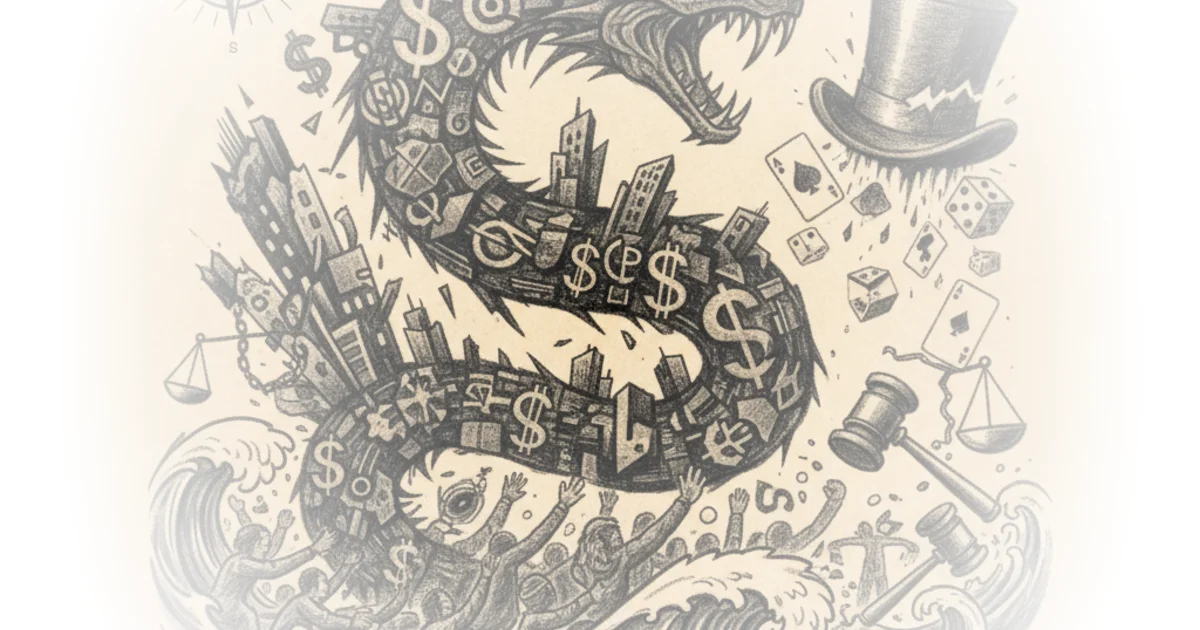
This framing is effective because it strips away the utopian marketing of the tech sector to reveal the underlying nihilism. Stoller points out that these leaders are not just predicting disruption; they are luxuriating in it. Alex Karp of Palantir is cited for telling investors during an earnings call that "This is a revolution. Some people can get their heads cut off." The author argues that voters, having already experienced the "enshittification" of social media platforms, no longer believe in the promise of a better future delivered by these monopolies. Instead of listening to this public frustration, the wealthy are doubling down, viewing opposition as an attack on their very existence.
Critics might argue that the public's fear of AI is often rooted in misunderstanding rather than the specific policies of these CEOs. However, Stoller's evidence suggests the anger is directed at the intent of the technology—displacing workers without a safety net—rather than the technology itself. The refusal of American oligarchs to adopt worker-protective rules seen in China, despite the potential for social stability, underscores an ideological rigidity that Stoller correctly identifies as a major political liability.
The superrich have an outsized voice. And that's always how it goes.
The Gaslighting of the Public
The commentary shifts to a specific case study of elite fragility: the reaction of billionaire Ken Griffin to New York City Mayor Zohran Mamdani's proposal for a vacation home tax. Stoller details how Griffin, whose firm Citadel helped crater Spirit Airlines, organized a massive backlash against a relatively mild fiscal proposal. The author notes that Griffin claimed Mamdani had "put his life in danger" and threatened to move operations to Miami, stating, "Mamdani is making it really clear: New York doesn't welcome success."
Stoller describes this dynamic as "mass gaslighting," where a public assault is launched against a politician for merely suggesting that the wealthy should contribute more to the infrastructure that enables their wealth. He draws a parallel to the "Lina Khan Derangement Syndrome," where the Wall Street Journal and business lobbyists attacked the Federal Trade Commission chair for attempting to block mergers, accusing her of being a "secret Marxist" with a "disregard for the rule of law." The pattern is consistent: any attempt to impose limits on wealth triggers a disproportionate, almost hysterical defense from the elite class.
This analysis holds up well against the historical backdrop of the 1980s, when the Motor Carrier Act of 1980 began the deregulation that allowed such concentration of power. Stoller suggests that the current rage is a reaction to the end of that era's consensus. The billionaire class, having been told for decades that their success is the definition of morality, cannot comprehend a world where they are viewed with suspicion. As Stoller observes, "Since the 1980s, the wealthy have been beloved, admired, and enriched in America and globally. They were told they are special, and they believe it."
The Political Reckoning
The piece concludes by connecting this economic anger to a broader political realignment. Stoller argues that the era of elite dominance is fracturing, not just in the U.S. but across the West, with leaders in the UK, France, and Germany facing similar backlash. He points to the rise of a new generation of populists, such as Graham Platner in Maine and Abdul Al-Sayed in Michigan, who are challenging establishment Democrats. These candidates, Stoller notes, have learned from the Trump era to ignore establishment norms, but they are applying those tactics to anti-monopoly and anti-corruption agendas.
The author warns that the superrich will not go quietly. They will use their control over the press and their financial leverage to attack democracy itself. "They will threaten to withdraw their wealth from different regions, they will call people stupid and ignorant, and they will use credible organs and validators on their payroll to do so," Stoller writes. Yet, he remains optimistic that this rage will eventually backfire on the elite. The cycle of incumbents being thrown out of office every two years for the last twenty years suggests a system in flux.
Stoller's most striking insight is that the downfall of this oligarchy will not be a dramatic revolution, but a slow erosion of their credibility. He writes, "Such is how an oligarchy ends, not with a bang, but with a bunch of whiny billionaires crying about taxes." This reframing of the political struggle from a battle of policy to a battle of legitimacy is the piece's strongest contribution. It suggests that the next few years will be defined not by the ability of the wealthy to buy elections, but by their inability to buy the public's love.
Critics might note that Stoller underestimates the resilience of the current political establishment, which has successfully co-opted populist rhetoric without delivering structural change. However, the sheer volume of recent primary challenges and the rising unpopularity of data centers and surveillance pricing suggest that the public's patience is indeed wearing thin.
Bottom Line
Stoller's argument is a compelling diagnosis of the psychological state of the American elite, correctly identifying that their greatest vulnerability is no longer regulation, but their own unpopularity. The piece's biggest strength is its ability to connect disparate events—from AI ethics to local property taxes—into a coherent narrative of elite panic. The reader should watch for how this rage manifests in the next legislative session, particularly as new populist candidates gain ground and the administration faces pressure to address monopoly power directly.