Most people assume ghosts are tragic figures seeking vengeance, but a new documentary reframes them as bureaucratic clerks demanding specific moral corrections. Dan Snow's coverage of Dr. Eleanor Janega's work reveals that medieval hauntings were not about fear of the unknown, but about enforcing a rigid social contract where the dead returned to fix financial and spiritual debts. This distinction transforms ghost stories from simple campfire tales into a sophisticated mechanism for maintaining community order and religious orthodoxy.
The Bureaucracy of the Restless Dead
Snow introduces the core thesis by highlighting a fundamental shift in how the living interact with the dead. He notes that Janega explains how "medieval people's ideas about death... hinge on the idea that someone's kind of coming back from the dead to let you know that they are usually in hell and they need your help." This reframing is crucial because it strips away the modern romanticism of the ghost story. Unlike contemporary narratives where spirits are often victims of circumstance, Snow points out that "medieval ghosts have done something wrong and they want something from you." The commentary here is sharp: the supernatural was a tool for accountability, not just entertainment.
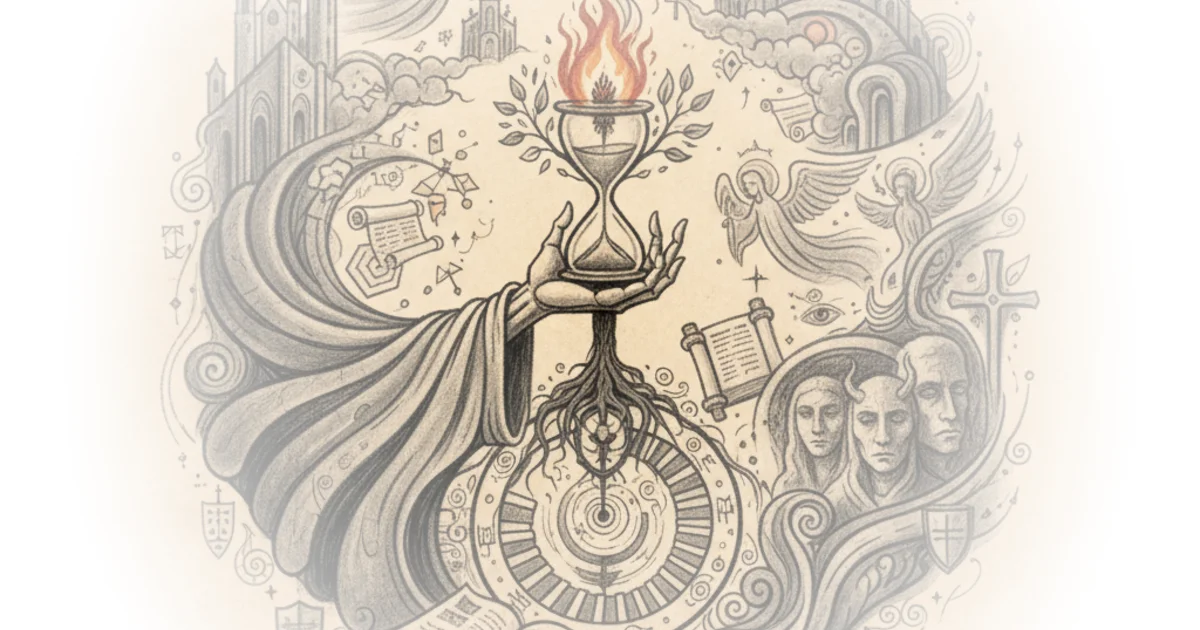
The evidence provided centers on specific narratives that function as moral checklists. Snow highlights the story of "Snowball the Tor," a ghost who appears in various forms—a raven, a dog, or even a "scary hay stack"—to demand restitution. Janega argues that these shape-shifters represent the fluid nature of guilt, yet their demands are rigidly legalistic. Snow observes that in one instance, a ghost asks for a mill to be returned because the original owner had already been paid, noting that "if you take advantage of those, then that's something that can land you in hell as well." This suggests that the medieval afterlife was deeply concerned with economic fairness, a nuance often lost in modern retellings that focus solely on sin and redemption.
"Ghost stories are used to set out what those accepted religious but also societal norms are. These are the ways that you should behave if you want to avoid purgatory and having to come back and get people to correct what you've done wrong in life."
This observation lands powerfully because it connects the supernatural to the very tangible anxieties of daily life. However, a counterargument worth considering is whether these stories reflect the actual beliefs of the peasantry or merely the propaganda of the literate class. As Snow admits, "we need a monk or somebody to write it down," and "monks are going to like religious it up just the stitch." The voices of the illiterate majority are filtered through clerical lenses, potentially exaggerating the moralizing aspect of these tales.
Gender, Propaganda, and the Architecture of Death
The coverage then pivots to how these stories reinforced specific social hierarchies, particularly regarding gender. Snow recounts a cut story about Guinevere's mother, a figure whose ghost appears with "frogs that are suckling on her breasts" as a direct punishment for infidelity and vanity. Snow writes that Janega finds this story significant because it underlines "specific gender norms," serving as a warning that "don't you dare do it, otherwise this is what happens." This is a stark reminder that the afterlife was a mirror used to police the behavior of the living, especially women who deviated from courtly expectations.
Moving from the spectral to the physical, Snow examines the concept of "transit tombs." These monuments feature a dual image: the deceased in full finery on top, and a rotting skeleton beneath. Snow asks how the wealthy justified this, suggesting it might be a form of "propaganda" to deflect attention from their privilege. Janega's argument, as presented by Snow, is that these tombs were a way to say, "Really, I'm just like you," while simultaneously asserting their power through the sheer scale of the monument. The duality serves as a memento mori, reminding viewers that wealth cannot stop decay, yet the effort to build such tombs proves that wealth could delay the memory of that decay.
Critics might argue that focusing on the moralizing function of these stories ignores the genuine terror the medieval population felt. If the ghost was always a moral lesson, the element of surprise and genuine fear might be diminished in the historical record. Yet, Snow counters this by citing the autobiography of Holy Roman Emperor Charles IV, who described a ghost story with "no meaning there" other than a cup smashing into a wall, proving that not every encounter was a sermon.
"You don't make a big grand tomb in a cathedral for no reason. You want people to see it. You want people to connect it with you."
This insight into the psychology of the medieval elite adds a layer of political analysis to the religious narrative. The tomb was not just a grave; it was a billboard for a legacy that the living could not control, only curate.
Bottom Line
The strongest part of this coverage is its ability to demystify the supernatural, revealing it as a practical tool for social regulation and economic accountability. The biggest vulnerability remains the reliance on clerical sources, which may skew the perception of how common these beliefs were among the lower classes. Readers should watch for how modern interpretations of these stories continue to sanitize the harsh, transactional nature of the medieval afterlife.