Cory Doctorow delivers a piercing diagnosis of our current moment: the crisis of truth isn't caused by artificial intelligence, but rather AI is merely the final blow to a truth-assessment system that has been rotting for decades. While most headlines scream about deepfakes and algorithmic manipulation, Doctorow reframes the issue as an "opportunistic infection" striking a body already weakened by corporate capture and regulatory failure. This is a crucial pivot for busy readers who feel overwhelmed by the noise, offering a structural explanation for why we can no longer agree on reality.
The Surkov Strategy and the Epistemic Void
Doctorow argues that the chaos we see today mirrors a specific, calculated tactic used by authoritarian regimes. He writes, "It's a very putinesque way of living," referencing the strategy of Vladislav Surkov, who once admitted to funding opposition groups without revealing which ones were real and which were fake. The goal wasn't to make people believe a lie, but to ensure they believed nothing at all. Doctorow observes, "Putin's method isn't to get you to believe a lie – it's to keep you from believing that anything is true."
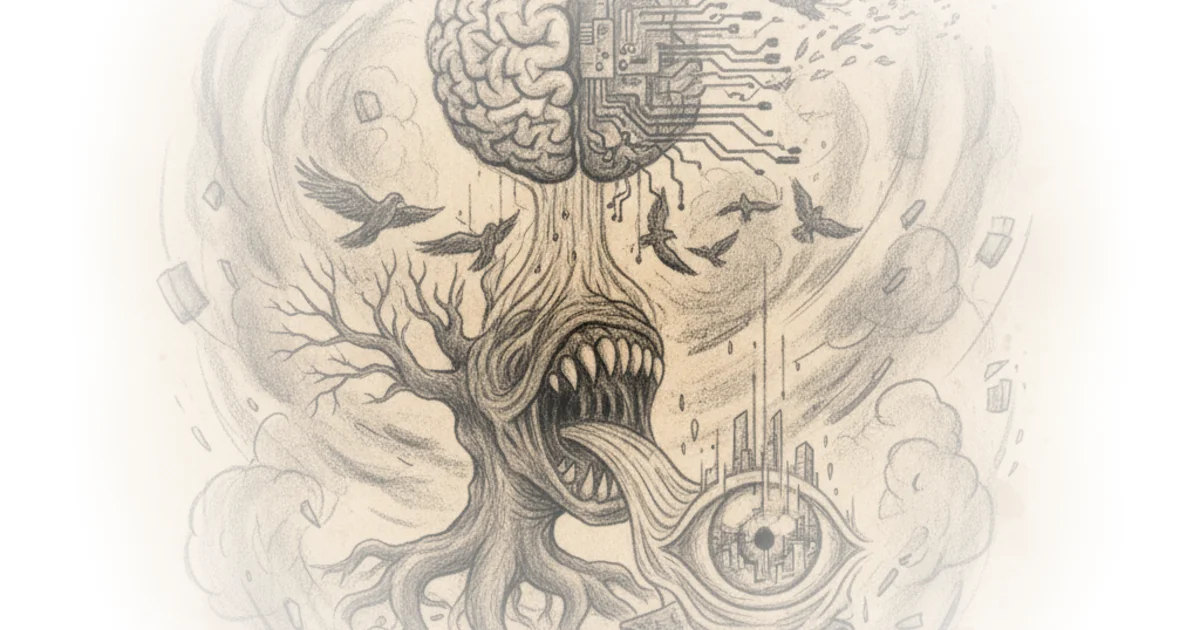
This framing is powerful because it shifts the blame from the technology itself to the intent behind its deployment. By connecting modern AI capabilities to Surkov's decades-old playbook, Doctorow suggests that the "epistemological void" we inhabit is a feature, not a bug, of how power operates in the digital age. He notes that in this environment, "Anything could be a lie, so nothing was necessarily true," creating a paralysis where genuine discourse becomes impossible.
A world where it's impossible to know what's true, and where anything might be fake.
The Collapse of Trust in Expertise
The core of Doctorow's argument rests on the idea that we have always relied on institutions to verify reality for us, but those institutions have been compromised. He points out that no individual can possibly verify the safety of their food, the structural integrity of their home, or the code in their car's brakes. Instead, "we defer to expert agencies: governmental regulators that assess truth claims by soliciting input from all comers."
However, Doctorow contends this system has failed. He writes, "It is not fit for purpose." He illustrates this with the example of the pharmaceutical industry, noting that while he supports vaccination, he does not trust the corporations or the regulators who oversee them. "A string of scandals – most notably the Sacklers' Oxycontin murder-spree – has proven that pharma will kill you for a nickel and that the FDA will let them get away with it." This is a provocative stance, yet it effectively highlights the erosion of the "cognitive immune system" that allows societies to function.
Critics might argue that dismissing the FDA entirely undermines public health efforts, but Doctorow's point is about the system of trust, not the specific medical advice. He suggests that when the gatekeepers are captured by the industries they regulate, the public has no choice but to become cynical. As he puts it, "The epistemological void we were already adrift in before AI came along: a world of unresolvable, urgent, terrifyingly high-stakes questions."
The Opportunistic Infection
Doctorow draws a medical analogy to explain why AI is so effective at spreading disinformation. He compares AI to a pathogen that targets a host with a pre-existing condition. "Covid was an opportunistic infection that inflicted disproportionate harms on people who were already suffering," he writes. Similarly, "The epistemic void created by AI is another opportunistic infection."
This is the article's most significant insight: deepfakes work so well not because they are perfect, but because we are already primed to doubt everything. He explains, "If you could trust your government's expert agencies... then deepfakes would have a much harder time penetrating our cognitive immune systems." The problem is that banks, healthcare systems, and media outlets have already trained us to expect scams and lies. "We laugh when other people fall for a deepfake of celeb shilling for supplements or a shitcoin? Maybe it's because celebs actually shill for supplements and shitcoins, and face no consequences."
By linking the rise of AI deception to the long history of "regulatory capture" and corporate misconduct, Doctorow forces a re-evaluation of the solution. It is not enough to build better detection tools; we must rebuild the institutions that verify truth. He concludes with a stark warning: "It's not so much that AI is a powerful way of lying – rather, we have been made progressively more vulnerable to lies for decades, leaving us at an epistemic death's door, and AI has arrived to deliver the coup de grace."
Bottom Line
Doctorow's strongest contribution is reframing the AI crisis as a symptom of long-standing institutional decay rather than a sudden technological shock. The argument's vulnerability lies in its heavy reliance on the assumption that rebuilding trust in expert agencies is politically feasible in the current climate. However, his diagnosis is undeniable: without fixing the underlying rot in our regulatory and media systems, no amount of AI regulation will restore our shared reality.