The Year Everything Clicked -- Or So the Story Goes
Danielle Belardo, the food systems writer behind Illuminate Food, closes out 2025 with an annual tradition: cataloging the people, products, and ideas that shaped her year. On its surface, the piece is a gratitude list. Beneath that, it is a document of someone mid-pivot, narrating the story of their own reinvention in real time -- and grappling with the tension between influence as a dirty word and influence as a vocation.
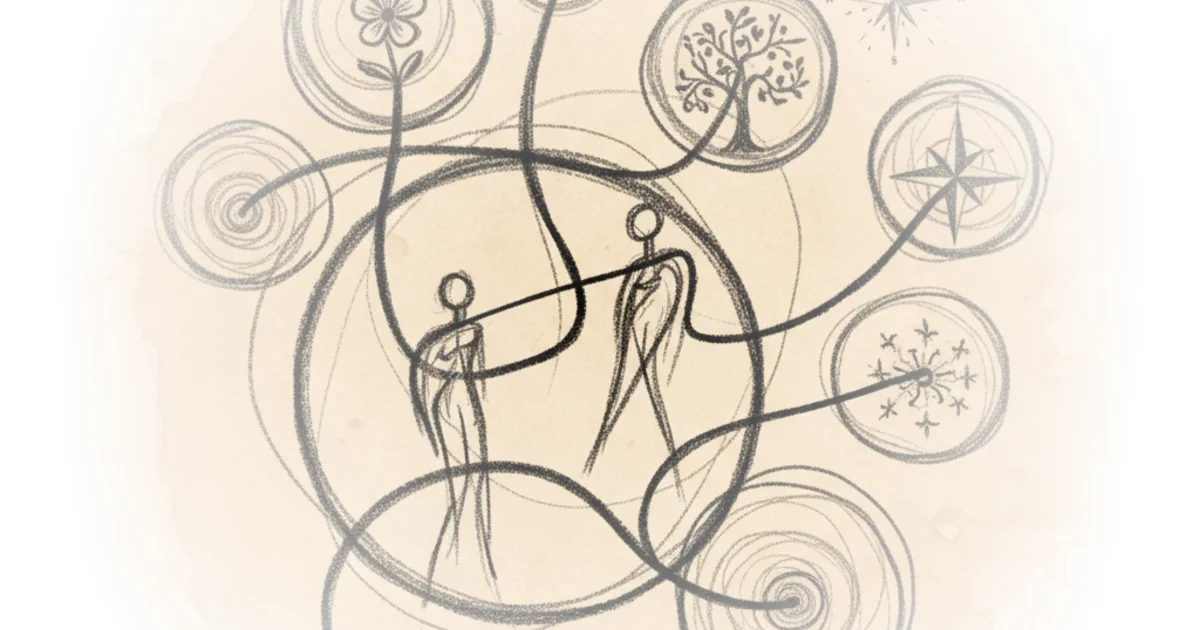
Belardo frames the year through Taylor Swift's "Invisible String," a metaphor for the idea that seemingly unrelated decisions eventually converge into a coherent path. The concept is appealing, if unfalsifiable. Every year looks like destiny in retrospect. The more interesting question is whether the decisions she describes -- choosing beans over food systems writing, choosing freelance over a salaried position, choosing Instagram over longer-form work -- represent genuine clarity or the kind of post-hoc narrative smoothing that year-end reflection invites.
The Bean Bet
The central career move Belardo describes is a narrowing of focus. She went from writing broadly about food systems to zeroing in on beans -- a single ingredient category -- and building an Instagram presence around it. The bet paid off in the most visible way possible.
I said yes to a hunch that zeroing in on beans made more sense for me than writing about food systems, and to giving Instagram a real shot by consistently creating content. This choice was met with a big YES after a simple carousel post sharing my story went viral.
The virality validated the pivot, and Belardo leans into the confirmation. But there is an interesting tension she does not fully explore. Food systems writing -- the kind that examines supply chains, agricultural policy, and environmental impact -- operates at a structural level. Bean evangelism, however charming, operates at a lifestyle level. The former asks readers to think about systems. The latter asks them to try a recipe. Both have value, but they are not the same project, and treating a viral Instagram post as proof that the narrower path was the right one conflates reach with depth.
That said, Belardo's instinct is not wrong. The food world is littered with writers who cover everything and reach no one. Specificity builds audiences. The question is whether the audience she is building will eventually circle back to the structural questions she left behind, or whether the algorithm will keep pulling her toward content that performs well -- mashed beans on toast, spice recommendations, accessible weeknight meals -- at the expense of the harder material.
Reclaiming the Word "Influencer"
Belardo returns to a theme from the previous year's edition of this post: the rehabilitation of "influencer" as a term. She argues that the word carries an unnecessarily bad reputation and that some creators provide genuine value rather than aspirational content designed to provoke inadequacy.
I am honored if I've influenced you to eat more beans, to think about where your food comes from, or to consider the impact of what we eat on the planet.
The defense is earnest, but it sidesteps the structural critique of influencer culture. The problem was never that individual creators lack sincerity. It is that the platforms they operate on are engineered to reward engagement over accuracy, performance over substance, and parasocial relationships over genuine expertise. A person can be a good influence while operating within a system that is, on balance, corrosive. Belardo's insistence that her influence is positive does not address whether the medium itself shapes the message in ways she may not fully control.
The counterpoint, which Belardo implicitly makes through her own experience, is that platform dynamics are not destiny. She describes a community of bean enthusiasts -- including a group that calls itself "the leguminati" -- that formed organically around shared interest rather than aspirational posturing. Online communities built around specific, practical interests tend to be healthier than those organized around lifestyle branding. If the bean community functions more like a hobbyist forum than a parasocial audience, then perhaps the medium matters less than the specificity of the subject.
The Freelance Leap
Belardo's other major 2025 decision was leaving salaried work for freelancing. Her description of its appeal is revealing.
Even if I work 10-5 pm most days and a couple of hours in the evenings, getting to take off an afternoon every couple of weeks, or to decline a call because I have something else going on, gives me a huge thrill. It completely shifts the power dynamic, and yes, it's more work, but it's also more freedom.
The honesty here is refreshing. Belardo is not claiming freelancing is easier or more lucrative. She is describing a psychological shift -- the feeling of autonomy, even when the actual hours worked are comparable or greater. This tracks with research on worker satisfaction: perceived control over one's schedule matters more than the schedule itself. The thrill she describes is not about working less. It is about the option to say no.
What goes unmentioned is the financial precariousness that often accompanies freelance work, particularly in content creation. Belardo notes she took on a role with Burlap and Barrel, the spice company, and that mentor Dana Cowin hired her for content work documenting events. These are the kinds of gigs that sustain a freelance career, but they also introduce dependencies that can constrain the very independence the arrangement is supposed to provide. When your client is also your content subject, the line between editorial judgment and professional obligation gets blurry.
The Personal Inventory
The second half of the piece shifts from reflection to enumeration. Belardo lists her 2025 influences: Rachel Karten, a social media analyst whose newsletter featured Belardo's viral post; her acupuncturist, who taught her to manage cortisol; her espresso machine; her husband Theo, who completed a second master's degree and began working as a therapist at Weill Cornell Medicine; and her 97-year-old grandmother, the only holdover from last year's list.
The most substantive entry is Dana Cowin, described as a mentor who runs Progressive Hedonist, a platform focused on finding joy in climate action. Cowin's model -- in-person gatherings organized around food and environmental purpose -- represents a more grounded version of the influence Belardo aspires to. Where Instagram rewards scale and speed, Cowin's approach rewards presence and specificity. It is notable that Belardo identifies Cowin as a formative influence while building her own career on a platform that operates by a fundamentally different logic.
The aspirational section at the end is the most self-aware part of the piece. Belardo lists a treadmill desk she has barely used, a reading habit she wants to build, and the environmental publication Atmos as things she wants to engage with more deeply. Her sibling Emmy's advice on reading over television is the piece's most quotable line.
A good story takes care of you.
It is a small, perfect sentence, and it points toward something Belardo seems to be circling throughout the essay: the desire for depth in a career increasingly built on breadth, for slow engagement in a medium designed for speed.
Bottom Line
Belardo's year-end reflection is at its strongest when it is honest about the contradictions of building a values-driven career on platforms that do not share those values. The bean pivot worked. The freelance leap feels right. The community is real. But the piece also reveals, perhaps unintentionally, the gravitational pull of the attention economy -- how virality becomes validation, how platform success reshapes professional identity, and how the hardest questions about food systems get displaced by the easier, more shareable ones about what to spread on toast. The invisible string may be real, but it is worth asking who is pulling it.