Matt Bell argues that the most effective research for fiction isn't about finding the right facts, but about surrendering to the wrong ones until they reveal the right story. In an era where artificial intelligence promises instant answers, Bell makes a counter-intuitive case for the inefficiency of physical libraries and the necessity of getting lost in the stacks. This is not a tutorial on how to write faster; it is a manifesto on how to write deeper, suggesting that the friction of manual inquiry is the very mechanism that generates authentic human experience.
The Architecture of Serendipity
Bell begins by dismantling the modern obsession with efficiency. He frames novel writing not as a craft of construction, but as a "mode of exploring not just my place in the world but also history, science, ethics, and other areas of thought." This reframing is crucial: it elevates the writer from a storyteller to a temporary scholar, someone willing to "moonlight as one" across dozens of disciplines. The value here lies in the admission that the process is often messy. Bell notes that he once spent eighteen months on a project he ultimately abandoned because the research convinced him "there probably wasn't an ethical way to write the book I'd intended." He treasures this "failure" because the research itself "changed my worldview on certain topics forever."
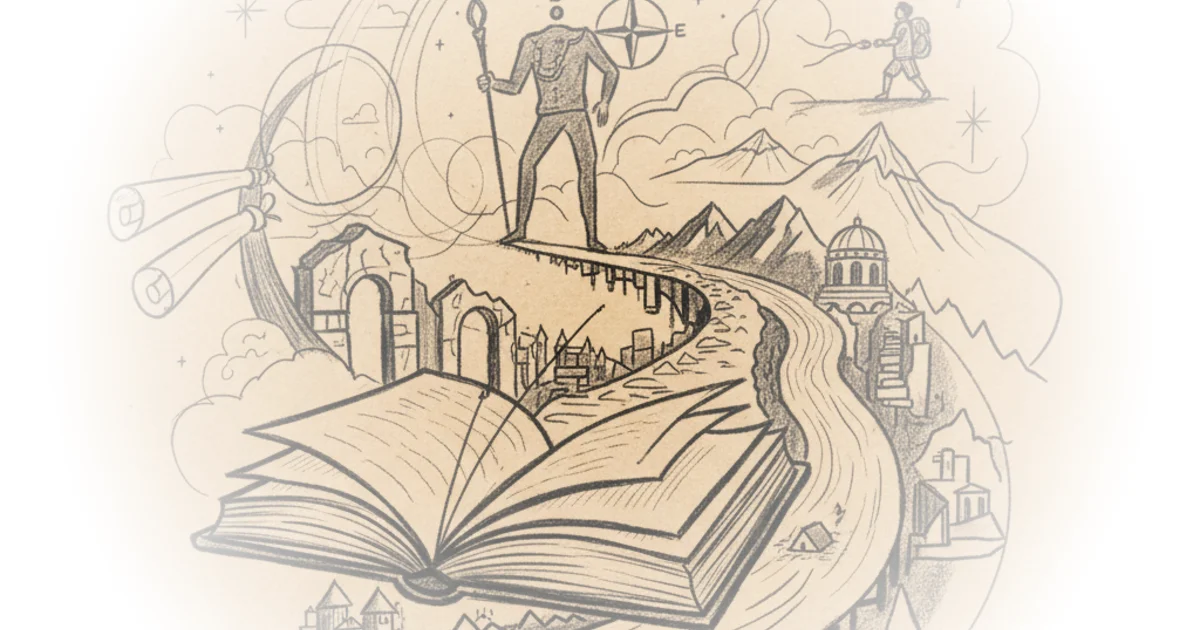
This perspective challenges the transactional view of research where inputs must immediately yield plot points. Instead, Bell advocates for a "Read, Read, Read" approach that is deliberately exhaustive. He describes emptying a bookshelf next to his desk and refilling it with everything from science fiction to environmental philosophy, reading "a couple hundred others" for a single novel. While some might argue this is an unsustainable luxury for working writers, Bell insists that the "slog gives up a gem," and that the sheer volume of intake creates a necessary density of knowledge.
Ideally, fiction writers are trying to understand what our characters understand. No less than that; but also no more.
This quote captures the core of Bell's methodology. He argues that analytical understanding of a setting is insufficient; the writer must inhabit the sensory and cognitive limits of the character. To achieve this, Bell suggests that writers must accept that their research will feel like "waste" in the traditional sense. He cites Andrea Barrett, who described her own research into utopian communities as a "long wade" that led her away from her original plot, only to find that the detour was where the story truly lived. The argument holds up because it prioritizes emotional truth over narrative efficiency, a distinction that separates functional fiction from resonant art.
The Physicality of Information
Perhaps the most provocative element of Bell's commentary is his rejection of digital search in favor of physical books. He explicitly links this choice to the rise of large language models, noting that "AI-generated blob that opens every Google search result is often surprisingly inaccurate." But his critique goes deeper than reliability; he argues that digital search is too efficient, cutting the writer off from the "adjacency effect" of physical discovery.
When searching a physical book, Bell explains, "your eyes see all the other facts and definitions printed on the page." This visual proximity allows for unexpected connections, such as finding an entry for "apple maggot" while looking up "Johnny Appleseed." He describes this as "fuel entering the machinery of your imagination," a process that algorithms cannot replicate because they are designed to filter out the irrelevant. Bell writes, "I try to use Google not as a first resort but as my last," because the web often leads to the "exact same first ten things that anyone else researching your subject will."
You want to go farther, weirder, more unexpected places than the merely curious will!
This stance is a direct challenge to the homogenization of information. By insisting on the "tangible benefits of looking for facts in physical books," Bell argues that the medium of research shapes the texture of the fiction. He suggests that even middle school libraries can offer the "quality information" needed for convincing fiction without the barrier of overly scholarly archives. Critics might note that this approach privileges writers with access to physical libraries and the leisure time to browse, potentially excluding those without such resources. However, Bell's point remains that the method of browsing—the wandering, the accidental discovery—is the critical variable, regardless of the specific location.
Embodied Perception and the Image Bank
Bell extends his research philosophy beyond text to include visual media and, most importantly, physical presence. He argues that writers often run on empty, "repeating images over and over because there's nothing else left." To combat this, he recommends consuming documentaries, video games, and art books to "stock up on images." He shares a specific anecdote about watching Daniel Day-Lewis run in The Last of the Mohicans to solve a movement problem in his own novel, and using the virtual landscapes of Red Dead Redemption 2 to understand navigation in perilous terrain.
The materials we're using, whether autobiographical or historical, need to be dissolved entirely into the work, freshly embodied in characters, images, and language bringing the scene alive.
This concept of "dissolving" research is the ultimate goal of his generative approach. Bell insists that research should never be a separate document of inert notes. Instead, he writes directly into the manuscript, letting the research "tell me what to write next." This ensures that the facts are always filtered through the character's perspective, preventing the common pitfall of an authorial voice that knows too much. As he puts it, the goal is to "shed an expert's analysis in favor of a character's embodied perception."
The most powerful application of this principle is Bell's advocacy for firsthand experience. He recounts a trip to a glacier in Iceland, where he and a companion heard "water rushing inside the glacier, like an underground river flowing just below the surface." This sensory detail, which he calls "pure magic," became a pivotal element in his novel Appleseed. He argues that "even if you've read everything there is to read about a place, you'll still see something new and unexpected if you go yourself." This is a compelling argument for the irreplaceable value of physical travel in an age of virtual simulation. While not every writer can afford a month-long pilgrimage, the principle remains: the specific attention of the writer's own body in a space generates details that no amount of secondary reading can provide.
Bottom Line
Matt Bell's argument is a robust defense of the slow, messy, and often inefficient nature of deep research, positioning it as the antidote to the superficiality of algorithmic information. The strongest part of his case is the insistence that research must be generative and embodied, forcing the writer to live inside the character's limited worldview rather than hovering above it as an omniscient expert. Its biggest vulnerability is the implicit privilege required to access physical archives and travel to remote locations, though the underlying philosophy of seeking serendipity over efficiency remains universally applicable. Writers should watch for the shift from gathering facts to cultivating a state of mind where those facts can unexpectedly transform the story. "