In a cultural landscape obsessed with productivity, Noah Smith delivers a startling inversion: what you consume, not what you produce, is the true architect of your identity. While the prevailing narrative suggests that work defines our worth, Smith argues that the AI revolution is forcing a necessary reckoning, pushing us to find meaning in the choices we make rather than the tasks we complete. This is not merely a philosophical musing on leisure; it is a pragmatic roadmap for preserving human dignity in an age where algorithms are rapidly devaluing human labor.
The Illusion of Productive Identity
Smith begins by dismantling the deep-seated belief that our jobs are the primary source of our self-worth. He observes that from San Francisco to Tokyo, society forces us to introduce ourselves by our occupations, treating our labor as the sole metric of our value. "All my life, I realized, I had been told that it was people's work that gave them meaning — that what you produce makes you special," Smith writes. This framing is effective because it exposes a cultural blind spot: we praise production as virtuous while treating consumption as trivial or even morally suspect.
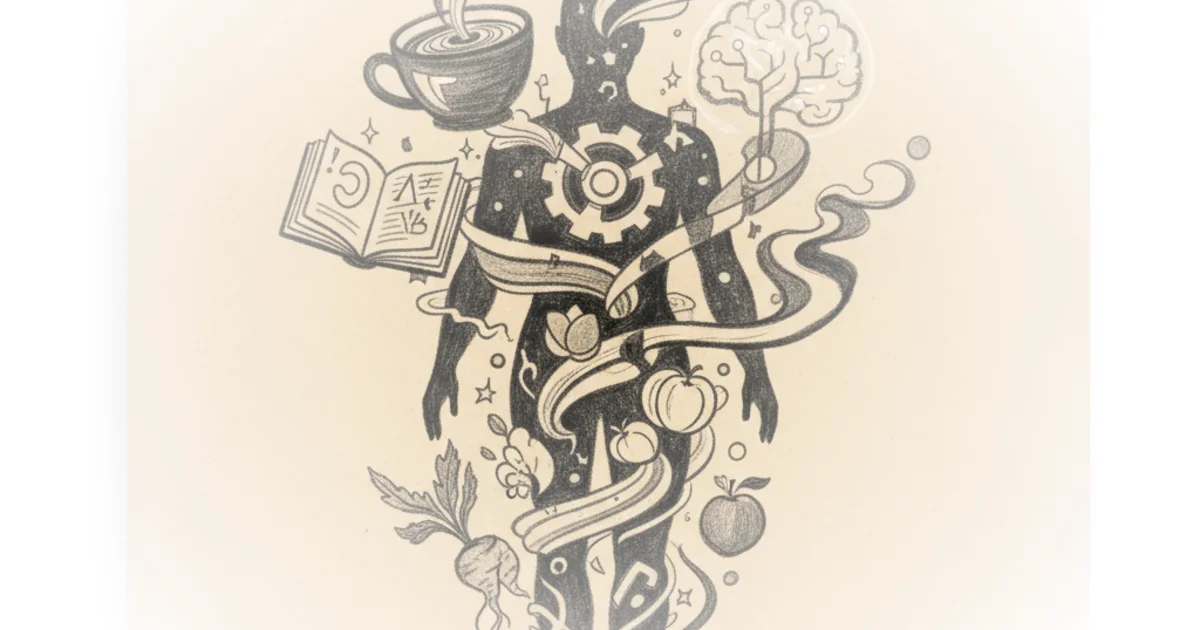
The author points out that this bias is a rare point of unity between the political left and right, where both sides often decry the "consumer society" in favor of the dignity of labor. Smith challenges this consensus, asking why we should identify as "writers" rather than "science fiction fans" or "rabbit dads." He suggests that the reverence for work is partly a cynical economic tool. "Plenty of research in both economics and psychology indicates that people will accept lower salaries in exchange for working at a job where they think they're doing something good for society," he notes. This observation cuts deep, implying that the status we attach to our careers is often a substitute for fair compensation, a mechanism that allows institutions to pay less by offering moral accolades instead.
"Production is very different. Your decision of what to produce is not fully your own; the market gets to decide."
The Sovereignty of the Consumer
The core of Smith's argument shifts from critique to a reclamation of agency. He posits that while the market dictates what we produce, only we can dictate what we consume. Every purchase, from a cup of coffee to a subscription to a newsletter, is a moment of self-examination. Smith cites research by Cheek et al. (2022) and Nanakdewa et al. (2021) to show that the mere act of choosing from a wide array of options makes people feel larger, stronger, and more independent. "When you decide what to consume, you ask: 'What do I want?'," Smith writes. "When you decide what to produce, you ask: 'What do other people want me to do?'" This distinction is the article's most powerful insight, reframing consumption not as passive surrender to advertising, but as an active, individuating process.
Critics might note that this view risks romanticizing consumerism, ignoring how corporate algorithms can manipulate preferences and limit genuine choice. Smith acknowledges that advertising exists but argues that the fundamental desire for modern conveniences and cultural experiences is authentic. He draws a parallel to the "college experience," describing it as a unique societal phase where life was defined by consumption—learning music, building friendships, and exploring interests—rather than the pressure of earning a living wage. "Imagine a society where everyone could have a college experience like mine — a time of self-discovery and self-expression, where work was done for enrichment instead of for money," he suggests. This historical reference to the "moratorium" period of youth offers a tangible vision of what a consumption-centric life could look like for adults.
The AI Catalyst and the Future of Meaning
The urgency of Smith's argument is driven by the advent of artificial intelligence. He acknowledges that AI threatens to disrupt traditional careers, potentially causing a "crisis of meaning" for those who derive their identity from their professional skills. If an algorithm can write code or solve algebraic conjectures, the pride associated with those tasks evaporates. However, Smith sees this disruption as an opportunity to accelerate a cultural shift. "I think it's possible for us to reorient our identities away from what we produce, and toward what we consume, and to find meaning in the latter," he argues.
He envisions a future where the material abundance generated by AI allows for a redistribution of wealth, enabling a society where life resembles an elite education for everyone. In this vision, people spend their days reading, creating art for fun, and engaging in deep conversations without the fear of poverty. "That's a vision of a consumption society, but not one that's meaningless or empty," Smith concludes. "Instead, it's a vision of technology freeing us to become more like ourselves."
"In fact, consumption shapes you into a unique individual, while your job exists at the whim of the collective."
Bottom Line
Noah Smith's most compelling contribution is his redefinition of autonomy, arguing that in a world where the market dictates production, true individuality is found in the act of choosing what to consume. While the argument relies on the optimistic premise that AI-generated wealth can be equitably distributed, its psychological insight—that the habit of self-examination is forged in the marketplace of choices—is a vital counter-narrative to the anxiety of obsolescence. The reader is left with a provocative question: if our jobs no longer define us, are we ready to embrace the identity we build through what we love?