{"commentary text": "This piece makes a provocative claim: that America's strategy of squeezing Iran's oil exports won't work — and that escalating to target civilian infrastructure would catastrophically backfire on the global economy. Novara Media presents an expert who argues the US fundamentally misunderstands what Iran can sustain.
The Plan That Might Not Work
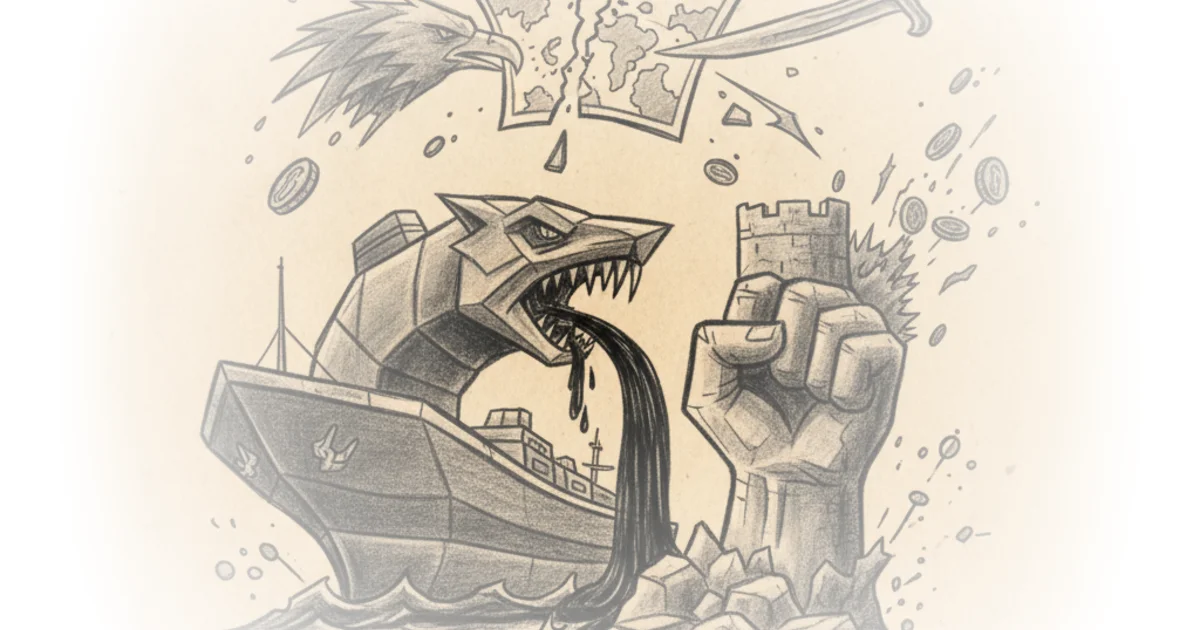
The article opens with what sounds like a bold strategic move: Donald Trump is reportedly planning to take K Island — a small processing hub that handles 90% of Iran's crude oil exports. According to sources in the White House, the plan involves military strikes followed by seizure. Novara Media writes, "We need about a month to weaken the Iranians more with strikes, take the island, and then get them by the balls and use it for negotiations." The framing is stark — this isn't diplomacy, it's hostage negotiation. Another official told Axios that if Trump decides on a coastal invasion, "that's going to happen" — as though war itself were inevitable.
Why Economic Pressure Was Never Enough
The core of Novara Media's argument comes from Fanja Bachman Heritch, CEO of the Boss and Bizarre think tank, who published a piece in Foreign Policy titled "Iran can afford America's economic warfare." His central claim: cutting off oil exports won't cripple Iran the way Washington expects. The reason is partly historical — Iranian oil exports dropped dramatically during Trump's maximum pressure sanctions starting in 2018, but "that doesn't mean that Iran's economy is going to collapse immediately." It created pain, yes. But not collapse.
More critically, Heritch points out that Iran spends just $8 billion annually on military expenditure. To put that into perspective: "the Pentagon has reportedly just asked the White House to push forward a supplemental budget addition of $200 billion to fund the Iran war." So Iran is spending a tiny fraction of what its adversaries spend — and yet it's managed to sustain its current operations.
If the Iranian government needed to scrounge up more money to keep this war effort going even as the economy is contracting, what they essentially have to do... is find another $90 per Iranian citizen.
This is the piece's most damning observation: America's economic warfare has been underway for eight years, and it's failed to reduce the threat. "The US has basically been engaged in an economic war on Iran for the last 8 years and the inability to break out of that cycle... is partly why we're facing this war right now."
The Dangerous Escalation Path
What happens if the US shifts from choking trade flows to targeting actual infrastructure? Heritch warns this would open "a new phase in the conflict" — one where Iran responds by striking critical energy facilities worldwide. He cites a specific example: Iran's retaliation for the South Pars facility strike hit Qatar's LNG facility and "knocked 17% of the production capacity of the most important LNG facility in the world offline." If this escalates, he argues, those kinds of incidents would multiply.
And here's why everyone should care — not just Middle East watchers. The Gulf states aren't just oil producers. They're major investors in renewable energy projects across the global south. One example: Saudi company Aqua Power is one of the largest operators of renewable energy assets globally; Emirate company Mazdar operates solar projects throughout Central Asia and East Africa. "If you undermine the prosperity of the Gulf States, you're actually undermining the prosperity of all of the countries in which they have emerged as a significant player providing financing and expertise necessary to build critical infrastructure."
Critics might note that Heritch's argument assumes Iran would simply absorb infrastructure attacks without collapsing — but it's also possible that directly targeting power plants and steel mills could achieve America's goal faster, even if it escalates. The piece doesn't fully explore whether short-term military victory outweighs long-term regional instability.
Bottom Line
This article's strongest contribution is reframing the war as fundamentally misdiagnosed by Washington. The assumption that oil exports equal Iranian military capability has driven eight years of failed sanctions. But its biggest vulnerability is strategic: arguing for restraint when escalation already exists, while acknowledging that Iran can sustain this conflict indefinitely. "We can't really afford for this damage to multiply" — that's the real warning.", "affiliateLinks": [{"asin": "1786460551