Jason Slaughter delivers a blistering indictment of the modern American vehicle fleet, arguing that the dominance of SUVs and light trucks is not a market preference but a regulatory failure that has turned city streets into death traps. While many analysts focus on emissions or traffic congestion, Slaughter brings a visceral, data-driven case that these vehicles are fundamentally incompatible with walkable urban life, citing statistics that show pedestrians are three times more likely to die when struck by an SUV than a standard car.
The Regulatory Loophole
The core of Slaughter's argument rests on a historical accident: the classification of SUVs as "light trucks." He explains that this distinction, originally intended for commercial vehicles, was exploited by automakers to bypass stricter safety and fuel economy standards. "Light trucks originally referred to commercial vehicles that needed to carry or tow heavy loads or traverse difficult terrain," Slaughter notes, but the definition was stretched to include passenger vehicles built on truck frames. This allowed manufacturers to avoid the Corporate Average Fuel Economy (CAFE) standards that applied to passenger cars, effectively gaming the system to maximize profit.
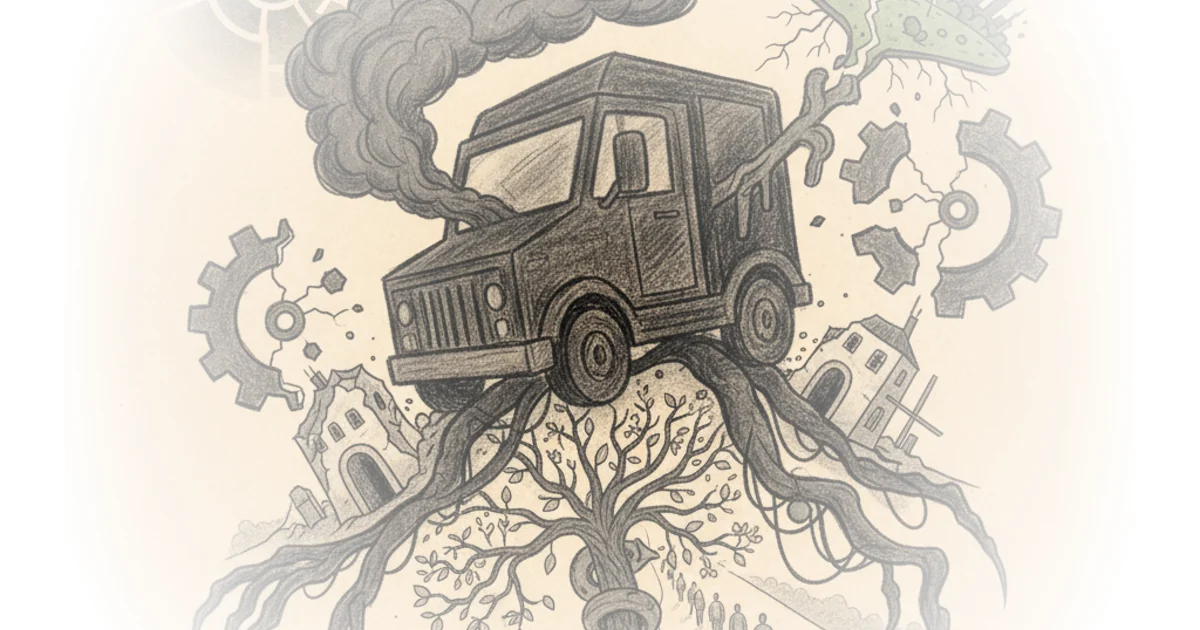
This regulatory arbitrage created a perverse incentive structure. "Rather than build cars that met cafe standards, auto manufacturers were incentivized to get as many people to buy light trucks as possible," Slaughter writes. The result was a fleet where nearly 80% of new sales are now oversized vehicles. The argument is compelling because it shifts the blame from individual consumer choice to a systemic design flaw in federal policy. Critics might argue that market demand drove this shift, but Slaughter counters that the industry actively manufactured that demand through targeted marketing and by removing smaller, safer alternatives from the market.
SUVs are oversized, ridiculous, unnecessary death machines that are literally killing people, even their own drivers.
The Marketing of Fear
Once the regulatory path was clear, the industry needed a narrative to sell these impractical vehicles to urban and suburban drivers. Slaughter points to a deliberate pivot in marketing strategy, moving from an "outdoorsy" image to one of fear-based security. "The city is a big scary place. Protect yourself with a big stupid car," he paraphrases the industry's logic. This approach turned road safety into an arms race, where the biggest vehicle was marketed as the safest, despite evidence to the contrary.
The author highlights how this marketing exploited genuine anxieties about crime and violence. "Think of it as a 4,000 lb guardian angel," he quotes from an advertisement, illustrating how the industry sold a false sense of security. The irony, as Slaughter points out, is that the features designed to make drivers feel safe—like high ground clearance and stiff frames—actually increase the lethality of crashes for everyone else. The argument lands with force because it exposes the cognitive dissonance at the heart of the SUV boom: a vehicle sold as a shield is, in reality, a battering ram.
The Physics of the Crash
Slaughter dives into the mechanics of why these vehicles are so dangerous, focusing on bumper height and chassis stiffness. American regulations require car bumpers to be between 16 to 20 inches off the ground, but light trucks face no such restriction. "The chassis on a light truck acted like a battering ram, and the people inside became the crumple zone," he explains. This creates a "crash compatibility" issue where a standard car and an SUV do not align in a collision, leading to catastrophic outcomes for the smaller vehicle.
The danger is even more acute for pedestrians. When hit by a car, a pedestrian is often thrown onto the hood, sustaining leg injuries. With an SUV, the impact is centered on the torso and head. "When a person gets hit by a car, they're typically thrown onto the hood... But the higher front end of an SUV means the impact is centered near the torso and head, which is much more deadly," Slaughter writes. This is not just a theoretical risk; the data is stark. He cites research showing that over 500 American children were killed by being run over by SUVs over a decade, often by their own parents in their own driveways due to blind spots created by the vehicle's height.
If you're walking and you get hit by an SUV, you're three times more likely to die than if you've been hit by a regular car.
The Myth of Necessity
Perhaps the most damning part of Slaughter's commentary is his dismantling of the "utility" argument. He notes that while SUVs are marketed for off-roading and towing, the vast majority of owners never use these features. "75% of light truck owners tow something once a year or less, and 70% go off-road once a year or less," he states. The vehicles are used for commuting and grocery runs, yet they occupy significantly more road space and fuel.
Slaughter also touches on the psychological profile of the average SUV buyer, citing industry research that suggested these drivers were less confident, more risk-prone, and less community-oriented. While this generalization is provocative, it serves to underscore his point that the vehicle choice is often about status and perceived safety rather than actual utility. "The vast vast vast majority of drivers in these light trucks are carrying exactly two things. Their briefcase and their fat ass," he quips, highlighting the absurdity of the situation. A counterargument worth considering is that rural drivers genuinely need these vehicles for their terrain, but Slaughter rightly limits his critique to the suburban and urban environments where these vehicles cause the most harm.
Bottom Line
Slaughter's piece is a powerful, if aggressive, synthesis of safety data, regulatory history, and marketing analysis that leaves little room for the "personal freedom" defense of oversized vehicles. Its greatest strength is the clear demonstration that the SUV boom was a manufactured crisis driven by regulatory loopholes rather than organic consumer need. The argument's vulnerability lies in its dismissal of rural needs, but for the urban and suburban reader, the evidence that these vehicles are "literally killing people" is undeniable and demands immediate policy intervention.