Richard Hanania poses a jarring question that cuts through decades of foreign policy noise: why has the American public's moral urgency to intervene in African crises evaporated? He argues this isn't because the suffering has stopped, but because our cultural bandwidth for altruism has been hijacked by internal pessimism and competing geopolitical dramas.
The Vanishing "CNN Effect"
Hanania begins by contrasting the post-Cold War era with today's apathy. In the 1990s and early 2000s, a specific doctrine of interventionism held sway. He notes that after the Soviet Union collapsed, the US military found itself searching for a new purpose, leading to "humanitarian interventions abroad" in places like Somalia, Haiti, and Bosnia. The driving force was what scholars called the "CNN effect," where 24-hour news coverage of atrocities created immediate pressure on Washington to act.
"The argument was that, while in previous generations atrocities were ignored, news coverage of humanitarian crises abroad created pressure for intervention."
This framing is compelling because it links media consumption directly to policy outcomes. Hanania highlights the rise of the "Responsibility to Protect" (R2P) doctrine, championed by thinkers like Samantha Power, which posited a moral obligation to stop genocides when possible. The failure to act in Rwanda remains a stain on that era; as Hanania reminds us, President Clinton later called his administration's passivity while 800,000 were slaughtered one of his "greatest regrets."
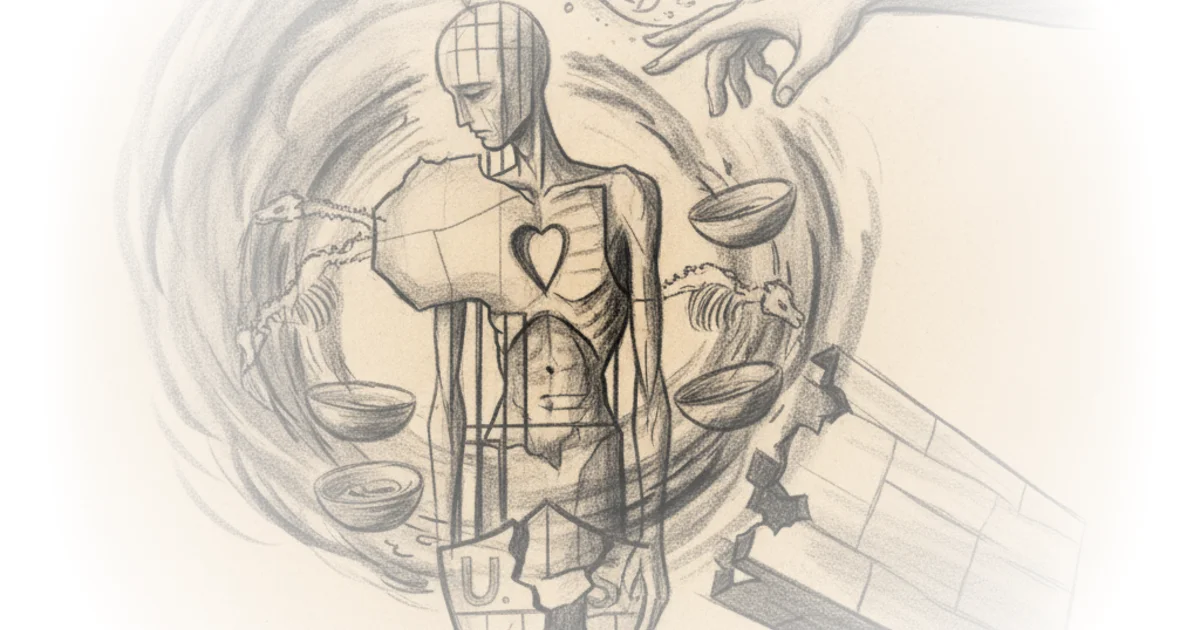
The shift away from this mindset is starkly illustrated by the current situation in Sudan. Since 2023, a civil war has killed at least 150,000 people and displaced millions more. Despite the scale of the tragedy, Hanania observes that "nobody cares." He suggests that if anything, smartphones should have amplified the outcry, creating a "CNN effect on steroids," yet the opposite has occurred.
"When people feel happy and secure, they are more generous. When they are depressed, anxious, and into navel-gazing, they lose interest in the problems of others."
This psychological pivot is Hanania's central thesis: altruism requires a baseline of national confidence that currently feels absent. He contrasts this with the "end of history" optimism of the early 2010s, epitomized by the viral Kony 2012 campaign. That documentary, which reached 100 million views in a week, operated on the premise that Americans had achieved enough peace to look outward and fix the world's broken parts.
"The culture of Kony 2012 is one in which people are secure enough to feel genuine sympathy and take into account the problems facing others."
Critics might argue that Hanania romanticizes the Kony campaign, which was criticized for its simplistic "white savior" narrative and questionable effectiveness. While Joseph Kony remains at large, his forces have been reduced to a tiny group of 12 to 20 fighters, suggesting some tactical success despite the cultural cringe. However, Hanania's point stands: the spirit of that campaign—unironic, bipartisan concern for distant strangers—is now culturally toxic.
The Rise of Parochial Victimhood
The most biting critique in Hanania's piece targets how modern political discourse has turned inward. He argues that both sides of the American political spectrum have adopted a "fetish" for victimhood, making it impossible to prioritize foreign suffering over domestic grievances. On the right, he points out that figures like Marjorie Taylor Greene oppose aid to Ukraine not on strategic grounds, but by comparing the war to an environmental incident in East Palestine, Ohio, that killed no one.
"Before the last decade, I think you would've found few Americans in positions of power or influence comparing the plight of people living in the United States to that of those suffering in the midst of a war zone."
Hanania suggests this represents a dangerous convergence where conservatives have adopted the left's self-pitying rhetoric but stripped it of universalism. He writes, "As an 'anti-woke' backlash rose on the right... conservatives adopted the left's self-pity and victimhood fetish, minus the universalism, making it all the more pathetic."
This shift explains why the current discourse is so crowded out. With conflicts in Gaza and Ukraine dominating the news cycle, there is simply no "attention space" left for atrocities in Africa or Haiti. Hanania uses a public choice theory lens to explain this: once you have a massive military-industrial complex, it needs an enemy. When the Soviet Union fell, that enemy was abstract human rights violations; after 9/11, it was terrorism; now, with the War on Terror fading, the focus has shifted to great power competition with China and proxy wars in Europe and the Middle East.
"A society can be understood to be like a person: there's only so much bandwidth, or so many things you can be dealing with at one time."
The data supports his claim that this isn't just about fewer atrocities occurring. Hanania cites the Early Warning Project and Uppsala Conflict Data Program, noting that while "one-sided violence" has dropped since the late 1990s, non-state conflict is actually rising again. The problem isn't a lack of horror; it's a lack of moral bandwidth to process it.
"Today, victimization narratives have triumphed, and no one is interested in the problems of the truly unfortunate from a global perspective."
This analysis forces a difficult question: if the conflicts in Ukraine and Gaza were resolved tomorrow, would America immediately resume its role as the world's policeman for African crises? Hanania doubts it. He believes the cultural confidence that fueled the R2P era is gone, replaced by a pervasive sense of doom that makes looking outward feel like an indulgence we can no longer afford.
"Once we start caring about suffering Africans again, it will be a sign that our culture is getting back on the right track."
Bottom Line
Hanania's argument is most powerful when he reframes foreign policy apathy not as a strategic calculation, but as a symptom of domestic cultural decay. The strongest part of his piece is the data-driven debunking of the idea that violence in Africa has simply vanished; the tragedy remains, our attention has just moved on. However, the piece overlooks how much of the "CNN effect" was actually driven by elite media framing rather than genuine public sentiment, suggesting the shift may be more about who controls the narrative than a change in the public's heart. Readers should watch whether the next major global crisis can break through this wall of domestic pessimism or if the era of humanitarian intervention is truly over.