This piece cuts through the noise of the January 6 chaos with a legalist's scalpel, arguing that the breach of the Capitol was not merely a riot but a direct consequence of executive inaction and rhetorical incitement. Devin Stone moves beyond the spectacle of the mob to dissect the specific chain of command failures and the chilling effect of political leaders validating conspiracy theories as fact.
The Architecture of Failure
Stone frames the event as a historical anomaly, noting that while Confederates only reached Fort Sumter during the Civil War, "today a confederate flag flew inside the U.S. Capitol." He argues that the physical breach was enabled by a leadership vacuum, stating that the President "failed to deploy the national guard or properly defend the capital both before the mob arrived and long after it started to attack." The commentary suggests this was not an oversight but a choice, highlighting the contrast with previous displays of military force used for photo opportunities. Stone writes, "You can abuse the national guard and the military and the police by deploying them and also by withholding them."
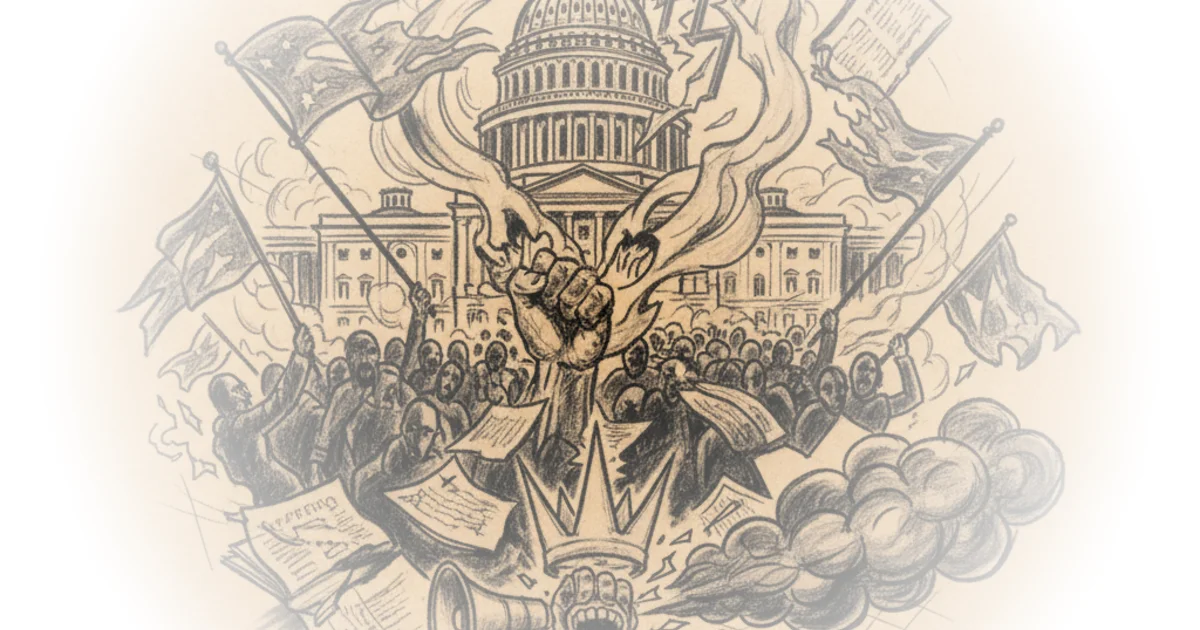
This distinction is crucial. It shifts the blame from a simple lack of preparation to an active decision to withhold protection from a specific group of citizens while deploying force against others. The argument gains weight by pointing out the absurdity of the situation: "It didn't take a foreign military to invade it took donald trump's incompetence and finality." While critics might argue that the scale of the breach was unforeseeable even for seasoned security experts, Stone's focus on the delay in deploying the National Guard despite requests from the D.C. mayor provides a concrete timeline of negligence that is hard to dismiss.
The president turned a blind eye... because they were on his team they were loved by the president even as they destroyed the government.
The Legal Threshold of Incitement
The core of Stone's analysis shifts to the legal implications of the rhetoric used before the march. He details how the executive branch leader told supporters, "We will never give up we will never concede it doesn't happen and after this we're going to walk down and i'll be there with you." Stone interprets this not as a call to peaceful protest but as a direct order, contrasting it with the standard political plea for calm. He notes that the President's rhetoric was compounded by his chief legal counsel, Rudy Giuliani, who demanded "trial by combat."
Stone's framing here is particularly sharp because it connects the speech to the immediate physical outcome. He argues that the President "loaded the gun and congress pulled the trigger," implicating not just the mob but the legislators who objected to the election certification. He lists a specific roster of senators who promoted the "fantasy" of a rigged election, arguing that their actions were not just politically expedient but dangerous. Stone writes, "Senator cruz cited statistics about a large number of americans who believed in this ridiculous conspiracy theory... which is ironic because a large number of people believe it because people like him promoted the ridiculous conspiracy theory."
This section effectively dismantles the defense that these politicians were merely "asking questions." Stone counters this by noting that when the mob was in the building, some of these same officials were fundraising or excoriating each other for the chaos they helped create. A counterargument worth considering is the difficulty of proving direct causation in a legal setting between a speech and a spontaneous riot, but Stone's evidence of the mob's specific timing and direction suggests a more coordinated effort than mere coincidence.
The Institutional Response and the Path Forward
The commentary concludes by addressing the immediate institutional crisis: the certification of the election and the potential for further violence. Stone highlights the bravery of Congress working through the night, contrasting it with the President's final tweet of support for the rioters: "We love you you're very special." He argues that this final act of validation makes the case for removal stronger than ever. Stone asserts, "We absolutely have to impeach president trump again remove him from office and prevent him from taking any office again."
He also touches on the potential for a pardon spree, warning that the President might attempt to "disarm these people via tweet or video" while simultaneously planning to pardon the traitors. The piece ends on a note of institutional resilience, suggesting that the event was a "last pathetic gasp of the failed experiment of trumpism." Stone writes, "Being a patriot doesn't mean wearing an american flag it means standing up for our institutions and fighting conspiracy theories."
Critics might argue that calling for the immediate removal of a President with only days left in office could further polarize the nation or destabilize the transition of power. However, Stone's argument rests on the premise that the damage to the institution of the presidency is already done and that leaving the current leader in place poses an ongoing risk of pardoning those who attacked the Capitol.
Let this be a lesson being a patriot doesn't mean wearing an american flag it means standing up for our institutions and fighting conspiracy theories.
Bottom Line
Stone's most compelling contribution is his refusal to treat the Capitol breach as an isolated security failure, instead framing it as the inevitable result of a coordinated strategy of incitement and institutional neglect. The argument's greatest strength lies in its specific attribution of responsibility to both the executive and legislative branches, though it risks underestimating the complexity of the legal hurdles to immediate removal. Readers should watch for how the investigation into the National Guard's deployment timeline unfolds, as that will likely be the definitive proof of the administrative failure Stone describes.