In a genre often reduced to stylized violence and flashy excess, Tom van der Linden offers a startling reframe: the gangster film is not merely a crime story, but a dark mirror reflecting the corruption of the very institutions meant to uphold the law. This analysis cuts through the neon glare of Brian De Palma's Scarface to reveal a structural tragedy about the American Dream itself, arguing that the mob's code is a twisted parody of the social contract. For the busy reader seeking to understand why these stories resonate decades later, van der Linden's distinction between a simple crime thriller and a true gangster epic provides the missing key to the genre's enduring power.
Defining the Genre
The piece begins by dismantling the assumption that any movie about criminals qualifies as a gangster film. Van der Linden draws a sharp line between individual grifters and the systemic nature of organized crime. "I think for me what defines this genre is that element of kind of looking at organized crime not just an individual criminal working alone but crime is a part of a system of crime," the author writes. This distinction is crucial because it shifts the focus from the mechanics of a heist to the sociology of power. The argument lands effectively by suggesting that these films are political in nature, exploring how specific socio-political factors birth these criminal ecosystems.
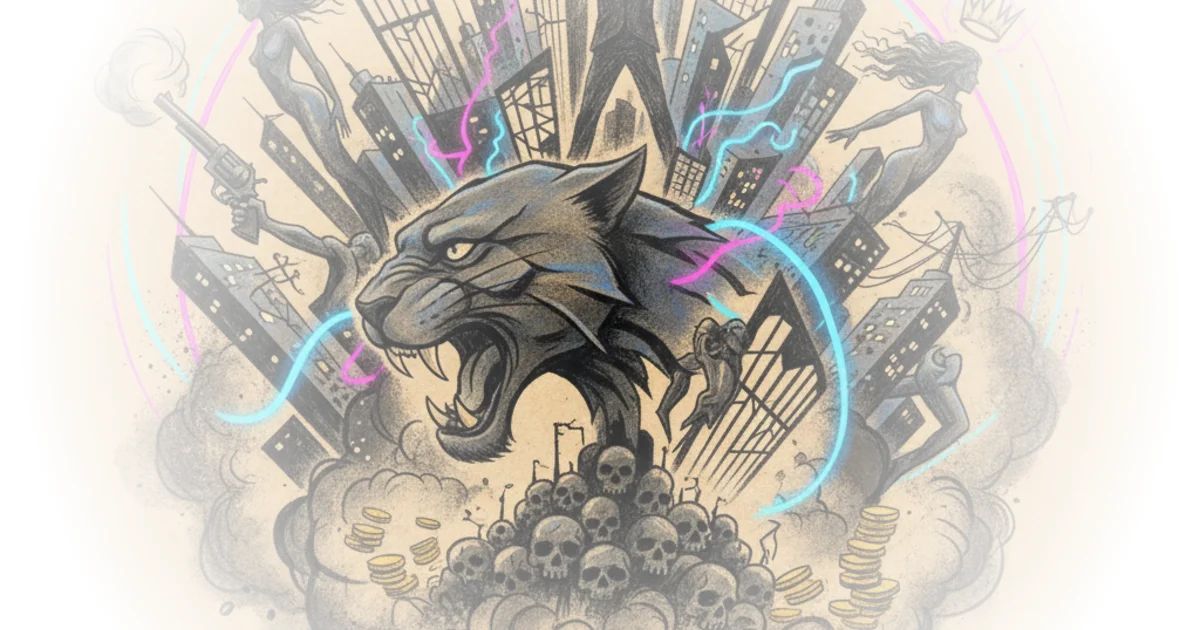
Van der Linden further refines this by noting the unique narrative architecture of the genre. He observes that these stories are defined by a "rise and fall structure" where the protagonist's ascent is inextricably linked to their own moral decay. "They are basically I think also gangster movies tend to have like a strong sort of like a bro code almost like every gangster family has their own rules," he notes. This "twisted sense of honor" creates a closed loop of logic that the audience is invited to critique, rather than simply enjoy. Critics might argue that this definition excludes the gritty realism of modern street-level crime dramas, but van der Linden's focus on the system and the code successfully isolates the specific sub-genre that deals with institutionalized power.
The mob families are more like this dark mirror to our own society in some way.
The American Dream as Tragedy
The commentary then pivots to a comparative analysis of The Godfather and Scarface, using the latter to deconstruct the myth of meritocracy. Van der Linden highlights a fundamental difference in trajectory: while Michael Corleone inherits a throne, Tony Montana must claw his way up from nothing. "Scarface is much more of a bottom-up story," van der Linden explains, contrasting the "destiny" of the Corleone heir with the raw, unfiltered ambition of the Cuban refugee. This framing is potent because it exposes the American Dream not as a promise of opportunity, but as a trap that rewards ruthlessness until it consumes the user.
The author points out that Tony Montana's downfall is not caused by external enemies, but by his own inability to adhere to the very code he used to climb. "He obviously breaks that word of Honor," van der Linden writes, pinpointing the moment Tony decides to work for himself rather than his patron. This act of self-aggrandizement is framed as the fatal flaw. The analysis suggests that the violence in these films is distinct from standard crime thrillers because it is "political violence within war and gangs," treating criminal conflict with the gravity of a battlefield. This elevates the genre from mere entertainment to a study of how power corrupts the individual and the system simultaneously.
The Mirror of Corruption
Perhaps the most provocative claim in the piece is the idea that the corruption of the mob is a reflection of the corruption within legal institutions. Van der Linden argues that the mob is not an anomaly but a symptom. "The corruption of the gangsters or the corruption of the mob is to some extent a reflection of the kind of corruption that exists in the legal side of it also in the police force in the government's," he asserts. This is the piece's strongest intellectual move, as it refuses to let the audience view the criminal underworld as a separate, exotic realm. Instead, it forces a confrontation with the reality that the rules of the street and the rules of the boardroom are often indistinguishable.
The author notes that while heist movies are about stealing external objects, gangster movies are about "climbing some kind of social ladder." This distinction recontextualizes the violence; it is not random, but a calculated tool for social mobility. "They're more like these political... stories are of a more political nature in that sense," van der Linden concludes. A counterargument worth considering is that this high-minded political reading might overlook the pure, visceral spectacle that directors like De Palma intend. However, the evidence presented—that the genre consistently ties personal ambition to systemic rot—suggests that the political dimension is indeed the core of the narrative engine.
Bottom Line
Tom van der Linden's analysis succeeds by refusing to treat Scarface as a mere stylistic exercise, instead exposing it as a brutal critique of the American meritocracy. The strongest part of the argument is the identification of the "dark mirror" dynamic, which reveals the gangster's code as a distorted reflection of societal values. The biggest vulnerability lies in the potential over-generalization of the genre, but the specific focus on the rise-and-fall structure and the systemic nature of the crime keeps the argument grounded. Readers should watch for how this framework applies to modern depictions of corporate power, where the "mob" may no longer wear suits, but the ladder remains just as deadly.
The mob families are more like this dark mirror to our own society in some way.